
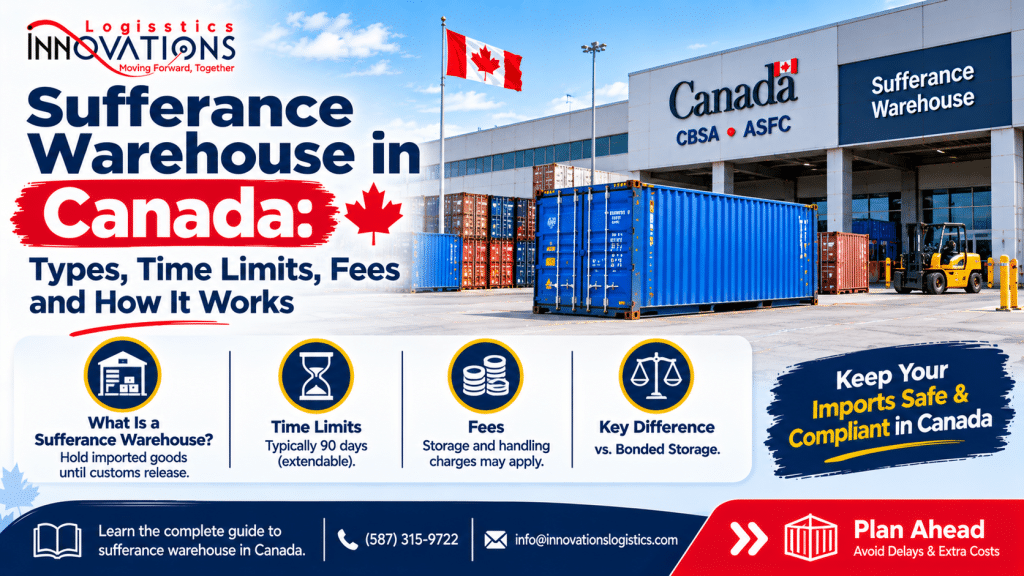
A sufferance warehouse in Canada is a licensed facility where imported goods wait for customs release. Many importers use one without knowing it. Your cargo may sit in one after a ship docks or a train arrives. Understanding how it works helps you avoid fees and delays.
This guide explains what a sufferance warehouse in Canada is, which types exist, and how long goods can stay. You will also see how it differs from a bonded warehouse and how it affects your trucking plan.
Quick answer: A sufferance warehouse is a privately run facility licensed by the CBSA. It holds imported goods for short-term storage, transfer, delivery and exam until customs releases them. General goods can stay up to 40 days. Shorter limits apply to perishables and some regulated goods.
What Is a Sufferance Warehouse in Canada?
The Canada Border Services Agency (CBSA) licenses sufferance warehouses. Private companies own and run them. The CBSA says these sites handle control, short-term storage, transfer, delivery and examination of goods held in bond.
“In bond” means the goods have arrived in Canada, but customs has not released them. The goods stay under CBSA control during that time. After release, you can move them to your own site.
The CBSA also says only goods with financial security posted can go into one of these warehouses. Therefore, your customs setup matters before cargo arrives. Our guide to how to import goods into Canada covers that setup.
How a Sufferance Warehouse in Canada Works
The flow is simple. Each step needs the one before it.
- Cargo arrives at a port, airport, rail yard or border.
- The carrier reports the cargo to the CBSA.
- The goods go to a licensed warehouse that matches the cargo type.
- Your customs broker files the entry.
- The CBSA releases the goods or orders an exam.
- After release, a truck collects the goods.
Carriers, forwarders and agents must put the warehouse’s sub-location code on cargo control documents. That code tells the CBSA where the goods sit. As a result, your broker needs to know the exact warehouse before release.
Why Importers Use a Sufferance Warehouse
Goods often cannot move on the day they arrive. Customs may need to review documents. Officers may also want to inspect the cargo. A sufferance warehouse in Canada gives the goods a legal place to wait.
- It holds cargo safely while customs reviews it.
- Officers get a place to inspect goods.
- Forwarders can unload and sort shared containers there.
- Your container leaves the terminal while paperwork finishes.
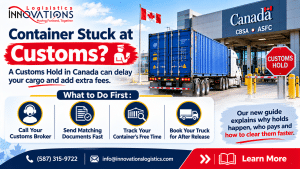
Read our guide to a customs hold in Canada to see what happens when the CBSA stops a shipment.
Types of Sufferance Warehouse in Canada
The CBSA lists five main types of sufferance warehouse in Canada. Each one fits certain goods and transport modes.
- Type A: Airlines, marine companies, railways, cargo handlers and harbour operators run these. They store goods in their own systems.
- Type B: These hold goods that arrive by highway in commercial trucks.
- Type C: A third party runs them. They store, deconsolidate and sort shipments before formal entry. Consolidators, bonded forwarders and customs brokers often operate them.
- Type S: These handle specific goods. Examples include fresh produce, used household goods and liquor.
- Type PS: These are private railway sidings. Importers use them for carloads held until release.
A warehouse can only take the goods and modes on its licence. For example, a household goods warehouse cannot store other cargo. Therefore, always confirm the licence before you book.
Cargo waiting for release? Talk to our team about the move that follows. Call (587) 315-9722, email info@innovationslogistics.com, or request a free quote.
Sufferance Warehouse Time Limits
The CBSA sets a maximum storage time for every sufferance warehouse in Canada. The limit counts from the day the carrier reports the goods.
- General goods get up to 40 days.
- Perishable goods get up to 4 days.
- Certain nuclear substances get up to 14 days.
- Firearms, weapons, ammunition and tobacco get up to 14 days.
- Spirits get up to 21 days.
The CBSA also has a separate memorandum on extending time limits. Still, do not count on an extension. You can read the full rules in CBSA Memorandum D4-1-4 and on the CBSA sufferance warehouses page.
Sufferance Warehouse vs. Bonded Warehouse in Canada
People often mix up the two. They serve different goals.
- A sufferance warehouse in Canada holds goods briefly while customs releases them.
- You usually pay duties and taxes at release.
- A bonded warehouse can store goods for a much longer period.
- It lets importers defer duties and taxes until the goods leave.
Broker sources often say bonded storage can last up to four years. Check current CBSA rules before you plan around that. Our guides to bonded shipping in Canada and what a bonded shipment is explain related ideas.
Sufferance Warehouse Costs and Fees
Each sufferance warehouse in Canada sets its own fees. Ask for a written fee list before cargo arrives.
- Receiving and handling fees.
- Storage fees per day or per pallet.
- Exam handling, such as unloading and reloading.
- Release and delivery fees.
- Transport to and from the warehouse.
Also check how fees change after free time ends. Our guides to demurrage and detention charges in Canada and drayage costs in Canada help you budget the full move.
Sufferance Warehouse and LCL Cargo
LCL cargo often passes through a Type C sufferance warehouse in Canada. Workers unload the shared container there. Then they sort each shipper’s goods. As a result, your pallets wait in that warehouse until customs releases them.
The CBSA encourages registering for its deconsolidation notice. Ask your forwarder how they handle it. Read our guide to LCL vs. FCL shipping to Canada for the full comparison.
Rail Containers and Sufferance Warehouses in Alberta
Alberta importers often receive containers by rail. A railway can run a Type A sufferance warehouse at its yard. Containers may wait there until customs releases them.
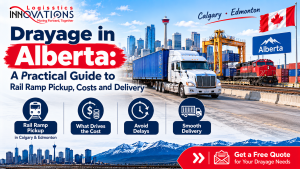
That wait matters for your truck booking. You cannot collect the container before release. However, you can book the truck early. Our guide to drayage in Alberta explains the ramp pickup. Our article on shipping containers from Vancouver or Prince Rupert to Alberta covers the route.
How to Choose a Sufferance Warehouse in Canada
Your forwarder or broker usually picks the warehouse. Still, you should know what to ask. Use these six steps.
Step 1: Confirm the Licence and Type
Ask which CBSA type and sub-location code the warehouse holds. Make sure it matches your cargo and transport mode.
Step 2: Check the Time Limit
Know the limit for your goods. Plan release well before day 40, or before day 4 for perishables.
Step 3: Get the Fees in Writing
Ask for storage, handling, exam and release fees. Also ask when free time ends.
Step 4: Ask About Exams
Find out whether the site can host CBSA exams. Then ask how it handles unloading and reloading.
Step 5: Plan the Pickup
Book your drayage in advance. Confirm hours, appointment rules and gate access.
Step 6: Agree on Updates
Decide how the operator will tell you about release and delays. Clear updates save time.
Common Sufferance Warehouse Mistakes
- Assuming any warehouse can receive in-bond cargo.
- Ignoring the 40-day limit, or the 4-day limit for perishables.
- Forgetting to post financial security first.
- Skipping the written fee list.
- Booking the truck only after release.
- Mixing up sufferance and bonded storage.
- Leaving paperwork errors until the last day.
Most of these mistakes are easy to avoid. In fact, a short call with your broker can save days.
How Innovations Logistics Supports Your Move Out of a Sufferance Warehouse
Your licensed customs broker files the entry and works with the warehouse. Innovations Logistics supports the trucking and storage around it. Our drayage team collects containers after release. Our warehousing and transloading gives cargo a safe place once it clears.
We also support bonded shipments for cargo that moves under customs control. In addition, we offer freight forwarding, intermodal service and container storage, rental and repair.
Once your cargo moves, you can track your shipment online.
Sufferance Warehouse in Canada FAQs
What is a sufferance warehouse?
It is a privately run facility that the CBSA licenses. It holds imported goods for short-term storage and exam until customs releases them.
Who licenses a sufferance warehouse in Canada?
The CBSA does. Applicants now apply through the CARM Client Portal. The CBSA aims to decide within 60 business days of a complete application.
How long can goods stay in a sufferance warehouse?
General goods can stay up to 40 days. Perishables get 4 days, and some regulated goods get 14 or 21 days.
Is a sufferance warehouse the same as a bonded warehouse?
No. A sufferance warehouse holds goods briefly until release. A bonded warehouse can hold goods much longer and lets you defer duties and taxes.
Can any goods go into a sufferance warehouse?
No. The CBSA says goods need financial security posted first. Also, the warehouse licence must match the goods and the transport mode.
Who pays storage fees at a sufferance warehouse?
The importer usually pays, often through the carrier or forwarder. Check your quote and ask for a written fee list.
Does LCL cargo go through a sufferance warehouse?
Often yes. Many LCL shipments move through a Type C warehouse, where workers unload and sort the shared container.
Can I pick up goods before customs releases them?
No. Goods stay under CBSA control until release. Book your truck early so it can move the same day.
This guide is general information. Ask your licensed customs broker about your own shipment.
Need a truck after customs release? Tell us your port, container details and delivery location. Call (587) 315-9722, email info@innovationslogistics.com, or request a free quote today.