
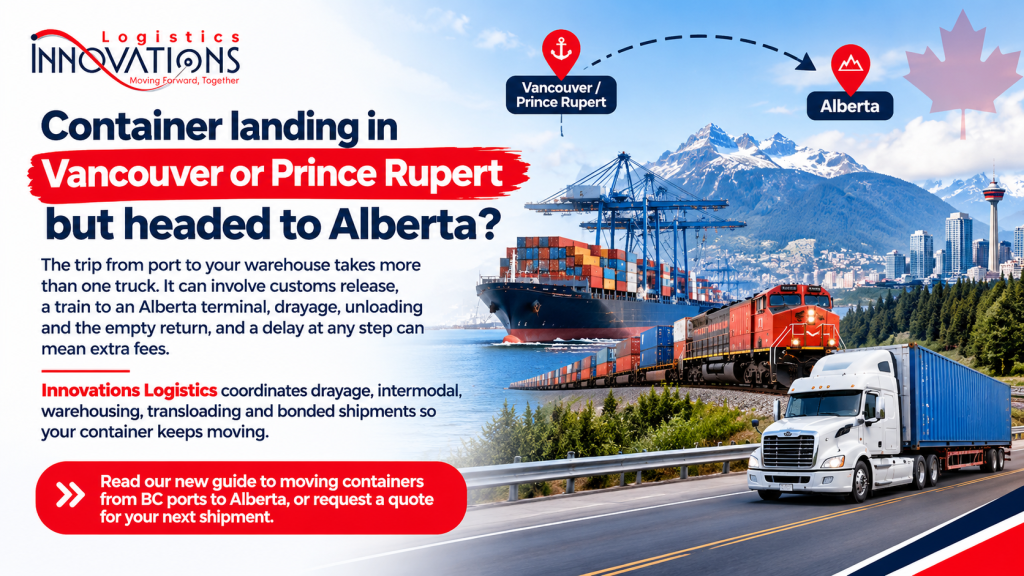
Shipping containers from Vancouver to Alberta, or from Prince Rupert to Alberta, is a multi-step process that involves customs release, rail transport, container drayage and warehouse delivery. Because Alberta has no seaport, almost every imported container has to travel more than 1,000 km inland, and that final stretch is where many importers lose time and money. This guide explains how port to warehouse delivery in Alberta works, your intermodal and trucking options, what affects cost, and how to avoid delays and extra fees.
Alberta is a major consumer and industrial market, but it has no seaport. Every imported container has to be moved in from the coast, and the way you plan that move affects your cost, your delivery date and how much stress your team carries. This guide walks through the full journey from the vessel to your Alberta warehouse, compares your options, and explains how to avoid the most common delays.
Why Alberta Importers Ship Containers Through Vancouver and Prince Rupert
Because Alberta is landlocked, almost all ocean freight arrives through a West Coast gateway and then travels inland by rail and truck. The two main entry points are Vancouver and Prince Rupert.
Vancouver is Canada’s largest port and offers a wide choice of shipping lines and sailings. Prince Rupert, on the north coast of British Columbia, is a smaller port with a strong geographic advantage. The Port of Prince Rupert says it is North America’s closest port to Asia by up to three days of sailing, and about 36 hours closer to Shanghai than Vancouver. Its Fairview Container Terminal was designed around moving containers directly between ships and trains, and CN connects the port to Alberta by rail.
For an Alberta importer, the right port depends on where your cargo originates, which shipping line you use, the sailing schedule, and the rail service available at the other end. The cheapest ocean rate is not always the best total cost once inland transportation, waiting time and fees are included.
Vancouver vs. Prince Rupert: Which Port Is Better for Shipping Containers to Alberta?
| Factor | Port of Vancouver | Port of Prince Rupert |
|---|---|---|
| Sailing distance from Asia | Longer than Prince Rupert | Shorter, with the port advertising up to three days saved compared with some West Coast ports |
| Shipping line options | Broad choice of carriers and sailings | Fewer services, so check availability for your origin |
| Rail connection to Alberta | Served by Canadian Class I railways | CN rail line with direct train services to Alberta |
| Best suited for | Flexibility and frequent sailings | Speed from Asian origins and rail-focused moves |
Ask your freight forwarder to quote both options for the same shipment. A slightly higher ocean rate through one port can be offset by faster transit or smoother inland handling.
Where Containers Are Delivered in Alberta: Calgary and Edmonton Intermodal Terminals
Most containers travel by train to an intermodal terminal near Calgary or Edmonton, where they are lifted off the railcar and picked up by a drayage truck. CN’s Calgary Logistics Park is located in Rocky View County near the Calgary airport, and CN has long offered container train service from Prince Rupert to both Calgary and Edmonton.
The Edmonton region also promotes itself as an inland port connected to both Vancouver and Prince Rupert, and Edmonton Global reports more than sixteen rail intermodal terminals and storage facilities in the area. For Alberta importers, this means the final delivery point, the closest terminal and the available trucking capacity should all be confirmed before the container sails, not after it arrives.
If your business is based in the Edmonton area, you may also find our guide to trucking companies in Edmonton helpful when planning local deliveries.
Port to Warehouse in Alberta: The Container Journey Step by Step
Step 1: Booking and Vessel Departure
The journey starts before the ship leaves Asia. Your supplier, freight forwarder and shipping line confirm the booking, container type, cargo details and routing. This is also the time to decide whether the container will be cleared at the port or moved inland under bond, and to arrange drayage and a delivery appointment at your warehouse.
Step 2: Vessel Arrival and Discharge
When the vessel arrives, the container is unloaded at the marine terminal and placed in the yard or transferred to rail. Port congestion, weather and vessel bunching can change the date a container becomes available, so build some flexibility into your plan.
Step 3: Customs Clearance and Release
Before goods can be delivered, customs paperwork must be completed and duties and taxes arranged. Commercial importers need to understand how the CBSA’s CARM system works, including having their own client portal account. Our article on CARM in Canada explains what to prepare, and our guide to the importer of record in Canada covers who is responsible for duties and risks.
If goods need to travel inland before they are cleared, a bonded shipment allows eligible cargo to move beyond the first point of arrival while remaining under customs control. You can learn more in What Is a Bonded Shipment? and Bonded Shipping in Canada.
Step 4: Rail Transport to Alberta
Once the container is available, it is usually loaded onto a train and carried to an Alberta intermodal terminal. Rail is well suited to the long mountain and Prairie distance, and the container stays sealed throughout the trip. To understand the process in more detail, read What Is Intermodal Transportation? and How Intermodal Rail Transportation Works.
Step 5: Pickup from the Rail Terminal
When the train arrives, the container has to be picked up within the terminal’s allowed time. This is where drayage matters. A drayage truck collects the container from the ramp and takes it to your warehouse, distribution centre or transload facility. If no truck or appointment is arranged in advance, the container can sit at the terminal and start generating storage or demurrage charges. Our drayage service is designed to prevent exactly that gap, and our guide to what drayage is explains the basics.
Step 6: Delivery and Unloading
At your site, the container is unloaded by your team or transferred into a warehouse. If your dock is full or your staff are not ready, the truck and chassis can be held, which can lead to waiting time and detention. A confirmed appointment with the right equipment, such as a forklift and enough labour, keeps this step short.
Step 7: Transloading or Warehousing (When Needed)
Some importers do not want to receive a full container at their own facility. In that case, cargo can be moved into a warehouse and then delivered in smaller loads. Our warehousing and transloading service supports this, and you can compare approaches in Transloading Services in Canada and Transloading vs. Cross Docking.
Step 8: Empty Container Return
After unloading, the empty container must be returned to the designated depot within the allowed time. Missing this deadline can result in detention charges even though the cargo has already been delivered, so confirm the return location and hours before pickup.
Documents to Prepare Before the Container Arrives
Missing paperwork is one of the most common reasons containers are delayed. Before the vessel arrives, confirm that you have:
- The bill of lading or sea waybill
- A complete commercial invoice with accurate descriptions and values
- A packing list that matches the cargo
- Importer of record details and your CARM client portal information
- Any permits or certificates required for your product type
- Your customs broker’s contact details and instructions
- The delivery address, contact person and appointment time at your warehouse
Small errors, like mismatched quantities or unclear product descriptions, can hold up release even when the container is physically ready to move.
Your Main Options for Intermodal Container Transport to Alberta
Option 1: Rail Intermodal Plus Local Drayage
The container travels by train to an Alberta terminal and a local drayage truck completes the delivery. This is the most common approach for full container loads because rail handles the long distance while trucks cover the short final leg.
Best for: Regular imports, larger volumes and cost-conscious shippers.
Watch for: Rail schedules, terminal pickup deadlines and drayage availability near the ramp.
Read how the two modes work together in Drayage vs. Intermodal: What’s the Difference? and Intermodal vs. Truckload Shipping in Canada.
Option 2: Direct Trucking from the Port
A truck hauls the container from the port all the way to Alberta. It can make sense for urgent shipments, smaller loads or destinations that are far from a rail terminal.
Best for: Time-sensitive freight and hard-to-reach locations.
Watch for: Higher fuel use, driver availability and winter conditions on mountain routes.
Option 3: Transload Near the Port, Then Move the Freight
Cargo is moved out of the ocean container and into domestic trailers or containers. This can help consolidate loads, free up ocean equipment quickly, or split a large shipment across several destinations.
Best for: Mixed shipments, multiple delivery points and cargo that benefits from repacking.
Watch for: Extra handling and warehouse fees, which should be compared against savings.
Option 4: Move Under Bond and Clear Inland
Eligible goods can move to an inland location under customs control and be cleared closer to their destination. This can simplify the process for Alberta-based importers and keep cargo moving instead of waiting at the port.
Best for: Importers who want cargo to leave the port quickly and who are set up for inland clearance.
Watch for: Bonded carrier requirements and accurate documentation. See How to Choose a Bonded Carrier in Canada.
What Affects the Cost of Shipping a Container from Vancouver to Alberta
There is no single price for a port-to-Alberta move. The final cost depends on several factors, and understanding them helps you compare quotes properly.
- Container size and weight. A heavy 40-foot container may require different equipment and handling than a lighter 20-foot unit.
- Choice of port and routing. The ocean rate, rail rate and drayage rate all combine into a total landed cost.
- Distance from the rail terminal. The farther your warehouse is from the ramp, the higher the drayage cost. Our guide to drayage costs in Canada lists the main pricing factors.
- Rail versus truck. Rail is often more economical over long distances. See our intermodal shipping cost breakdown for details.
- Waiting time. Delays at the terminal, customs or your dock can add charges.
- Terminal, rail yard and carrier fees. Storage is often billed separately by terminals and rail yards, while shipping lines can charge demurrage and detention when free time is exceeded.
- Fuel and seasonal demand. Fuel surcharges and busy periods can raise costs.
- Special requirements. Bonded movement, extra labour, specialized equipment or after-hours delivery may increase the price.
To keep overall freight spending under control, see How to Reduce Freight Costs in Canada Without Sacrificing Speed.
Common Problems That Delay Import Container Delivery in Alberta
- Customs holds. Incomplete or inaccurate paperwork can stop a container from being released.
- No drayage booked. Searching for a truck after the container is available wastes free time.
- Rail or terminal delays. Congestion, equipment shortages or weather can push back availability.
- Warehouse not ready. A full dock, closed receiving hours or missing labour can leave a container waiting.
- Missed empty return. Late return can trigger detention charges after delivery is complete.
- Poor communication. When the forwarder, broker, trucker and warehouse do not share information, small problems grow quickly.
Container Drayage, Intermodal and Warehousing Support for Alberta Importers
- Book drayage before the vessel arrives. Arrange the truck and pickup window while the container is still at sea.
- Prepare customs documents early. Send complete paperwork to your broker as soon as the shipping documents are ready.
- Track the last free day. Know when storage or demurrage starts and plan pickup before that date.
- Confirm your receiving appointment. Make sure the warehouse has dock space, equipment and staff available.
- Plan the empty return. Ask where the empty must go and by when.
- Have a backup for storage. If your warehouse is not ready, container storage or a warehouse transload can keep cargo safe and free up the container. See Container Storage Solutions for Businesses That Need Extra Space.
- Communicate regularly. Share updates between everyone involved, and use online tracking where available.
Planning for Winter and Peak Season
Cold weather and heavy demand can both affect port-to-Alberta moves. Snow and ice can slow trucks on mountain and Prairie routes, and trains can face delays during extreme weather. Late in the year, importers often bring in extra inventory for the holiday season, which increases demand for trucks, rail equipment and warehouse space.
To reduce the risk, book transportation early, build buffer days into delivery plans, confirm holiday receiving hours with your warehouse and avoid leaving containers at the terminal longer than necessary. Cargo that can be damaged by freezing, such as some liquids and electronics, should be flagged to your provider before shipping.
Do You Need a Freight Forwarder?
If you are importing from overseas, a freight forwarder can arrange the ocean booking, paperwork and inland connection as one coordinated move. This reduces the number of parties you have to manage and makes it easier to compare Vancouver and Prince Rupert routings. Our freight forwarding service supports importers who want a single point of contact from origin to Alberta. For more background, read Door to Door Freight Forwarding and How Much Do Freight Forwarders Charge?.
Questions to Ask Before Choosing a Logistics Partner
- Can you handle the full move from port to my warehouse, or only one part of it?
- Do you coordinate drayage, rail terminal pickup and warehousing together?
- How do you handle bonded movements and customs documentation?
- What happens if my warehouse is not ready when the container arrives?
- How will you communicate delays and share shipment status?
- Which fees are included in your quote and which could be added later?
For more guidance, read How to Choose a Drayage Company in Canada and How to Choose an Intermodal Transportation Provider in Canada.
How Innovations Logistics Helps Alberta Importers
Innovations Logistics supports businesses that move containers through Canadian ports and rail terminals with a connected set of services:
- Drayage for port-to-warehouse and terminal-to-terminal container moves
- Intermodal service combining rail and trucking
- Warehousing and transloading for storage, repacking and distribution
- Bonded shipment support for cargo moving under customs control
- Freight forwarding for end-to-end shipment coordination
- Container storage, rental and repair
When these services are planned together, there are fewer handoffs, fewer gaps between steps and fewer surprise costs. For a closer look at the last leg of the trip, see our guide to shipping containers from port to warehouse, and once your cargo is moving, you can track your shipment online.
Frequently Asked Questions
Do containers going to Alberta usually travel by rail or truck?
Most full containers travel by rail from the port to an Alberta intermodal terminal, then by truck for local delivery. Direct trucking is generally used for urgent shipments or locations that are difficult to reach from a rail terminal.
Is Vancouver or Prince Rupert better for Alberta imports?
It depends on your origin, shipping line, schedule and rail service. Prince Rupert is promoted as the closest North American port to Asia and has a rail connection to Alberta, while Vancouver offers a wider choice of carriers and sailings. Compare both for each shipment.
Can I clear goods in Alberta instead of at the port?
In some cases, eligible goods can move under bond to an inland location and be cleared there. Your customs broker or logistics provider can confirm what applies to your cargo and which documents are required.
How early should I book drayage for a container?
As early as possible, ideally while the vessel is still at sea. This gives your provider time to arrange a truck and pickup appointment before the container becomes available.
What happens if my warehouse is not ready when the container arrives?
You can arrange container storage or a warehouse transload so the container is not held at the terminal or on a truck. This helps you avoid extra charges while you prepare to receive the cargo.
What fees can I be charged if a container sits too long?
Depending on where it is held, you may be charged storage by the terminal or rail yard, demurrage by the shipping line while the container is inside the terminal, and detention while it is outside the terminal past its free time. Free time and rates vary, so check your carrier agreement or published tariff.
Does winter weather affect containers moving to Alberta?
It can. Snow, ice and extreme cold can slow trucks and trains on mountain and Prairie routes. Plan extra buffer days from November onward and tell your provider if your cargo is sensitive to freezing.
How can I track my container?
Your shipping line, forwarder and logistics provider can share container status and availability updates. Customers of Innovations Logistics can also use the online tracking page on our website.
Get a Free Quote for Your Alberta Container Move
Tell us your port, container details and delivery location, and our team will plan the move from pickup to delivery and return. Request a free quote today.
Container Drayage and Transloading for Alberta Imports
Once a container reaches an Alberta rail terminal, the quality of the final delivery matters as much as the ocean and rail legs. Container drayage in Alberta covers the pickup from the ramp, the delivery to your warehouse or distribution centre, and the empty return. If your facility is not ready to receive a full container, container transloading in Alberta lets cargo move into a warehouse first, so the equipment is freed and delivery can be scheduled in smaller loads. You can learn more about our drayage service, intermodal service and warehousing and transloading, or read when your business actually needs drayage services.