
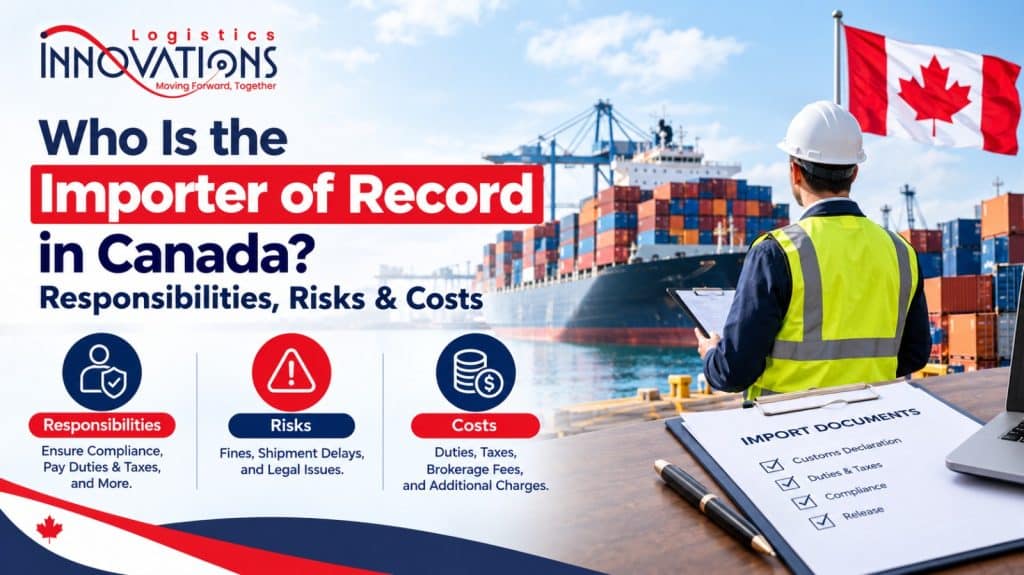
If your business imports commercial goods into Canada, understanding the importer of record in Canada is important. The importer of record is the party identified as the importer on the customs declaration and is directly responsible for important customs obligations.
In simple terms, the importer of record is responsible for making sure imported goods are properly declared, duties and taxes are paid, records are maintained, and required corrections are made. Under current CBSA rules, the importer of record is also a key contact for customs verifications and post accounting obligations.
For Canadian businesses, choosing the right importer of record arrangement can affect customs compliance, cash flow, and exposure to unexpected costs.
What Is an Importer of Record in Canada?
An importer of record in Canada is the person or business identified as the importer when commercial goods are accounted for with the Canada Border Services Agency.
For commercial imports, the importer of record is identified through the business number and import/export account used for customs transactions. There is one self declared importer of record for an importation, although other parties can also have legal responsibilities related to the goods.
The importer of record does not necessarily have to prepare every customs document personally. A licensed customs broker can act as an agent and handle customs transactions on the importer’s behalf.
The important point is that using a broker does not automatically remove the importer’s responsibility.
Who Can Be the Importer of Record?
The importer of record may be a Canadian business importing goods for its own operations, a Canadian purchaser, or, in certain arrangements, an authorized agent or customs broker.
For example, a Canadian retailer purchasing products from a manufacturer overseas may act as the importer of record when bringing those products into Canada.
A non resident business may also have Canadian importing obligations, depending on how its goods are sold and imported.
The correct arrangement depends on the transaction, ownership, customs accounting, and applicable Canadian requirements. Businesses should establish these responsibilities before shipping rather than trying to resolve them after the goods reach the border.
Importer of Record Responsibilities
The importer of record has several important responsibilities. These go beyond simply getting a shipment released.
1: Customs declarations
The importer must ensure that information submitted to the CBSA is accurate and complete. This includes information about the goods, importer, origin, classification, value, and other required details.
2: Tariff classification
Imported products must be assigned the appropriate tariff classification. The classification can affect the applicable duty rate and other import requirements. Incorrect classification can lead to additional duties, corrections, and compliance issues.
3: Value for duty
The importer must establish the correct value for duty. Depending on the transaction, this can involve the price paid or payable and required adjustments.
CBSA guidance notes that certain costs, including some commissions, packing costs, assists, royalties, licence fees, and transportation or insurance costs to the place of direct shipment, may affect the calculation.
4: Origin information
The importer must provide accurate country of origin information and apply any applicable trade agreement or tariff treatment correctly.
5: Duties and taxes
The importer of record is responsible for duties and taxes owed on the importation. This can include customs duties, GST, and other applicable amounts depending on the goods and circumstances.
6: Record keeping
Importers must maintain records supporting their customs declarations. CBSA guidance states that records supporting value for duty declarations must be kept for six years.
7: Corrections and reassessments
If an importer has reason to believe a declaration is incorrect, corrections may be required. CBSA can also reassess an importation after accounting. Additional duties can arise from issues involving tariff classification, origin, value for duty, or other compliance matters.
What Risks Does the Importer of Record Face?
The main risk is financial and compliance liability.
If customs information is incorrect, the business may face additional duties, taxes, reassessments, interest, penalties, or other consequences depending on the circumstances. The importer of record is also the main contact for CBSA verifications and is directly responsible for post accounting obligations such as record keeping, corrections, and payment of duties.
There can also be shared liability. CBSA explains that the importer of record, importer, and owner can have liability for duties in certain circumstances. This is why businesses should not treat the importer of record designation as a simple paperwork decision.
What Costs Can the Importer of Record Be Responsible For?
The total cost depends on the goods, transaction, origin, classification, and customs arrangement. Common costs can include:
- Customs duties
- GST and other applicable taxes
- Customs brokerage fees
- Customs examination or handling charges
- Storage and demurrage caused by delays.
- Transportation and delivery costs
- Costs associated with correcting customs declarations
- Additional duties following a reassessment
- Financial security requirements when using applicable release programs
Brokerage fees are separate from government duties and taxes. CBSA states that customs brokers charge for their services and that brokerage fees are not regulated by the CBSA.
For businesses importing regularly, these costs should be included when calculating the true landed cost of imported products.
Importer of Record vs. Importer vs. Owner
These terms can sound interchangeable, but they describe different roles.
- Importer: Usually the person or business that brings goods into Canada or causes them to be imported.
- Owner: The person who owns the goods when CBSA releases them.
- Importer of record: The person identified as the importer on the customs accounting documents.
One company can perform more than one of these roles. In other transactions, different companies may have different roles and may still have responsibilities relating to the same shipment.
Importer of Record vs. Customs Broker
The importer of record and customs broker have different roles. The importer of record has the customs accountability associated with the importation. A customs broker is a licensed professional who can conduct customs business for the importer as an agent.
A broker may prepare and submit customs information, communicate with CBSA, and handle other customs activities on the importer’s behalf. However, businesses should clearly understand who is being identified as the importer of record on the customs accounting documents.
Can a Customs Broker Be the Importer of Record?
Yes, an authorized agent such as a customs broker can, in certain circumstances, act as the importer of record. CBSA specifically recognizes situations where authorized agents assume the role of importer of record. However, this can create direct liability for the agent, including responsibility for duties and post accounting obligations.
Businesses should therefore confirm the arrangement with their customs broker before shipment and make sure responsibilities for duties, records, corrections, and reassessments are clearly understood.
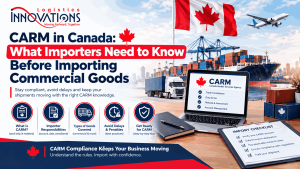
How CARM Affects the Importer of Record
The CBSA Assessment and Revenue Management system, known as CARM, has made importer accountability more important. Commercial importers must register in the CARM Client Portal. If a business uses a licensed customs broker, the importer can delegate authority to that broker through CARM so the broker can act on its behalf.
Since January 1, 2026, changes to importer of record rules have also increased the importance of understanding who is identified on customs accounting documents. CBSA explains that customs brokers can face joint liability when using their own business number in applicable circumstances. For Canadian importers, CARM should therefore be treated as part of the overall import compliance process, not simply as an online customs account.
How to Choose the Right Importer of Record Arrangement
Before importing commercial goods, ask:
- Who owns the goods when they enter Canada?
- Who is purchasing the goods?
- Who will be identified as the importer of record?
- Who will handle customs declarations?
- Who is responsible for duties and taxes?
- Who will maintain customs records?
- Who will handle corrections or CBSA reassessments?
- Is the business properly registered in CARM?
- Does the shipment require bonded transportation or storage?
- Are transportation and customs responsibilities clearly documented?
A logistics provider can help coordinate transportation, documentation, and the movement of imported cargo, while a licensed customs broker can handle customs transactions.
For example, Innovations Logistics provides freight forwarding services that coordinate transportation, carrier selection, shipment tracking, and documentation for domestic, cross border, and international freight.
For cargo moving under customs control, its bonded shipment services can also support transportation and temporary storage requirements.
FAQs About the Importer of Record
Is the importer of record responsible for customs duties?
Yes. The importer of record is responsible for duties and taxes owed on the importation, subject to the applicable rules and liability of other parties.
Does using a customs broker make the broker the importer of record?
Not automatically. A customs broker can act as an agent for the importer without becoming the importer of record. The party identified on the customs accounting documents is important.
Can a foreign company be an importer of record in Canada?
A foreign business may have Canadian importing responsibilities, but the appropriate arrangement depends on its business structure, transaction, goods, and customs requirements.
What happens if the importer of record makes a mistake?
A mistake can result in a correction, reassessment, additional duties or taxes, and potentially other compliance consequences. Importers should correct declarations when required and maintain supporting records.
Is the importer of record the same as the owner?
No. The importer of record, importer, and owner can be the same business, but they can also be different parties. Each role can carry different responsibilities.
Conclusion
The importer of record in Canada has an important role in the customs process. This party is responsible for accurate customs accounting, duties and taxes, record keeping, corrections, and other post accounting obligations.
For Canadian businesses, the key is to establish the importer of record arrangement before goods are shipped. Make sure your CARM account, customs information, documentation, broker relationship, and transportation arrangements are properly coordinated.
If you need help coordinating imported freight across Canada, Innovations Logistics can support your transportation and logistics requirements through freight forwarding, bonded shipments, drayage, warehousing, and transloading services.
Contact Innovations Logistics to discuss your next Canadian import shipment and build a logistics plan that fits your cargo and delivery requirements.