
A cargo control number tells the Canada Border Services Agency (CBSA) which shipment is which. Every commercial shipment that enters Canada needs one. Yet many importers never see it until a problem appears. Then a missing or wrong number can stall your cargo.
This guide explains what a cargo control number is, who assigns it and what it looks like. You will also learn the eManifest deadlines for each transport mode and how to avoid delays.
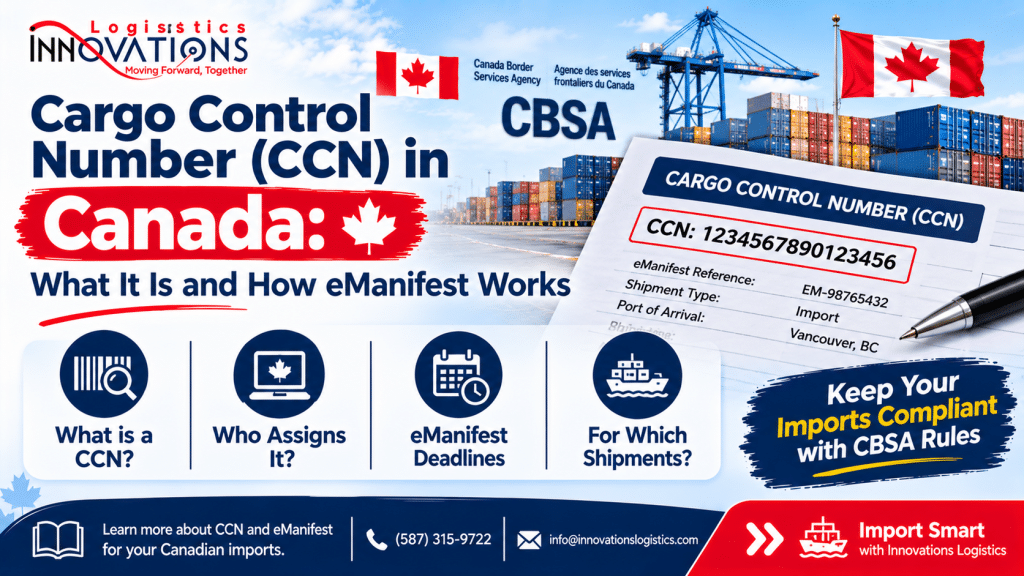
Quick answer: A cargo control number (CCN) is a unique reference of up to 25 letters and numbers. Your carrier or freight forwarder assigns it, and it starts with a CBSA carrier code. It ties your shipment to the data your carrier sends before arrival. Ask your forwarder for it early, and check that it matches your paperwork.
What Is a Cargo Control Number?
A cargo control number is a reference that identifies your transport document to the CBSA. The carrier or freight forwarder assigns it. The CBSA uses it to track and control the movement of imported goods.
Think of it as the shipment’s ID. Your cargo may pass through a port, a rail yard and a warehouse. At each stop, the same number links the goods to the same record.
You will often hear the short form, CCN. Brokers, truckers and warehouses all use it. Our guide to how to import goods into Canada shows where it fits in the full process.
What a Cargo Control Number Looks Like
The CBSA sets a simple structure. Every number follows it.
- The number can be up to 25 characters long.
- Letters and numbers can both appear.
- The carrier code that the CBSA issued comes first.
- A unique number from the carrier or forwarder follows the code.
The CBSA gives a highway example. Suppose a truck carries the bar-coded PARS number “1234PARS56789” to the border. Then the carrier must send the same value, “1234PARS56789”, as the cargo control number before arrival. The two must match exactly.
Who Assigns a Cargo Control Number?
You do not create the number yourself. The party that moves your goods does.
- Carriers: Highway, rail, air and marine carriers assign numbers to their own cargo documents.
- Freight forwarders: They assign numbers to house bills for shared containers and consolidated loads.
Each party must first hold a CBSA carrier code. As a result, you can tell who issued a number by its first four characters. Our guide to freight forwarder vs. freight broker explains who does what.
What Is eManifest?
eManifest is the CBSA’s system for advance cargo data. It is also called Advance Commercial Information, or ACI. Carriers and forwarders send cargo and trip details to the CBSA before the goods arrive.
That early data lets the CBSA check risk in advance. It also helps officers plan exams. Meanwhile, goods with clean data usually move faster.
As an importer, you do not file eManifest. However, you must give your carrier and forwarder accurate cargo details. Wrong data in means wrong data out.
Need a shipment tracked from port to dock? Talk to our team. Call (587) 315-9722, email info@innovationslogistics.com, or request a free quote.
eManifest Deadlines by Transport Mode
The CBSA sets a deadline for each mode. Your carrier must meet it.
- Marine: 24 hours before loading at the foreign port, for most goods. Cargo from the United States needs data 24 hours before arrival.
- Air: 4 hours before arrival, or at departure on shorter flights.
- Rail: 2 hours before arrival.
- Highway: 1 hour before arrival.
Freight forwarders follow the same time frames for house bills. Some marine goods need longer lead times, so ask your carrier for the exact cutoff. You can read the rules in the CBSA eManifest FAQ.
Primary and House Bill Cargo Control Numbers
Shared containers use two levels of numbers. Both matter.
- Primary number: The carrier’s number for the main cargo document. It reports the goods at the first port of arrival.
- House bill number: The forwarder’s number for each shipper’s goods inside the container.
The forwarder links each house bill to the primary number. As a result, the CBSA sees both the container and the goods in it. The CBSA explains the process in its guide to house bills. Our guide to LCL vs. FCL shipping to Canada shows how shared containers work.
Why Importers Need the Cargo Control Number
You may never type the number yourself. Still, it matters for several reasons.
- Your customs broker usually needs it to match your release request to the carrier’s data.
- Truckers and warehouses use it to find your cargo.
- It helps you chase a shipment that looks lost.
- It speeds up answers if the CBSA asks questions.
Warehouses also use the number to find goods held under customs control. Read our guide to a sufferance warehouse in Canada to see how that works.
How to Find Your Cargo Control Number
You can usually find it in a few minutes. Try these steps in order.
Step 1: Ask Your Forwarder
Your forwarder assigns numbers for house bills. Ask for the number as soon as the booking is final.
Step 2: Check Your Shipping Documents
Look at the bill of lading, the arrival notice and any release paperwork. The number often appears there.
Step 3: Check the PARS Barcode for Trucks
For highway shipments, the PARS barcode usually matches the number. Compare the barcode with the data your carrier sent.
Step 4: Ask Your Customs Broker
Your broker needs the number to release the goods. They can confirm it is on file with the CBSA.
Common Cargo Control Number Problems
- The number on the paperwork does not match the number the carrier sent.
- The carrier or forwarder has not sent the data yet.
- A character is wrong, such as a swapped letter or digit.
- The forwarder did not link the house bill to the primary number.
- The carrier sent the data after the deadline.
Most of these problems trace back to a small error. In fact, a quick call to your forwarder often solves them.
How eManifest Errors Cause Delays and Fees
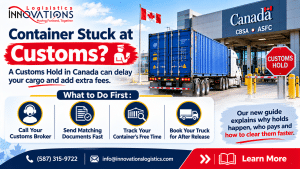
Wrong or late data can stop your cargo. The CBSA may hold the goods until someone fixes the record. Meanwhile, free time keeps running.
As a result, storage, demurrage and detention can add up fast. Our guide to customs hold in Canada explains what happens next. Our article on demurrage and detention charges in Canada explains the fees.
How to Avoid eManifest Delays: Step by Step
Follow these six steps before your cargo ships.
Step 1: Give Accurate Cargo Details
Send exact descriptions, quantities and weights to your forwarder. Make sure they match your invoice.
Step 2: Confirm Your Carrier and Forwarder Are Set Up
Both need a CBSA carrier code. Ask whether they file eManifest data for every shipment.
Step 3: Ask for the Number Early
Get the cargo control number as soon as it exists. Then share it with your broker.
Step 4: Check Every Document
Compare the number on each document. Fix any mismatch before the ship sails.
Step 5: Know the Deadline for Your Mode
Ask your carrier when they must file. Then give them your data well ahead of that time.
Step 6: Book Your Truck for After Release
Line up drayage before the goods clear. In Alberta, see our guide to drayage in Alberta.
How Innovations Logistics Supports Your Shipment
Your carrier, forwarder and customs broker handle the CBSA data. Innovations Logistics supports the transport and storage around it. Our drayage team moves containers after release. Our warehousing and transloading gives cargo a safe place to wait.
We also support bonded shipments and offer freight forwarding, intermodal service and container storage, rental and repair. Once your cargo moves, you can track your shipment online.
Cargo Control Number FAQs
What is a cargo control number?
It is a unique reference that identifies your shipment’s transport document to the CBSA. The carrier or forwarder assigns it.
How long is a cargo control number?
It can be up to 25 characters. It can include letters and numbers, and it starts with the CBSA carrier code.
What is a CCN in shipping?
CCN is the short form of cargo control number. Brokers, carriers and warehouses use it every day.
What is eManifest?
It is the CBSA’s advance cargo data system. Carriers and forwarders send cargo details before the goods arrive in Canada.
When must eManifest data reach the CBSA?
Marine data is due 24 hours before loading for most goods. Air is 4 hours, rail is 2 hours and highway is 1 hour before arrival.
Does the importer file eManifest?
Usually no. The carrier and forwarder file it. You must give them accurate cargo details.
Is a PARS number the same as a cargo control number?
For highway shipments, the bar-coded PARS number and the cargo control number must match. The CBSA gives this as its example.
What if my cargo control number is wrong?
Call your forwarder and broker right away. A wrong number can delay release, so fix it fast.
This guide is general information. Ask your licensed customs broker about your own shipment.
Need a truck after your cargo clears? Tell us your port, container details and delivery location. Call (587) 315-9722, email info@innovationslogistics.com, or request a free quote today.