
How to File a Freight Claim in Canada for Damaged or Lost Shipments
When a shipment arrives damaged, with missing items, or does not arrive at all, a freight claim can help you recover the value of the loss. But knowing how to file a freight claim is important because the process depends on the carrier, transportation mode, shipping terms, and type of loss.
For Canadian businesses, the safest approach is to document the problem immediately, notify the carrier in writing, keep the shipment and packaging available, collect the right documents, and submit a clear claim within the applicable deadline.
This guide explains the freight claim process in Canada step by step, including what to do when freight is damaged, lost, short, or damaged inside apparently good packaging.
What Is a Freight Claim?
A freight claim is a formal request for compensation from a carrier for freight that was damaged, lost, short, or otherwise affected while under the carrier’s responsibility.
A freight claim is different from simply calling customer service about a problem. A proper claim normally identifies the shipment, explains what happened, states the amount being claimed, and provides evidence supporting the loss.
Common reasons for filing a freight claim include:
- Damaged products
- Lost shipments
- Missing cartons or pieces
- Concealed damage
- Water or handling damage
- Damaged packaging that affected the goods
- Short shipments
The carrier will review the shipping documents, delivery records, condition of the freight, and other evidence before deciding the claim.
When Can You File a Freight Claim in Canada?
You may have grounds for a freight claim. Canadian businesses commonly encounter issues when goods arrive damaged, are delivered short, or fail to arrive.
1: Damaged freight
If products are visibly damaged when they arrive, document the condition before accepting the shipment. Examples include crushed cartons, broken pallets, torn packaging, or damaged products.
2: Lost shipment
A freight claim for lost shipment may apply when the carrier cannot deliver the shipment or confirms that the goods cannot be located. Do not assume that a shipment is legally considered lost simply because tracking has stopped updating. First ask the carrier to trace the shipment and confirm its status in writing.
3: Short shipment
A shortage occurs when fewer pieces or cartons arrive than the shipping documents show.
For example, if the bill of lading lists 20 cartons but only 18 arrive, record the shortage on the delivery documentation and notify the carrier promptly.
4: Concealed damage
Concealed damage is damage that is not obvious when the shipment is delivered but is discovered after the packaging is opened. This is one reason receiving teams should inspect shipments as soon as possible. Carrier rules can establish specific notification periods for concealed damage.
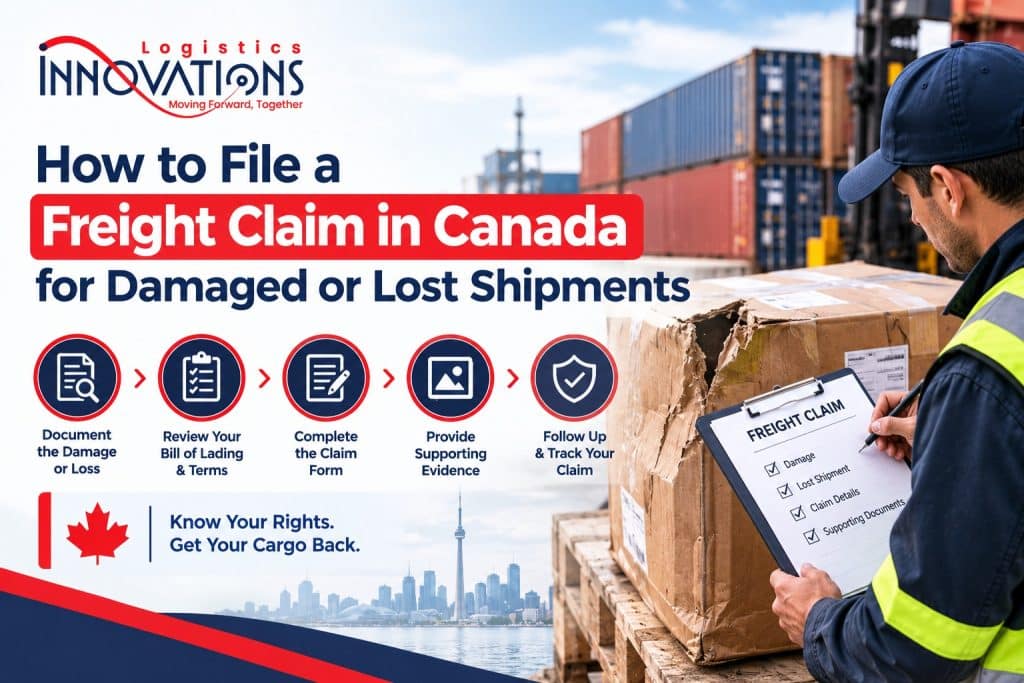
How to File a Freight Claim in Canada
The exact process varies by carrier, but these steps provide a practical starting point.
1. Inspect the shipment immediately
Check the cartons, pallets, wrapping, seals, and products before signing the delivery receipt.
Look for:
- Crushed or punctured packaging
- Broken pallets
- Water damage
- Missing pieces
- Open or damaged seals
- Visible product damage
- Packaging that appears to have been repaired during transit
Do not rely only on the outside of the shipment. If practical, inspect the contents as soon as possible after delivery.
2. Record the damage or shortage
If you see damage or missing freight, write a clear description on the delivery receipt or proof of delivery. Avoid vague comments such as “damaged” if you can provide more detail.
Take photographs showing:
- The entire shipment
- Damaged packaging
- Product damage
- Pallet condition
- Shipping labels
- Container or trailer condition where relevant
- Any visible seals or markings
Good photographs can help connect the condition of the goods to the condition of the packaging at delivery.
3. Notify the carrier
Contact the carrier as soon as possible and provide written notice. Do not rely only on a phone conversation. Keep an email, claim reference, online submission confirmation, or other written record showing that the carrier was notified.
For concealed damage, notify the carrier immediately after discovery. Some carriers have very short notification periods. For example, CMA CGM’s current Canadian cargo claim guidance specifies written notice within three days for certain ocean cargo claims.
4. Gather the supporting documents
A strong freight damage claim needs evidence. Depending on the shipment, you may need:
- Bill of lading
- Proof of delivery
- Freight invoice
- Commercial invoice
- Packing list
- Photos of the damage
- Photos of the packaging
- Inspection report, if requested
- Repair estimate
- Replacement cost documentation
- Shipment tracking records
- Written correspondence with the carrier
- Statement explaining the amount claimed
5. Calculate the amount of your claim
State exactly what you are claiming and how you calculated the amount.
For example:
- Product value: $4,500
- Repair cost: $800
- Other documented eligible costs: $200
- Total claim: $5,500
Do not automatically claim every business cost associated with the incident. Carrier liability may be limited by applicable laws, tariffs, contracts, bills of lading, declared value, exclusions, or other terms.
6. Submit the claim
Use the carrier’s official claims process. Some carriers provide online claim portals. Others accept claims by email or through their claims department.
Keep:
- Claim number
- Submission date
- Documents submitted
- Carrier contact information
- Emails and correspondence
- Inspection records
- Settlement offers
This information becomes important if the carrier asks for additional evidence.
7. Follow up
A submitted claim does not always mean the matter is finished. The carrier may request additional documents, inspect the freight, ask questions about packaging, or investigate where the damage occurred. Respond promptly and keep all communication organized.
Documents You Need for a Freight Claim
The most important documents usually establish three things:
1: What was shipped?
The bill of lading, packing list, and shipment records help establish what the carrier received.
2: What happened?
The proof of delivery, photographs, inspection report, tracking records, and damage notes help establish the condition and movement of the freight.
3: What was it worth?
Commercial invoices, supplier invoices, repair estimates, and other financial records help establish the value of the claim.
Keep the original damaged goods and packaging until the carrier tells you that they can be discarded. Some carriers may require an inspection before deciding the claim. Current Canadian carrier guidance specifically tells claimants to preserve damaged freight and packaging in certain situations.
How to Handle Damaged Freight at Delivery
The first few minutes after delivery can have a major effect on your documentation.
Use this quick receiving checklist:
- Inspect the outside of the shipment.
- Count the pieces or cartons.
- Check for visible damage.
- Photograph anything unusual.
- Record exceptions on the delivery receipt.
- Ask the driver to acknowledge the recorded exception when possible.
- Notify the carrier promptly.
- Preserve the damaged goods and packaging.
- Open the shipment and inspect concealed damage as soon as practical.
- Keep all documents together.
Do not throw away damaged packaging before the claim process is complete unless the carrier authorizes disposal.
What to Do If Your Shipment Is Lost
If your shipment has not arrived, start by asking the carrier to trace it.
Confirm:
- Pickup date
- Origin
- Destination
- Tracking or waybill number
- Last recorded location
- Expected delivery date
- Delivery attempts
- Current status
- Carrier investigation reference
Ask the carrier to confirm the shipment status in writing. If the carrier confirms that the freight is lost or cannot locate it after a reasonable investigation, prepare the freight claim for a lost shipment using the bill of lading, commercial invoice, proof of value, tracking information, and other supporting records. Do not wait unnecessarily. Claim deadlines can apply even while a shipment is being traced.
Freight Claim Deadlines in Canada
There is no single deadline that applies to every freight claim in Canada. This is an important point because the applicable deadline can depend on the carrier, mode of transportation, bill of lading, tariff, contract, and type of claim.
For many Canadian motor carrier shipments, industry guidance refers to a written notice period of 60 days after delivery for loss, damage, or delay, while non delivery can involve a different period. TST CF Express currently publishes these 60 day and nine month periods under its applicable Canadian bill of lading terms.
Ocean shipments can have different requirements again. CMA CGM, for example, currently specifies a three day written notice period for certain cargo damage claims. The practical rule is simple: check the carrier’s current terms before assuming a deadline applies to your shipment. Then notify the carrier as quickly as possible.
Common Reasons Freight Claims Are Delayed or Denied
A valid loss does not automatically guarantee payment. Claims can face problems when:
- Damage was not recorded at delivery
- The carrier was notified too late
- Required documents were missing
- The value of the goods was not supported
- Packaging was inadequate
- Damaged goods were discarded before inspection
- The wrong carrier was contacted
- The claim amount was unclear
- The shipment terms limited carrier liability
- The loss was caused by an event excluded under the applicable terms
Packaging is especially important for LTL and other shipments that may involve repeated handling. The carrier may examine whether the packaging was suitable for the transportation service used.
Freight Claim vs. Cargo Insurance
A carrier freight claim and cargo insurance are not the same thing. A freight claim seeks compensation from the responsible carrier under the applicable transportation contract, tariff, bill of lading, and law.
Cargo insurance provides separate financial protection according to the insurance policy. Carrier liability may not equal the full commercial value of your goods. Depending on the shipment, liability can be affected by declared value, contractual terms, applicable limits, exclusions, and the cause of the loss.
For high value, fragile, specialized, or time sensitive freight, businesses should understand the carrier’s liability before shipping and determine if additional cargo coverage is appropriate.
When a Logistics Partner Can Help
Managing freight claims can become difficult when your business handles multiple carriers, shipment modes, warehouses, and customers.
A logistics partner can help with areas such as carrier coordination, shipment documentation, tracking, transportation planning, and communication.
Innovations Logistics provides freight forwarding services for Canadian businesses and coordinates truck, rail, ocean, and air shipments, including carrier selection, documentation, shipment tracking, and transportation planning.
If freight problems are becoming a regular operational burden, reviewing your overall shipping process may help reduce future claims and make the claims process easier to manage.
Frequently Asked Questions
1. How do I file a freight claim in Canada?
Start by documenting the damage, shortage, or loss. Notify the carrier in writing, collect the bill of lading, proof of delivery, invoices, photographs, and other supporting documents, then submit the claim through the carrier’s claims process. Always check the carrier’s applicable deadline.
2. Can I file a freight claim for damaged goods after delivery?
Yes, concealed damage may still be claimable, but notification requirements can be strict. Contact the carrier immediately after discovering the damage and preserve the goods and packaging for possible inspection.
3. What documents are needed for a freight damage claim?
Common documents include the bill of lading, proof of delivery, commercial invoice, packing list, photographs, inspection reports, repair estimates, and records showing the value of the damaged goods. The carrier may request additional documents.
4. Who is responsible for filing a freight claim?
The appropriate claimant can depend on the shipping arrangement, contract, ownership of the goods, and carrier terms. The shipper, consignee, or another party with the legal or contractual interest in the goods may be able to file. Confirm the requirements with the carrier and applicable shipping documents.
5. How long do I have to file a freight claim in Canada?
There is no universal deadline for every Canadian freight claim. Different carriers and transportation modes can have different notification and filing periods. CN currently specifies four months for damage notification, while TST CF Express publishes a 60 day period for certain Canadian loss, damage, or delay claims and nine months for non delivery. Check the applicable carrier terms before relying on a deadline.
Conclusion
A freight claim is much easier to manage when you act quickly and keep good records.
Inspect the shipment at delivery, record visible damage or shortages, photograph the freight and packaging, notify the carrier in writing, preserve the evidence, and submit a complete claim with documents supporting both the loss and its value.
Most importantly, do not assume that one freight claim deadline applies to every shipment in Canada. Carrier terms, transportation mode, contracts, and applicable rules can change the process.
If your business needs help coordinating freight across Canada or managing transportation from pickup through delivery, Innovations Logistics can help with freight forwarding, carrier coordination, shipment tracking, and transportation planning.
For businesses that want more support with freight movement and logistics coordination, contact Innovations Logistics to discuss your shipping requirements.