
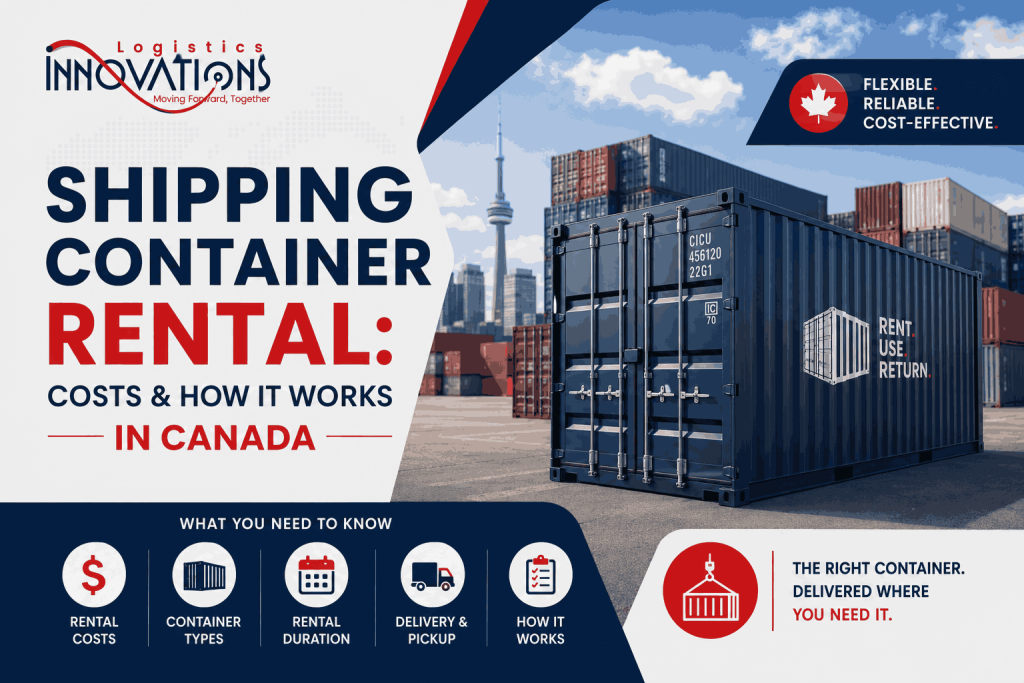
A shipping container rental gives Canadian businesses and customers secure storage without the upfront cost of buying a container. It can be useful for construction projects, inventory overflow, renovations, seasonal stock, equipment, and temporary storage.
So, how much does it cost to rent a shipping container in Canada? A 20 ft container commonly costs about C$100 to C$250 per month, while a 40 ft container often costs about C$175 to C$350 per month. Actual shipping container rental prices vary by location, supplier, container condition, rental period, availability, and delivery requirements. Delivery and pickup are often charged separately.
How Much Does It Cost to Rent a Shipping Container in Canada?
There is no single shipping container rental cost across Canada. Prices depend on the container size, condition, location, rental terms, and services included.
As a general Canadian planning guide:
Container size | Typical monthly rental range |
20 ft container | C$100–C$250 |
40 ft container | C$175–C$350 |
These are general planning ranges based on current Canadian rental listings, not fixed national rates. Some suppliers may advertise lower starting prices, while others charge more depending on local availability, container condition, rental length, and delivery requirements.
Specialty containers, such as high cube, refrigerated, modified, or office containers, may also cost more than standard storage units.
What Is Included in the Rental Cost?
The monthly rate is only part of the total cost. Depending on the supplier, you may also pay for:
- Delivery
- Pickup or collection
- Applicable taxes
- Site preparation
- Special placement requirements
- Insurance or damage waivers
- Additional rental time or contract changes
For example, a container advertised at C$150 per month may have separate delivery and pickup charges. Always request a complete quote so you know your expected total cost before agreeing to the rental.
What Affects Shipping Container Rental Rates?
Several factors can change shipping container rental rates in Canada.
Container Size
A 20 ft container is usually less expensive and requires less space for delivery and placement. A 40 ft container provides substantially more storage capacity but needs a larger delivery area.
Location
Rental prices can vary between Calgary, Edmonton, Vancouver, Toronto, Montreal, Halifax, and other Canadian locations. Local inventory, demand, transportation distance, and delivery requirements can all affect the final price.
Rental Duration
Short term rentals are useful for temporary projects, renovations, construction, or seasonal storage. Longer rental periods may qualify for better monthly rates, depending on the supplier.
Ask whether the agreement is month to month, fixed term, or subject to a minimum rental period.
Container Condition
Used and newer containers can have different rental prices. Before accepting a unit, check the doors, flooring, roof, walls, locking mechanism, and general condition.
If you are storing business inventory, equipment, or valuable materials, make sure the container is suitable for your intended use.
Delivery and Site Requirements
Delivery can be a significant part of your overall rental cost. The provider may consider the distance, truck requirements, site access, ground conditions, overhead clearance, and placement location.
Make sure the delivery route and placement area are ready before the container arrives.
20 ft vs 40 ft Shipping Container Rental
Choosing the right size can help you avoid paying for unused space or needing another container later.
Feature | 20 ft | 40 ft |
Storage capacity | Smaller | Larger |
Space required | Less | More |
Typical rental cost | Lower | Higher |
Best for | Smaller storage needs | Larger storage needs |
Common uses | Tools, inventory, equipment | Warehouse overflow, large inventory |
20 ft Shipping Container Rental
A 20 ft shipping container rental is a practical option for businesses, contractors, retailers, and customers who need secure storage without a large footprint.
It can work well for:
- Business inventory
- Tools and equipment
- Construction materials
- Seasonal products
- Small warehouse overflow
- Furniture during renovations
A 20 ft container can also be easier to place at sites with limited space.
40 ft Shipping Container Rental
A 40 ft shipping container rental provides roughly twice the floor area of a 20 ft container. It can make more sense when you need larger storage capacity.
Common uses include:
- Large inventory volumes
- Industrial equipment
- Construction supplies
- Warehouse overflow
- Manufacturing inventory
- Large commercial projects
A 40 ft high cube container can provide additional vertical space when storage height is important.
Before renting a 40 ft container, confirm that your site has enough space for delivery and safe placement.
How Does Shipping Container Rental Work?
The rental process is generally straightforward.
- Determine Your Storage Needs
Consider what you need to store, how much space you need, where the container will be placed, and how long you expect to rent it. - Choose the Container
Select a 20 ft or 40 ft container based on your storage requirements and available space. Ask about the container’s condition and features before accepting the rental. - Get a Complete Quote
Ask the provider to include the monthly rental rate, delivery, pickup, taxes, minimum rental period, and any other applicable charges. A complete quote makes it easier to compare shipping container rental prices accurately. - Confirm the Rental Terms
Check the billing cycle, minimum rental period, extension options, early return terms, and responsibility for damage or loss. Understanding these terms upfront can help prevent unexpected costs if your project timeline changes. - Prepare the Site and Arrange Delivery
The container needs suitable access and a stable placement area. Confirm requirements for gates, overhead clearance, ground conditions, and delivery access with the provider.
The provider then delivers and positions the container at your property or places it at a storage facility, depending on your rental arrangement.
- Use, Return, or Extend
After delivery, inspect the container for existing damage and report any issues according to the rental agreement. When you no longer need it, arrange pickup. If your project continues, ask about extending the rental period.
When Should You Rent a Shipping Container?
Renting is generally most useful when your storage needs are temporary, flexible, or uncertain.
Common situations include:
- Construction projects needing temporary equipment storage
- Retail businesses managing seasonal inventory
- Businesses experiencing warehouse overflow
- Renovations that reduce available storage
- Contractors storing tools and materials
- Businesses moving between locations
- Temporary storage during expansion
Renting can reduce the upfront financial commitment compared with buying a container. However, if you expect to use a container for many years, buying may provide better long term value.
To compare the two options, consider the purchase price, rental payments, delivery, pickup, maintenance, taxes, and potential resale value.
On-Site vs Off-Site Container Storage
You generally have two storage options.
On-site storage means the container is delivered directly to your property. It provides convenient access to inventory, equipment, and materials.
Off-site storage means the container is kept at a dedicated storage facility. This can be useful when your property does not have enough space or cannot accommodate container delivery.
The right option depends on your available space, access requirements, security needs, and how often you need to access your goods.
What to Ask Before Renting a Shipping Container
Before accepting a quote, ask:
- What is the monthly rental price?
- Is there a minimum rental period?
- How much are delivery and pickup?
- Are taxes included?
- What condition is the container in?
- Is it suitable for my intended storage?
- Are there additional placement charges?
- Who is responsible for damage or repairs?
- Is insurance or a damage waiver included?
- Can I extend the rental period?
- Is there a charge for early return?
Getting these details in writing makes it easier to compare providers and understand your actual shipping container rental cost.
Frequently Asked Questions
1: How much does it cost to rent a shipping container in Canada?
A standard shipping container rental commonly costs about C$100 to C$250 per month for a 20 ft container and C$175 to C$350 per month for a 40 ft container. Delivery and pickup may be additional. Actual rates depend on location, availability, size, condition, and rental terms.
2: How much is a 20 ft shipping container rental?
A 20 ft shipping container rental commonly costs about C$100 to C$250 per month in Canada. Your actual price may vary based on the supplier, location, container condition, rental period, and delivery requirements.
3: How much is a 40 ft shipping container rental?
A 40 ft shipping container rental commonly costs about C$175 to C$350 per month. High cube and specialized containers may cost more, while some suppliers may offer lower starting prices.
4: Are delivery and pickup included in the rental price?
Not always. Many Canadian suppliers charge delivery and pickup separately. The cost can depend on distance, location, access, equipment, and placement requirements. Always request a complete quote before renting.
5: Is renting a shipping container better than buying?
Renting can be better for temporary or flexible storage because it avoids the upfront cost of purchasing a container. Buying may provide better value for long term use. Compare the total rental cost with the purchase price, delivery, maintenance, taxes, and potential resale value.
Conclusion
A shipping container rental gives Canadian businesses and customers a flexible way to add secure storage without purchasing a container outright. A 20 ft unit is often suitable for smaller storage needs, while a 40 ft container provides substantially more space for larger operations.
The best rental decision is not based on the monthly price alone. Compare delivery, pickup, rental terms, container condition, site requirements, and your expected storage period.
If you need a container for storage, inventory, equipment, construction, or a temporary business requirement, Innovations Logistics can help you choose a suitable rental and storage solution based on your requirements.
Visit the Container Storage, Rental & Repair Services page for more information or request a quote for your specific needs.