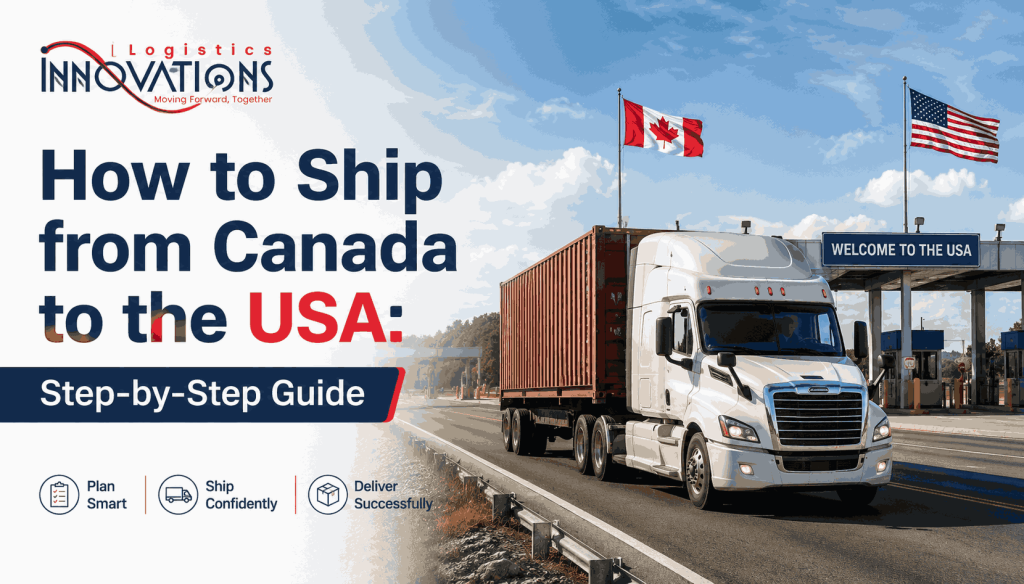
Shipping from Canada to the United States is part of everyday business for thousands of Canadian companies. From manufacturers and wholesalers to ecommerce brands and retailers, many businesses rely on fast and reliable transportation to keep products moving across the border.
If you are wondering how to ship from Canada to USA, the process involves much more than choosing a carrier. You need the right shipping method, accurate paperwork, customs compliance, and a logistics partner that understands cross border transportation.
This guide explains each step in simple terms so you can avoid delays, reduce shipping costs, and move your freight with confidence.
Step 1: Know What You Are Shipping
Before booking a shipment, identify exactly what you are sending. The type of cargo determines the shipping method, required documents, and customs requirements.
Ask yourself these questions:
- Is it a parcel or a freight shipment?
- Is it for personal or commercial use?
- Is the product restricted or regulated?
- Does it require temperature control or special handling?
- Is it fragile, oversized, or hazardous?
For businesses, commercial shipments usually require more documentation than personal shipments. Missing information can lead to customs delays and extra charges.
Check If Your Goods Can Enter the United States
Most products can cross the border without issues, but some goods require permits or inspections.
These may include:
- Food and beverages
- Medical devices
- Pharmaceuticals
- Chemicals
- Plants and agricultural products
- Firearms and ammunition
Always verify import requirements before shipping to avoid unexpected delays.
Step 2: Choose the Right Shipping Method
Selecting the right transportation option is one of the most important parts of shipping from Canada to USA. The best option depends on your shipment size, budget, delivery timeline, and destination.
Parcel Shipping
Parcel shipping works best for small packages and ecommerce orders.
It is commonly used for:
- Online retailers
- Small business orders
- Documents
- Individual packages
Major parcel carriers include Canada Post, UPS, FedEx, DHL, and Purolator.
Less Than Truckload Shipping
LTL shipping is ideal when your freight does not require an entire trailer.
Benefits include:
- Lower transportation costs
- Good for one to six pallets
- Regular cross border service
- Suitable for small and medium sized businesses
Full Truckload Shipping
FTL shipping is the preferred option for large shipments that fill an entire trailer.
Businesses often choose FTL because it offers:
- Faster transit times
- Fewer handling points
- Lower risk of damage
- Direct delivery
Freight Forwarding
Freight forwarding is a smart option for companies that regularly move freight across North America.
A freight forwarder coordinates transportation, shipping documents, customs processes, and carrier management, allowing businesses to focus on their operations instead of handling logistics themselves.
If your company ships freight across Canada and the United States regularly, working with a professional freight forwarding provider can save time and reduce costly shipping mistakes.
Step 3: Package Your Shipment Properly
Proper packaging protects your products throughout transportation and helps reduce damage claims. Good packaging also makes loading, unloading, and customs inspections easier.
Here are a few best practices:
- Use strong boxes or quality pallets.
- Secure freight with stretch wrap or straps.
- Add protective materials for fragile items.
- Clearly label every package.
- Include shipping labels and handling instructions.
For pallet shipments, stack products evenly and avoid overhanging boxes. Proper palletizing reduces the chance of freight shifting during transit.
Businesses shipping valuable equipment should also consider cargo insurance for additional protection.
Step 4: Prepare Your Shipping Documents
Incorrect paperwork is one of the biggest reasons shipments are delayed at the border. Before your freight leaves Canada, make sure all required documents are complete and accurate.
Commercial Invoice
The commercial invoice is one of the most important shipping documents.
It usually includes:
- Seller information
- Buyer information
- Product description
- Quantity
- Unit value
- Total shipment value
- Country of origin
- Currency used
Customs officers use this document to determine duties, taxes, and import eligibility.
Packing List
A packing list provides detailed information about the shipment.
It normally contains:
- Number of cartons or pallets
- Dimensions
- Weight
- Product quantities
- Package identification
This document helps customs officers and warehouse teams verify the shipment.
Bill of Lading
The Bill of Lading serves as the transportation contract between the shipper and the carrier.
It includes:
- Pickup location
- Delivery address
- Carrier details
- Freight description
- Shipping instructions
HS Codes
Every internationally traded product is assigned a Harmonized System code, commonly called an HS code.
Using the correct HS code is essential because it determines:
- Customs classification
- Import duties
- Trade regulations
- Border processing requirements
Incorrect product classification can result in customs delays, penalties, or additional costs.
Step 5: Understand Customs Clearance
Every commercial shipment entering the United States must go through customs clearance. This process allows US Customs and Border Protection to verify the shipment, review documentation, and assess any applicable duties or taxes.
A shipment with complete and accurate paperwork usually moves through customs much faster than one with missing or incorrect information.
Some shipments also qualify for duty-free treatment under the Canada-United States-Mexico Agreement, commonly known as CUSMA. If your goods meet the agreement’s rules of origin, you may pay lower or no import duties.
For smooth Canada to USA shipping, make sure you:
- Use accurate HS codes.
- Complete all shipping documents.
- Declare the correct shipment value.
- Include the country of origin.
- Provide any permits required for regulated goods.
Many businesses also work with a customs broker to help prepare documents, submit customs entries, and resolve issues if questions arise during the clearance process.
Step 6: Choose the Right Logistics Partner
Choosing the right carrier or logistics provider can make a significant difference in shipping costs, transit times, and customer satisfaction.
While some businesses only ship occasionally, companies that move freight across the border regularly often benefit from working with an experienced logistics provider.
Look for a company that offers:
- Cross border transportation
- Freight forwarding
- Warehousing
- Customs coordination
- Shipment tracking
- Reliable delivery across Canada and the United States
Instead of managing several transportation providers, many businesses prefer working with one logistics partner that can handle the entire shipping process from pickup to final delivery.
If your business ships freight throughout North America, Innovations Logistics provides Freight Forwarding Services, 3PL Logistics Services, Warehousing, Drayage, and Supply Chain Management to help businesses move freight efficiently across the Canada and US border.
Step 7: Book Your Shipment and Track Its Progress
Once your shipment is packaged and the paperwork is complete, you are ready to schedule pickup. Before confirming your shipment, review the following details:
- Pickup address
- Delivery address
- Number of pallets or packages
- Weight and dimensions
- Freight class if applicable
- Contact information
- Delivery requirements
After your shipment is collected, most carriers provide tracking updates throughout the journey. Monitoring your shipment allows you to identify delays early and keep customers informed about delivery times.
For businesses shipping regularly, real-time shipment visibility helps improve planning and customer service.
Step 8: Confirm Delivery and Keep Your Shipping Records
The shipping process does not end once the freight reaches its destination.
After delivery, verify that:
- The shipment arrived on time.
- The correct products were delivered.
- There is no visible damage.
- The receiver signed the proof of delivery.
It is also a good practice to keep copies of shipping documents, invoices, customs paperwork, and delivery confirmations. These records can help resolve customer questions, support accounting, and simplify future shipments.
Businesses that review their shipping performance regularly can often identify opportunities to reduce costs and improve delivery times.
How Long Does Shipping from Canada to the USA Take?
Transit times vary by mode and distance:
- Express courier (FedEx, UPS, DHL): 1 to 3 business days
- Standard parcel post: 4 to 7 business days
- LTL truck freight: 2 to 5 business days depending on distance
- FTL truck freight: 1 to 4 business days
- Rail freight: 5 to 10 business days
Customs clearance can add time if documents are incomplete or if the shipment is flagged for inspection. Clean documentation is the most effective way to keep transit times on schedule.
Common Mistakes to Avoid When Shipping from Canada to the USA
Many shipping delays are caused by simple mistakes that can easily be prevented.
Avoid these common issues:
- Using the wrong HS code
- Missing or incomplete commercial invoices
- Incorrect shipment values
- Poor packaging
- Choosing the wrong shipping method
- Failing to understand customs requirements
- Waiting until the last minute to prepare documents
Planning and reviewing your paperwork before shipping can save both time and money.
Frequently Asked Questions
How long does shipping from Canada to the USA take?
Delivery times depend on the shipping method, destination, customs clearance, and carrier. Parcel shipments may arrive within a few business days, while freight shipments can take longer depending on distance and service level.
What documents are required to ship from Canada to the USA?
Commercial shipments commonly require a commercial invoice, packing list, Bill of Lading, and the correct HS codes. Some products may also require permits or certificates.
Do I have to pay customs duties?
Some shipments qualify for reduced or duty-free treatment under CUSMA if they meet the agreement’s rules of origin. Duties depend on the product type and applicable trade regulations.
What is the best shipping method for businesses?
The right option depends on shipment size, budget, and delivery timeline. Parcel carriers usually send small packages, while larger shipments often use LTL, FTL, or freight forwarding services.
Should I use a logistics company for cross border shipping?
If your business ships freight regularly, a logistics provider can simplify transportation, customs coordination, warehousing, and shipment management while helping reduce delays and administrative work.
Conclusion
Understanding how to ship from Canada to USA is about more than booking transportation. Every shipment requires careful planning, proper documentation, customs compliance, and the right shipping method.
By following the steps in this guide, Canadian businesses can reduce delays, avoid unnecessary costs, and improve the overall shipping experience.
If your company ships freight across Canada and the United States, partnering with an experienced logistics provider can make the process much easier. From freight forwarding and warehousing to cross border transportation and supply chain support, Innovations Logistics provides reliable logistics solutions designed to keep your freight moving efficiently.
If you’re looking for a dependable partner for shipping from Canada to USA, contact Innovations Logistics to discuss your transportation requirements and receive a shipping solution tailored to your business.