
Moving freight across Canada is not always simple. Businesses often need to transport goods over long distances, navigate busy ports, and ensure products arrive on time. Relying on a single transportation method can increase costs and create delays, especially for shipments traveling across provinces or international borders.
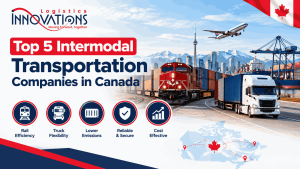
This is where intermodal transportation Canada plays an important role. By combining rail, trucks, and port operations into one coordinated system, businesses can move cargo more efficiently while controlling transportation costs.
From containerized freight arriving at Canadian ports to goods moving across the country by rail and completing final delivery by truck, rail intermodal transportation helps keep supply chains moving smoothly.
In this guide, you’ll learn what is intermodal transportation, how it works, the role of rail freight, the major Canadian ports involved, and the benefits it offers Canadian businesses.
What Is Intermodal Transportation in Canada?
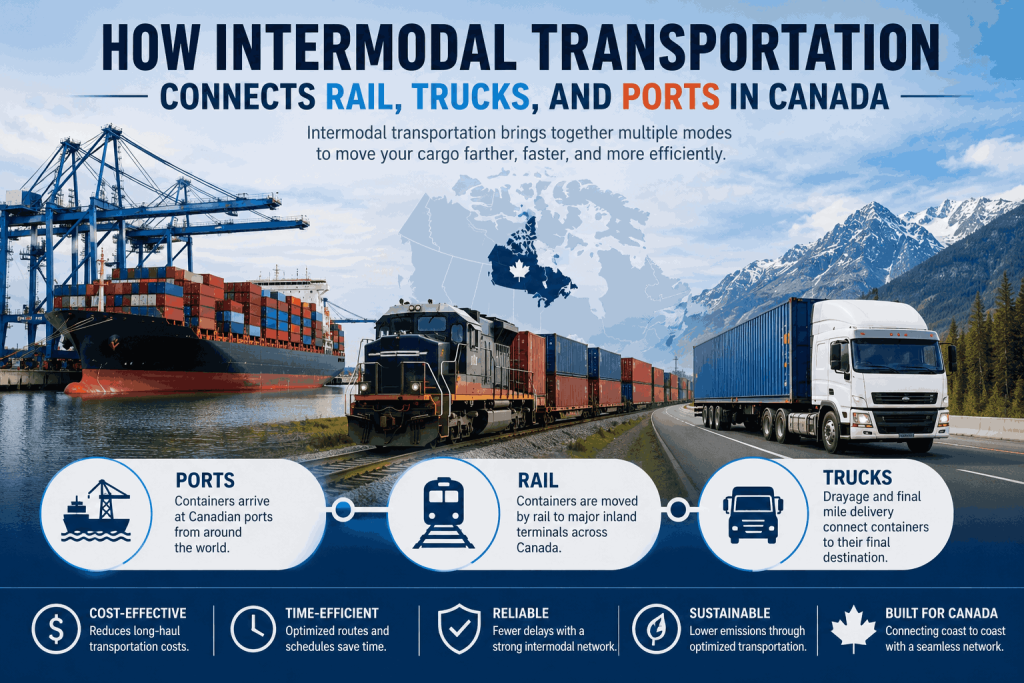
Intermodal transportation is the movement of freight using two or more modes of transport, most commonly rail, truck, and ship, without ever unloading the cargo itself. Instead, the goods remain in a standardized container that is transferred between modes of transport at key hubs called intermodal terminals.
So what is intermodal transportation in practical terms? Think of it this way: a container loaded with electronics in Shanghai arrives at the Port of Vancouver. From there, it’s lifted onto a CN or CP rail car and shipped east to a rail yard in Toronto. A truck then picks it up and delivers it to a distribution centre in Mississauga. The goods inside the container never get touched until the final destination.
This system works because:
- Containers are standardized 20-foot (TEU) or 40-foot (FEU) units that fit on ships, rail cars, and truck chassis.
- Transfer equipment is automated cranes and reach stackers, at intermodal terminals moves containers in minutes.
- Tracking is digital GPS and EDI systems that let shippers monitor cargo at every stage.
Canada’s geography makes intermodal logistics not just convenient but necessary. Spanning 9.9 million square kilometres with major trade corridors running east-west and into the United States, no single transport mode can cover the full journey efficiently on its own.
How Intermodal Logistics Connects Rail, Trucks, and Ports
The real strength of intermodal shipping in Canada comes from how tightly these three modes work together. Each one handles what it does best, and together they create a cost-efficient, high-capacity freight corridor.
Step-by-Step: How a Typical Intermodal Shipment Works
- Origin pickup: A drayage truck picks up the loaded container from a shipper’s facility or warehouse.
- Port or rail ramp delivery: The truck delivers the container to a port terminal or inland intermodal rail ramp.
- Long-haul rail movement: CN Rail or CPKC (Canadian Pacific Kansas City) moves the container hundreds or thousands of kilometres by rail.
- Destination terminal: The container arrives at a rail ramp or port close to the final delivery point.
- Last-mile delivery: Another drayage truck handles the final leg to the consignee.
This hub-and-spoke model reduces costs dramatically compared to over-the-road trucking for long distances. Rail freight in Canada costs roughly 3–4 times less per tonne-kilometre than road transport, making it the preferred backbone for intermodal logistics.
The Role of Drayage in Intermodal Freight Canada
Drayage, the short-distance trucking that connects ports and rail terminals to warehouses, is often overlooked. But without it, the whole system breaks down. Reliable drayage carriers are critical to keeping containers flowing through Canada’s intermodal network without delays.
If your business needs help managing drayage and intermodal freight solutions, Innovations Logistics offers end-to-end logistics support tailored to Canadian shippers.
The Role of Rail Freight in Canada’s Intermodal Network
Rail transportation is the backbone of Intermodal Freight Canada operations.
Canada’s large geography makes rail one of the most practical transportation methods for long-haul freight movement.
Why Rail Freight Matters
Lower Transportation Costs: Rail can move large volumes of freight over long distances at a lower cost than long-haul trucking.
Increased Capacity: A single train can carry hundreds of containers, helping businesses handle growing shipping demands.
Reduced Highway Congestion: Moving freight by rail reduces the number of trucks on major highways, improving traffic flow and road safety.
Environmental Benefits: Rail transportation generally produces fewer greenhouse gas emissions per tonne-kilometre compared to long-distance trucking.
Industries That Rely on Rail Intermodal Transportation
Many Canadian industries use rail intermodal services, including:
- Retail and consumer goods
- Manufacturing
- Automotive
- Agriculture
- Food and beverage
- Construction materials
- E-commerce distribution
As supply chains continue to grow, Rail Freight Canada remains essential for efficient freight movement across the country.
Major Canadian Ports Supporting Intermodal Shipping
Canadian ports are critical gateways connecting international trade with domestic transportation networks. These ports link ocean carriers, rail systems, and trucking companies to create seamless freight movement.
Port of Vancouver
The Port of Vancouver is Canada’s largest port and a major entry point for imports from Asia.
It supports:
- Containerized cargo
- Consumer goods
- Industrial products
- Agricultural exports
Rail connections from Vancouver help move freight quickly to major Canadian markets.
Port of Prince Rupert
Located in northern British Columbia, Prince Rupert offers a strategic gateway for trans-Pacific trade.
Benefits include:
- Shorter sailing times from Asia
- Efficient rail connections
- Reduced port congestion
Port of Montreal
The Port of Montreal plays a significant role in eastern Canadian trade.
It supports container shipping connections between:
- Europe
- Eastern Canada
- Central Canada
- U.S. markets
Port of Halifax
Halifax serves as a major Atlantic gateway for international cargo entering Canada. Its rail connections help distribute freight throughout the country.
Together, these facilities make Container Shipping Canada more efficient by connecting global shipping routes with inland transportation networks.
Benefits of Intermodal Freight Transportation in Canada
Many Canadian businesses choose intermodal transportation Canada because it provides both operational and financial advantages.
1. Lower Freight Costs
Rail transportation typically costs less than moving freight entirely by truck over long distances.
Businesses can reduce transportation expenses while maintaining reliable service.
2. Greater Supply Chain Efficiency
Using multiple transportation modes allows companies to optimize freight routes and improve delivery performance.
3. Enhanced Cargo Security
Containers remain sealed throughout most of the journey, reducing handling and minimizing the risk of damage.
4. Better Capacity During Peak Seasons
During periods of high freight demand, intermodal networks provide additional transportation capacity.
5. Reduced Environmental Impact
Many organizations are focusing on sustainability initiatives. Intermodal transportation helps reduce fuel consumption and emissions compared to long-haul trucking alone.
6. Strong Support for Importers and Exporters
Businesses involved in international trade benefit from seamless connections between:
- Ports
- Rail terminals
- Distribution centers
- Warehouses
- Final delivery locations
This makes intermodal logistics Canada an effective solution for both domestic and international freight movement.
When Should Businesses Use Intermodal Transportation?
Intermodal freight is often a good option when:
- Freight travels long distances.
- Cost savings are a priority.
- Delivery schedules are flexible.
- Cargo is containerized.
- Businesses want lower transportation emissions.
Companies moving freight across Canada often combine intermodal transportation with warehousing, transloading, and freight management services to improve overall supply chain performance.
FAQ: Intermodal Transportation Canada
1. What is the difference between intermodal and multimodal transportation?
Intermodal transportation uses a single standardized container that moves across multiple transport modes (truck, rail, ship) without the cargo being reloaded. Multimodal transportation also uses multiple modes, but may involve transferring cargo between different containers at each stage. Intermodal is generally faster and cheaper because the container itself never changes.
2. How does intermodal transportation work for cross-border Canada-U.S. shipments?
Canada-U.S. intermodal freight moves through shared rail networks, particularly CN and CPKC, both of which have extensive U.S. operations. Containers cross the border at designated points and are subject to customs clearance, typically using pre-clearance programs like ACI (Advance Commercial Information) to minimize delays.
3. Is intermodal shipping in Canada suitable for small and medium businesses?
Yes. While intermodal has historically been used by large volume shippers, consolidation services (LCL — less than container load) and third-party logistics providers now make it accessible to SMEs. Working with a freight broker or 3PL that specializes in intermodal logistics, Canada can get smaller shippers competitive rates.
4. What types of goods are commonly shipped via intermodal freight in Canada?
Almost any non-perishable cargo can be shipped well via intermodal. Common commodities include consumer goods, automotive parts, building materials, paper and forest products, chemicals (in approved containers), and retail merchandise. Refrigerated containers (reefers) also move perishables like food on intermodal networks.
5. How long does intermodal shipping take from Vancouver to Toronto?
The standard transit time for intermodal freight from Vancouver to Toronto via rail is approximately 5–7 business days, depending on the rail service, terminal dwell times, and drayage scheduling at either end. Expedited rail services can sometimes reduce this to 4–5 days.
Conclusion
Canada’s freight network depends heavily on strong connections between ports, railways, and trucking operations. Intermodal transportation Canada brings these systems together, allowing freight to move efficiently across provinces and international trade routes.
By combining the flexibility of trucks, the efficiency of rail, and the global reach of major ports, businesses can reduce costs, improve supply chain performance, and keep cargo moving reliably.
If you are looking for dependable freight solutions, warehousing and transloading services, or assistance with intermodal shipping Canada, Innovations Logistics offers transportation and logistics services designed to support businesses across Canada.
Visit Our Intermodal Transportation page to learn more about our solutions.