
Freight shipping costs in Canada can vary widely depending on the shipment size, distance, freight type, and delivery speed. If you’re a small business, shipping pallets across provinces or a company importing goods internationally, understanding freight shipping costs in Canada is essential for budgeting and choosing the right carrier.
In this complete guide, we’ll break down the average freight shipping rates Canada, explain what affects pricing, compare shipping methods, and show you how to reduce your transportation expenses. If you’re searching for reliable freight solutions, companies like Innovations Logistics provide customized shipping services across Canada and North America.
How Much Does Freight Shipping Cost in Canada?
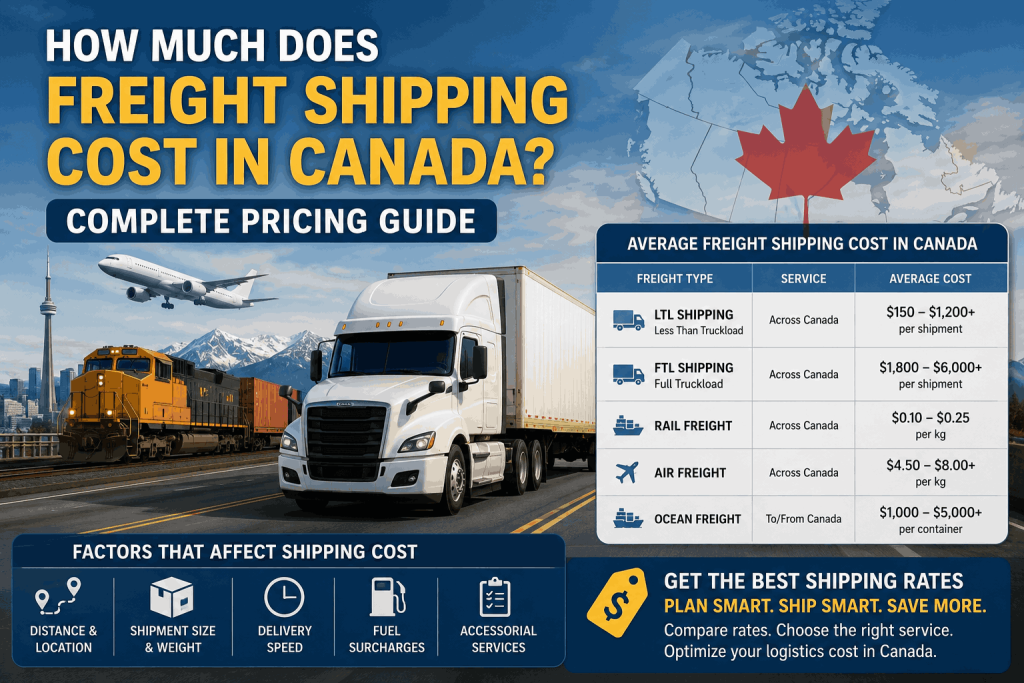
The average freight shipping cost in Canada ranges from:
Shipping Method | Average Cost |
LTL Freight (Less Than Truckload) | CAD $150–$800 |
FTL Freight (Full Truckload) | CAD $1,500–$6,000+ |
Air Freight | CAD $4–$12 per kg |
Rail Freight | Lower than truck freight for bulk shipments |
Ocean Freight | CAD $2,000–$8,000 per container |
These prices depend on several variables, including:
- Shipping distance
- Freight class
- Weight and dimensions
- Fuel surcharges
- Seasonal demand
- Customs and border fees
- Delivery urgency
Businesses often compare multiple freight shipping rates before booking to find the most cost-effective option.
What Affects Freight Shipping Cost in Canada?
Before diving into specific numbers, it’s helpful to understand what drives the price of any freight shipment. Here are the key factors every Canadian shipper should understand:
- Weight and dimensions: Heavier and bulkier freight costs more because it takes up more space and fuel. Carriers use both actual weight and dimensional weight (a calculation based on size) to determine your rate.
- Distance and lane: Longer routes cost more. However, high-volume lanes (like Toronto to Vancouver) often have more competitive rates than remote destinations.
- Mode of transport: Truck, rail, air, and ocean all come with very different price tags and transit times.
- Freight class: For LTL (less-than-truckload) shipping, the National Motor Freight Classification (NMFC) system assigns a class from 50 to 500 based on density, handling, and liability. Higher classes mean higher costs.
- Fuel surcharges: These fluctuate with diesel prices and are applied on top of base rates, typically adding 20–40% to the total bill.
- Accessorial charges: Things like liftgate service, residential delivery, inside pickup, or delivery appointments all add to the base rate.
- Seasonality: Peak season (fall, pre-holiday) drives freight rates up significantly due to higher demand.
Truck Freight Rates Canada
Truck freight remains the most common shipping method in Canada.
LTL vs FTL Shipping
LTL Freight (Less Than Truckload): LTL shipping combines freight from multiple businesses into one trailer.
Best for:
- Small shipments
- 1–6 pallets
- Budget-conscious shipping
Average pricing:
- CAD $150–$800
FTL Freight (Full Truckload): FTL gives one customer the entire truck.
Best for:
- Large shipments
- High-value goods
- Faster transit times
Average pricing:
- CAD $1,500–$6,000+
Companies using nationwide freight services often rely on providers like Us, Innovations Logistics for both LTL and FTL transportation solutions.
Rail Freight Rates Canada
Rail freight rates Canada are often lower than trucking costs for large-volume shipments.
Rail shipping is ideal for:
- Bulk commodities
- Heavy industrial goods
- Long-distance freight
- Agriculture and raw materials
Advantages of Rail Freight
- Lower fuel costs
- Reduced environmental impact
- Cost-effective for high-volume freight
Disadvantages
- Slower delivery times
- Limited route flexibility
- Requires terminal transfers
Businesses shipping across long distances often combine rail and truck transportation for better efficiency.
Air Freight Rates Canada
Air freight rates Canada are significantly higher than truck or rail shipping, but they provide unmatched speed.
Average air freight pricing:
- CAD $4–$12 per kilogram
Air freight works best for:
- Urgent deliveries
- Medical supplies
- Electronics
- High-value products
What Affects Air Freight Costs?
- Chargeable weight
- Airport fees
- Security screening
- Fuel surcharges
- International customs
For time-sensitive freight, air shipping may reduce delays and inventory shortages despite the higher cost.
Ocean Freight Rates Canada
For international imports and exports, ocean freight rates Canada are often the most affordable option.
Average Container Shipping Costs
- A 20-ft container costs between CAD $2,000 and $5,000 to ship.
- A 40-ft container costs between CAD $4,000 to $8,000, depending on the route and shipping conditions.
Ocean freight is commonly used for:
- Retail inventory
- Manufacturing goods
- Heavy machinery
- International trade
Ocean Freight Advantages
- Lowest cost per unit
- Best for large international shipments
Drawbacks
- Longer transit times
- Port congestion risks
- Customs delays
Freight Shipping Rates Comparison
Here’s a quick comparison of major freight transportation methods in Canada.
Shipping Method | Cost | Speed | Best For |
Truck Freight | Moderate | Fast | Domestic shipping |
Rail Freight | Low | Moderate | Bulk freight |
Air Freight | High | Very Fast | Urgent shipments |
Ocean Freight | Low | Slow | International cargo |
This type of freight shipping rates comparison helps businesses choose the best balance between cost and delivery time.
How to Calculate Freight Shipping Cost in Canada
Not sure where to start? Here’s a simple process to estimate your freight costs:
- Know your shipment details: Weight, dimensions, freight class, pickup and delivery locations.
- Choose your shipping mode: Truck (LTL or FTL), rail, air, or ocean.
- Get multiple quotes: Rates vary significantly between carriers and brokers.
- Factor in surcharges: Add fuel surcharges (often 20–40%) and any accessorial fees.
- Consider transit time vs. cost: The cheapest option isn’t always the right one if timing matters.
How to Reduce Freight Shipping Costs
Reducing freight expenses can improve profit margins significantly.
Practical Cost-Saving Tips
- Consolidate Shipments: Combining multiple shipments lowers per-unit transportation costs.
- Optimize Packaging: Use smaller pallets and reduce wasted space.
- Compare Carrier Rates: Different carriers offer different pricing models.
- Use Regional Warehousing: Shipping from warehouses closer to customers reduces transit costs.
- Plan Shipments Early: Last-minute freight bookings often cost more.
Frequently Asked Questions
How much does freight shipping cost in Canada?
Freight shipping costs in Canada typically range from CAD $150 for small LTL shipments to over CAD $6,000 for full truckload freight, depending on distance, weight, and shipping method.
What is the cheapest freight shipping method?
Rail and ocean freight are usually the cheapest options for large or bulk shipments. LTL trucking is affordable for smaller domestic freight.
How are freight shipping rates calculated?
Carriers calculate freight rates using shipment weight, dimensions, distance, freight class, fuel surcharges, and additional service requirements.
Are air freight rates more expensive than truck freight?
Yes. Air freight is significantly more expensive but offers much faster delivery times for urgent shipments.
How can businesses reduce freight shipping costs?
Businesses can lower shipping expenses by consolidating freight, optimizing packaging, comparing carriers, and working with experienced logistics providers.
Conclusion: Get the Right Freight Rate for Your Business
Understanding freight shipping costs in Canada isn’t just useful, it’s essential for keeping your supply chain competitive. From LTL and FTL truck freight rates to ocean and air freight pricing, there’s a wide range of options to choose from, and the right option depends on your cargo size, budget, and timeline.
The best way to consistently get competitive freight rates is to work with a trusted logistics partner who knows the Canadian market. Whether you’re shipping pallets across Canada or cross-border loads into the U.S., Innovations Logistics can help you move freight efficiently and affordably with transparent pricing and no extra charges.
Ready to get a freight quote? Contact Us today and let their team find the best rate for your next shipment.