
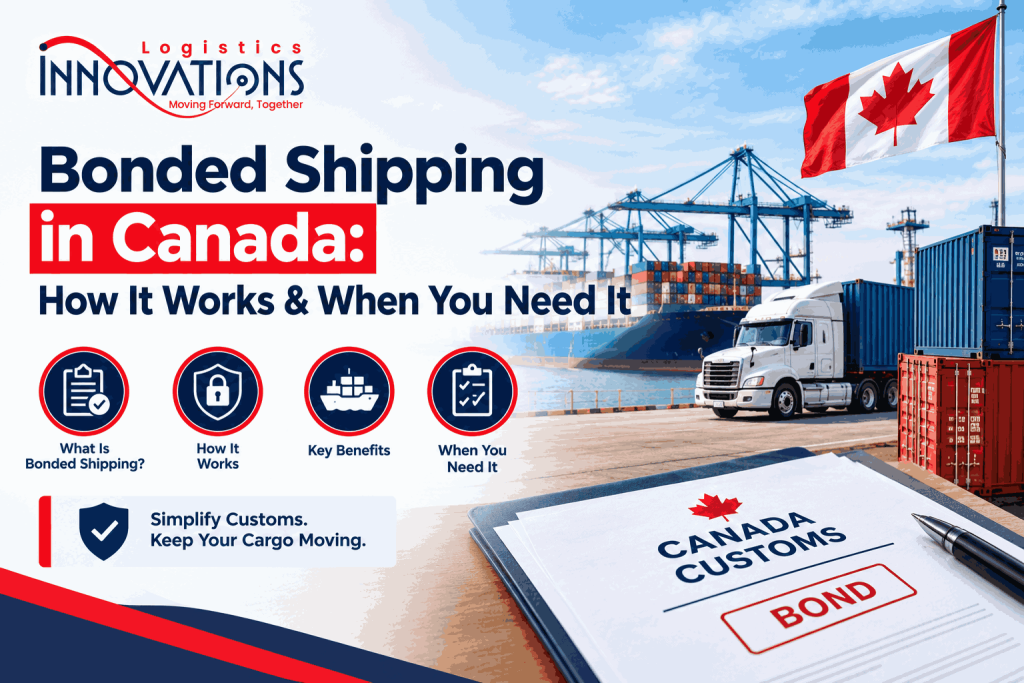
Bonded shipping in Canada allows eligible goods to move beyond the first point of arrival while remaining under customs control. This can be useful when imported cargo needs to move to an inland customs location, a sufferance warehouse, or through Canada without being released into the Canadian market.
For Canadian importers, exporters, manufacturers, retailers, and distributors, bonded shipping can provide more flexibility in how and where customs processing takes place. Understanding how bonded transportation works can also help businesses avoid unnecessary delays, handling, and customs issues.
What Is Bonded Shipping?
Bonded shipping is the transportation of eligible goods under customs control before they are released into Canadian commerce or otherwise processed under applicable customs requirements.
A bonded shipment remains subject to customs control while it is being transported. A bonded carrier or authorized freight forwarder assumes specific responsibilities for the movement and must meet the applicable Canada Border Services Agency (CBSA) requirements.
For example, cargo arriving at the Port of Vancouver may need to move to an approved inland location in Calgary before customs release. When the required conditions are met, a bonded carrier can transport the unreleased cargo inland while it remains under customs control.
The key point is that bonded shipping involves moving goods under customs control. It should not be confused with customs bonded warehousing, which concerns the storage of eligible goods under a separate CBSA program.
How Does Bonded Shipping Work in Canada?
The exact process depends on the shipment, transportation mode, destination, and customs requirements. A typical bonded freight Canada movement may follow these steps:
- Cargo arrives in Canada: The shipment reaches its first point of arrival, such as a port, airport, rail terminal, or border crossing.
- The shipment is reported to CBSA: The carrier or freight forwarder provides the required cargo information to CBSA. The applicable cargo control and reporting requirements allow customs authorities to identify and track the shipment.
- The goods remain under customs control: If the goods are not released at the first point of arrival, they remain under customs control while the authorized movement is arranged.
- A bonded movement is arranged: A bonded carrier or authorized freight forwarder handles the movement according to the applicable CBSA requirements.
- Cargo moves to an authorized destination: Depending on the circumstances, the goods may move to an inland CBSA location, a sufferance warehouse, or another authorized destination.
- Customs processing is completed: The importer or customs representative completes the required customs process. Once the applicable requirements are satisfied, the goods can be released or handled according to their final customs status.
This process can allow businesses to move cargo closer to its operational destination instead of requiring every shipment to complete customs processing at the first point of arrival.
When Do You Need Bonded Transportation in Canada?
You may need bonded transportation Canada when eligible goods cannot or should not be released at their first point of arrival. Common situations include:
1: Inland customs clearance: Your shipment arrives at a Canadian port or border crossing but needs to move to an inland customs location before release.
2: Transit through Canada: Goods may travel through Canada without being imported into the Canadian market. For example, eligible cargo can move through Canada from one international destination to another under the applicable customs procedures.
3: Movement to a sufferance warehouse: Imported goods may need to move to a licensed sufferance warehouse while customs processing is completed or before the next authorized movement.
4: Movement between customs-controlled locations: Unreleased goods may need to move between approved locations while remaining under customs control.
5: Complex international freight movements: Businesses using ocean, rail, air, highway, or multiple transportation modes may require coordinated bonded freight when cargo needs inland customs processing or controlled movement before release.
Not every shipment requires bonded transportation. If goods are properly released at the first point of arrival and can enter Canadian commerce, bonded transportation is generally not required for that movement.
Bonded Freight vs Regular Freight
The main difference is the customs status of the goods.
- Regular released freight has completed the applicable release process and can generally move into Canadian commerce.
- Bonded freight remains under customs control and requires the appropriate bonded movement process.
A regular carrier cannot simply take unreleased commercial goods inland because an importer requests it. The carrier, shipment, destination, and documentation must meet the applicable customs requirements.
This distinction is important because choosing the wrong transportation arrangement can result in delays, additional handling, or customs compliance problems.
What Are the Benefits of Bonded Shipping?
Bonded shipping can provide several practical benefits for Canadian businesses.
1: More flexibility in customs clearance: Cargo can move inland when customs processing is not being completed at the first point of arrival.
2: Fewer unnecessary freight movements: Businesses may be able to move cargo directly toward an appropriate inland location instead of arranging additional transportation after border clearance.
3: Support for cross-border supply chains: Bonded transportation can support eligible goods moving through Canada without entering the Canadian market.
4: Better coordination between logistics and customs: A bonded logistics provider can coordinate transportation with customs brokers, warehouses, terminals, and other parties involved in the shipment.
5: Potential duty and tax deferral through bonded warehousing: Bonded transportation itself should not be treated as an automatic duty and tax deferral program. However, eligible goods placed in a customs bonded warehouse can receive duty and tax treatment under the applicable CBSA rules while they remain in the warehouse.
The financial and operational benefit depends on the type of goods, customs program, shipment route, and how the cargo is handled.
Bonded Transportation vs Bonded Warehousing
These two services are related, but they serve different purposes.
Features | Bonded Transportation | Customs Bonded Warehousing |
Main purpose | Move goods | Store eligible goods |
Customs status | Goods remain under customs control during movement | Goods remain under customs control while stored |
Main use | Inland movement or eligible transit | Storage before release, sale, or export |
Location | In transit between authorized locations | Licensed customs bonded warehouse |
Duty and tax treatment | Depends on the applicable customs process | Eligible goods can receive deferral under the applicable program |
For businesses that need both transportation and storage, combining bonded freight with customs bonded warehousing can provide a more coordinated logistics solution.
What Does Bonded Shipping Cost?
There is no single price for bonded freight. The total cost can depend on several factors, including:
- Transportation mode and distance
- Shipment size and weight
- Bonded carrier or freight forwarder charges
- Customs brokerage requirements
- Warehouse storage and handling
- Port or terminal charges
- Documentation and customs processing
- Special handling or delivery requirements
Bonded transportation may cost more than a standard freight movement because of the additional compliance, documentation, and coordination involved. For this reason, businesses should compare the total logistics cost, rather than looking only at the transportation rate.
What Should You Check Before Choosing a Bonded Carrier?
Before choosing a provider for bonded shipping Canada services, ask:
- Do you have the required bonded carrier or freight forwarder authorization?
- Can you move the cargo to the required inland location?
- Do you handle the transportation mode required for my shipment?
- How are cargo documents and customs information managed?
- Can you coordinate with my customs broker?
- Do you have access to appropriate storage if customs clearance is delayed?
- Can you coordinate transportation with warehousing or transloading?
- What charges will apply to transportation, storage, handling, and customs-related services?
CBSA financial security requirements vary by transportation mode and type of bonded operation. For example, current CBSA guidance identifies specific security requirements for highway carriers, freight forwarders, rail, marine, and air operations. These security amounts are requirements for the bonded operation and should not be confused with a customer’s transportation price.
FAQs About Bonded Shipping
What is bonded shipping in Canada?
Bonded shipping in Canada is the movement of eligible goods under customs control before they are released into Canadian commerce or otherwise processed under applicable customs requirements.
What is bonded freight?
Bonded freight is cargo that remains under customs control while it is being transported. The carrier must follow the applicable requirements for the authorized bonded movement.
Do all imported shipments need bonded transportation?
No. Bonded transportation is generally used when eligible unreleased goods need to move beyond the first point of arrival or require another authorized in-bond movement. Goods that are properly released at the first point of arrival generally do not need bonded transportation for that movement.
Can a non-bonded carrier move an unreleased shipment?
In certain circumstances, CBSA provides a single-trip authorization process for a non-bonded carrier or freight forwarder. The requirements depend on the specific shipment and movement.
Does bonded shipping mean I do not pay duties and taxes?
No. Bonded transportation concerns the movement of goods under customs control. Duty and tax treatment depends on the applicable customs process. Customs bonded warehousing is a separate program that can provide eligible goods with duty and tax deferral while they remain in the warehouse.
Can bonded freight move through Canada?
Yes, eligible in-transit movements can travel through Canada under customs control when the applicable CBSA requirements are met.
Conclusion
Bonded shipping Canada can be an important part of international and cross-border logistics when eligible goods need to move under customs control before final release.
It can support inland customs clearance, movement to a sufferance warehouse, eligible transit through Canada, and coordinated freight movements between authorized locations.
The key is to arrange the movement correctly and confirm that the carrier, customs documentation, destination, and applicable security requirements are properly aligned.
If your business needs help with bonded shipment transportation, warehousing, transloading, or cross-border freight, Innovations Logistics can help coordinate the logistics services required for your shipment.
Contact Innovations Logistics to discuss your bonded freight requirements and request a quote.