
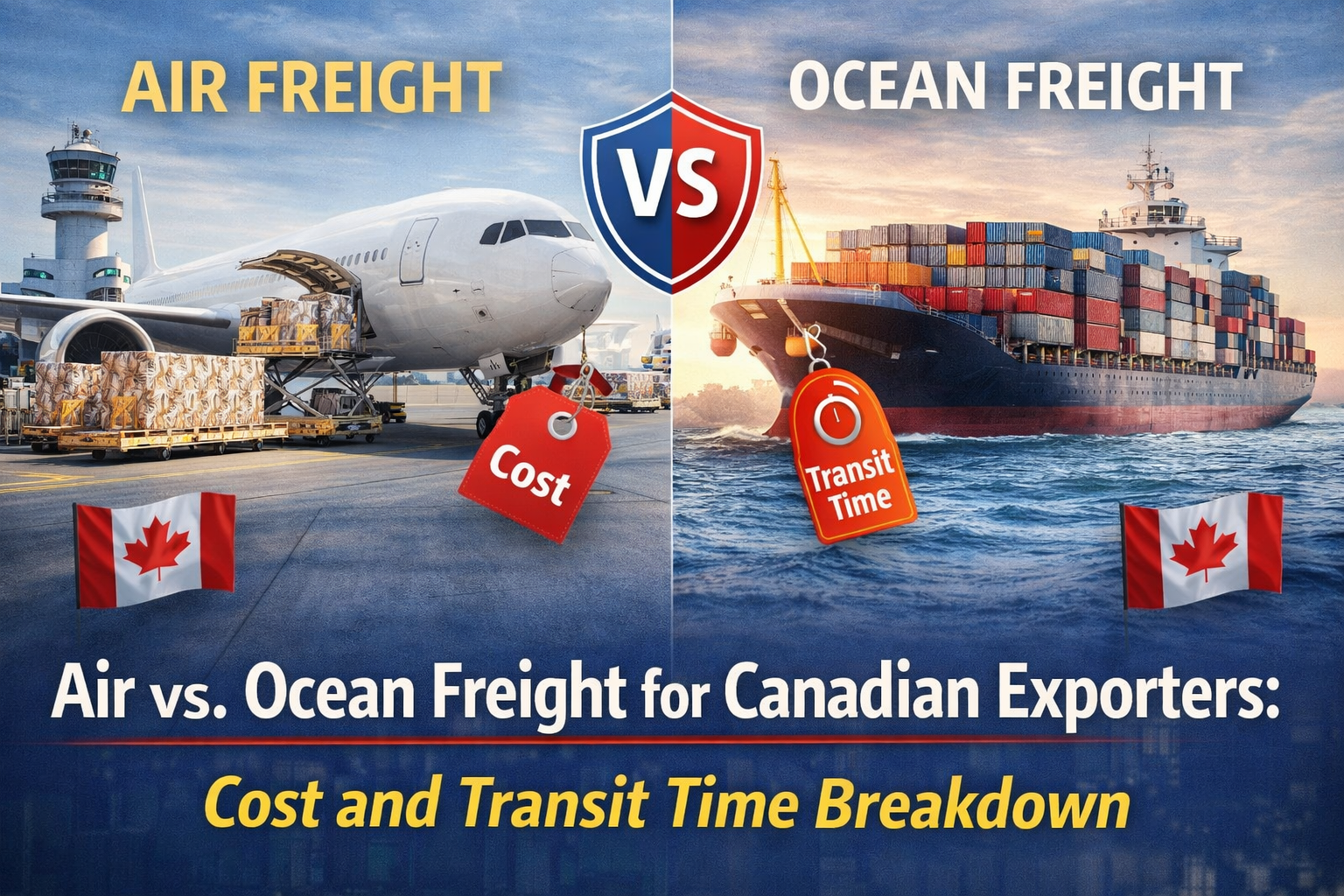
For Canadian businesses shipping goods overseas, choosing between air freight and ocean freight can feel overwhelming. Should you pay more for speed? Or save money and wait longer?
If you export from cities like Toronto, Vancouver, or Montreal, your freight decision directly affects your margins, delivery timelines, and customer satisfaction. In this guide, we’ll break down costs, transit times, pros and cons, and real-world scenarios to help Canadian exporters choose the right solution.
Understanding Air Freight and Ocean Freight
Before we compare numbers, let’s define both options clearly.
What Is Air Freight?
Air freight refers to the transportation of goods by aircraft. It is commonly used for:
- High-value products
- Time-sensitive shipments
- Perishable goods
- Small to medium cargo loads
International air freight typically moves through major hubs like Toronto Pearson and Vancouver International Airport. Air freight shipping is known for speed, reliability, and security.
What Is Ocean Freight?
Ocean freight involves transporting goods by sea using container ships. It is ideal for:
- Large shipments
- Heavy cargo
- Bulk commodities
- Non-urgent deliveries
Canada’s major ports, like the Port of Vancouver and the Port of Montreal, handle most ocean freight cargo heading to Asia, Europe, and the U.S. Ocean freight shipping remains the backbone of global trade due to its cost efficiency.
Cost Comparison: Air Freight vs. Ocean Freight
One of the biggest factors Canadian exporters consider is freight cost.
Ocean Freight Cost Breakdown
Ocean freight rates depend on:
- Container size (20ft or 40ft)
- Port charges
- Fuel costs
- Customs clearance
- Inland transport
Example:
Shipping a 20ft container from Vancouver to Shanghai:
- Ocean freight cost: $1,500–$3,000 (market dependent)
- Transit time: 25–35 days
Ocean freight cargo is much more cost-effective for heavy shipments.
Air Freight Cost Breakdown
Air freight cost is typically 4–6 times higher than ocean shipping.
Pricing is based on:
- Weight (actual or volumetric weight)
- Fuel surcharges
- Airport fees
- Customs handling
Example:
Shipping 500 kg from Toronto to Germany:
- Air freight cost: $3,000–$5,000+
- Transit time: 3–5 days
Air freight services are expensive, but they reduce inventory holding costs and prevent stockouts.
Transit Time Comparison: Air Freight vs. Ocean Freight
Transit time is often the deciding factor for exporters.
Air Freight Shipping Times
Transit time depends on the destination, but here are general estimates:
USA | 1–3 days |
Europe | 3–5 days |
Asia | 4–7 days |
Air freight shipping is ideal for time-sensitive shipments like:
- Electronics
- Medical supplies
- Perishable goods
- Urgent manufacturing parts
Ocean Freight Shipping Times
Ocean freight shipping takes significantly longer, but it’s much cheaper:
USA (coastal) | 7–14 days |
Europe | 20–30 days |
Asia | 25–40 days |
Add customs clearance and inland transport, and the total transit time can reach 30–45 days. However, ocean freight logistics is predictable when planned correctly.
Reliability and Risk Factors
Air Freight Reliability
Air freight services generally offer:
- More predictable schedules
- Lower damage rates
- Reduced theft risk
- Better tracking systems
Air cargo flights operate daily, minimizing delays.
Ocean Freight Risks
Ocean freight cargo may face:
- Port congestion
- Weather delays
- Labour disruptions
- Container shortages
For example, congestion at major ports like the Port of Vancouver has previously impacted transit times. However, experienced ocean freight services providers help mitigate these risks through route planning and buffer times.
Environmental Impact Considerations
Many Canadian companies now factor sustainability into logistics decisions.
- Air freight produces significantly higher carbon emissions.
- Ocean freight shipping is more environmentally efficient per tonne.
If ESG goals matter to your organization, ocean freight logistics may align better with your sustainability strategy.
Real-World Use Cases for Canadian Exporters
Case 1: Seafood Exporter in Atlantic Canada
Fresh lobster shipments require speed. Air freight cargo ensures delivery to Asian markets within days, preserving freshness and premium pricing.
Case 2: Machinery Manufacturer in Ontario
Heavy industrial equipment shipped to Europe benefits from lower ocean freight rates. Transit time is less critical than cost control.
Case 3: E-Commerce Brand in Toronto
When inventory runs low, air freight shipping restocks quickly. For regular replenishment, ocean freight cost savings protect profit margins.
Many exporters use a hybrid strategy:
- Ocean freight for bulk shipments
- Air freight services for urgent replenishment
Quick Comparison Table
Speed | 1–7 days | 15–45 days |
Cost | High | Low |
Best For | Urgent, high-value | Heavy, bulk |
Carbon Footprint | High | Lower |
Shipment Size | Small–Medium | Large, container loads |
How to Choose the Right Option
Ask yourself:
- How urgent is this shipment?
- What is the value per kilogram?
- Can my customer wait 30 days?
- What is my total landed cost?
- What are the current ocean freight rates?
At Innovation Logistics, we specialize in both air freight and ocean freight services, providing side-by-side quotes to help you make the most cost-effective shipping decision.
FAQ: Air vs. Ocean Freight for Canadian Exporters
1. Is ocean freight always cheaper than air freight?
Yes, in most cases. Ocean freight cost per kilogram is significantly lower, especially for large shipments.
2. How much faster is international air freight?
International air freight can be 4–6 times faster than ocean freight shipping.
3. When should I use air freight shipping?
Use air freight when shipments are urgent, high-value, or perishable.
4. What affects ocean freight rates?
Ocean freight rates depend on container size, route, fuel prices, seasonality, and global demand.
5. Can I combine air and ocean freight?
Yes. Many Canadian exporters use ocean freight logistics for regular shipments and air freight cargo for urgent needs.
Final Thoughts: Making the Smart Freight Decision
Choosing between air freight and ocean freight for Canadian exporters is not just about speed versus cost. It’s about aligning your shipping strategy with your business goals.
If you prioritize:
- Lower costs → Choose ocean freight shipping
- Faster delivery → Choose air freight shipping
- Balanced strategy → Use both strategically
The right logistics partner will analyze your cargo size, destination, timeline, and budget to recommend the best solution.
Ready to optimize your export shipping strategy?
Request a freight quote today and compare ocean freight services and air freight services side by side. The right choice could significantly improve your profit margins and customer satisfaction.