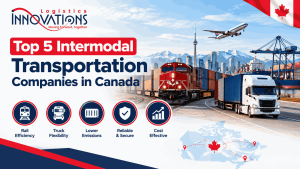

If you’re shipping goods across Canada or between Canada and the U.S., you’ve likely faced rising costs, delays, or capacity issues. That’s where intermodal transportation comes in.
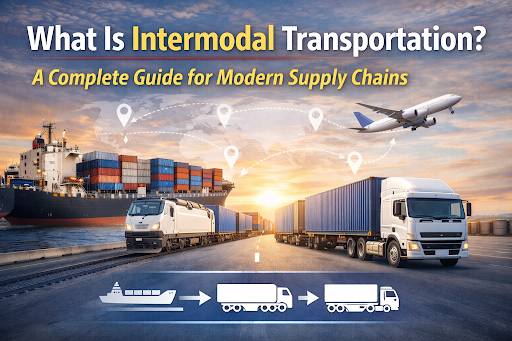
So, what is intermodal transportation? In simple terms, it’s a smarter way to move freight using multiple modes of transport like trucks, trains, and ships without handling the cargo itself during transfers.
For modern Canadian supply chains, intermodal transport offers a balance of cost savings, reliability, and sustainability. In this guide, you’ll learn the intermodal transportation meaning, how it works, its benefits, and when to use it for your business.
What Is Intermodal Transportation?
Intermodal Transportation Definition
Intermodal transportation is the movement of goods using two or more modes of transport (such as rail, truck, and ocean) in a single journey, without directly handling the cargo when changing modes.
Intermodal Transportation Meaning in Logistics
In logistics, intermodal transportation refers to using standardized containers that can easily transfer between:
- Trucks for first and last-mile delivery within Canadian cities and provinces
- Rail for long-distance inland transportation across Canada
- Ships for international trade through major ports like Vancouver, Montreal, and Halifax
This system ensures cargo stays in the same container, improving safety and efficiency.
How Intermodal Transportation Works
Understanding how intermodal freight moves can help you decide if it fits your supply chain.
Step-by-Step Process
Pickup | A truck collects the container from your warehouse |
Rail Transfer | The container is loaded onto a train for long-distance transport |
Destination Transfer | At the destination rail yard, it’s transferred back to a truck |
Final Delivery | The truck delivers the container to the final destination |
This combination, often called truck + rail intermodal transport, is the most common in Canada.
Types of Intermodal Transportation
Different combinations of transport modes are used depending on distance, cost, and urgency.
Common Intermodal Combinations
Truck + Rail | Best for long-distance inland shipping across Canada |
Truck + Ocean | Ideal for international shipments via ports |
Rail + Ocean | Used for large-scale imports/exports |
Truck + Air | Faster but more expensive option for urgent freight |
Benefits of Intermodal Transportation
Intermodal transport is growing fast in Canada, and for good reason.
Why Businesses Choose Intermodal Freight
- Lower transportation costs compared to full truckload over long distances, especially when rail is used for the main leg
- Improved fuel efficiency, since trains move more freight with less fuel per ton-mile
- Reduced cargo handling, which lowers the risk of damage or loss during transit
- Better capacity availability, especially during peak shipping seasons when trucks are limited
- Eco-friendly logistics, helping companies meet sustainability goals and reduce carbon emissions
For companies looking to optimize operations, working with Us, can help streamline intermodal shipping across Canada and cross-border routes.
Intermodal vs Multimodal Transportation
Many people confuse these two terms Intermodal vs Multimodal Transportation, but they’re not the same.
Key Differences
Containers | Same container throughout | May change containers |
Handling | Minimal handling | More handling possible |
Contracts | Multiple carriers | Single contract |
Risk | Lower due to fewer touchpoints | Slightly higher |
In short, intermodal transportation focuses on efficiency and container continuity, while multimodal transportation emphasizes simplicity through a single provider.
When Should You Use Intermodal Transportation?
Intermodal is not always the best choice, but it shines in specific scenarios.
Best Use Cases
- Long-distance shipping within Canada, such as Toronto to Vancouver
- Cross-border shipping between Canada and the U.S.
- Non-urgent freight, where cost matters more than speed
- High-volume shipments, where rail becomes more economical
If your business is scaling or dealing with frequent long-haul shipments, intermodal can significantly reduce logistics costs.
Challenges of Intermodal Transportation
While intermodal transport offers many advantages, it’s important to understand its limitations.
Common Challenges
- Longer transit times compared to direct trucking for short distances
- Complex coordination between multiple carriers and schedules
- Limited flexibility for last-minute changes
- Dependence on rail infrastructure, which may not be available in all regions
That’s why choosing the right logistics partner is critical for success.
How to Choose the Right Intermodal Logistics Provider
Selecting the right provider can make or break your shipping efficiency.
What to Look For
- Experience with Canadian and cross-border logistics
- Strong carrier network (rail and trucking partners)
- Real-time tracking and communication
- Transparent pricing and cost optimization strategies
A reliable partner like Innovations Logistics can help you integrate intermodal transportation into your supply chain without added complexity.
FAQ: Intermodal Transportation
1. What is intermodal transportation in simple terms?
Intermodal transportation means moving goods using multiple types of transport like trucks and trains without unloading the cargo from its container.
2. What is intermodal freight?
Intermodal freight refers to cargo that is transported using intermodal transportation methods, typically in standardized containers.
3. Is intermodal transportation cheaper than trucking?
Yes, for long distances, intermodal is usually more cost-effective because rail transport is cheaper than trucking over large distances.
4. What industries use intermodal transport?
Retail, manufacturing, agriculture, and e-commerce businesses commonly use intermodal transport for large and long-distance shipments.
5. What is the difference between intermodal and multimodal transportation?
Intermodal uses multiple carriers with the same container, while multimodal uses a single contract and may involve handling cargo between modes.
Conclusion
Intermodal transportation is no longer just an alternative, it’s a strategic advantage for modern supply chains in Canada.
By combining the strengths of truck, rail, and ocean freight, businesses can reduce costs, improve efficiency, and scale operations more effectively.
If you’re looking to optimize your shipping strategy, now is the time to explore intermodal solutions. Partnering with an experienced provider like Innovations Logistics can help you unlock the full potential of intermodal freight and keep your supply chain moving smoothly.