
When evaluating transport strategies in Canada, one of the most common questions logistics managers ask is:
Intermodal vs multimodal transport — which is better for cost, time, and risk?
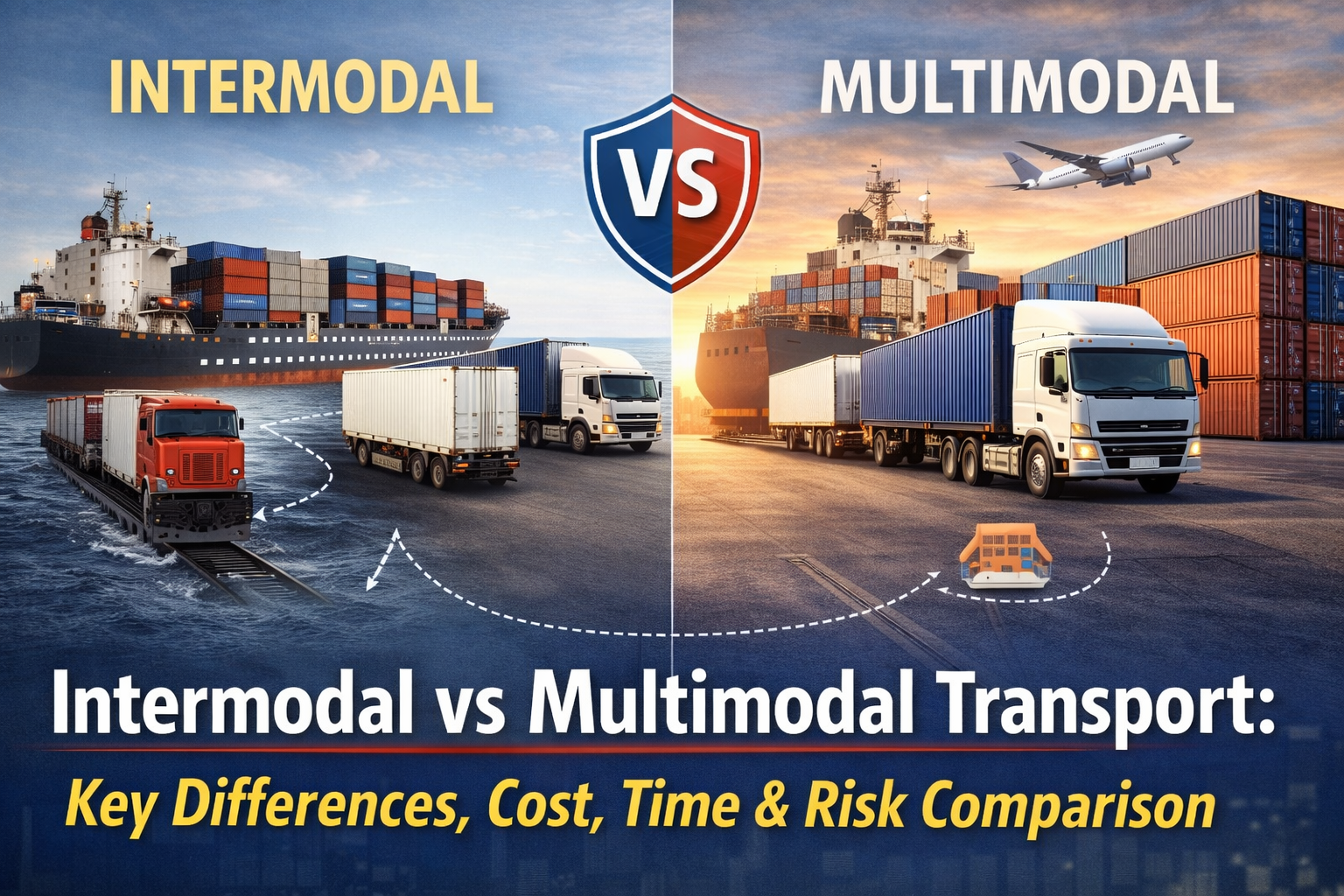
While both involve multiple modes of transport (rail, truck, ship, or air), the operational structure and liability handling differ significantly.
This guide explains:
- What is intermodal transportation
- What is multimodal transportation
- Intermodal vs multimodal transport differences
- Cost comparison
- Transit time impact
- Risk & liability considerations
If you’re optimizing supply chains across provinces or cross-border lanes, understanding this difference can directly affect your bottom line.
What Is Intermodal Transportation?
Intermodal transportation involves moving transport using two or more transportation modes, such as rail and truck, under separate contracts with each carrier.
The cargo stays in the same container throughout the journey, but responsibility is divided among different providers.
Key Characteristics of Intermodal Transport:
- Multiple carriers
- Separate contracts
- Standardized containers (usually 20ft or 40ft)
- Often includes rail + truck combination
- Popular for long-distance shipping
In Canada, intermodal transportation is widely used for:
- Ontario to British Columbia transport
- Cross-border U.S.–Canada shipments
- High-volume retail distribution
Rail plays a major role in reducing long-haul trucking costs.
What Is Multimodal Transportation?
Multimodal transportation also uses multiple modes (rail, truck, air, or sea), but under a single contract with one logistics provider.
That provider assumes full responsibility for the entire shipment.
Key Characteristics of Multimodal Transport:
- Single contract
- One point of contact
- Unified liability
- Simplified documentation
- Coordinated end-to-end movement
In multimodal transport, businesses deal with one operator who manages all transitions between transport modes.
Intermodal vs Multimodal Transport: Key Differences
Here’s a simple comparison of intermodal vs multimodal transport:
Container Handling | No handling between modes | Cargo may be handled between modes |
Contract | Separate contracts per carrier | Single contract for the entire shipment |
Risk of Damage | Lower | Slightly higher due to handling |
Cost | Cost-effective for long hauls | Can be higher if extra handling is needed |
Transit Time | Often faster | Can vary depending on mode changes |
Best For | Large, consistent shipments | Flexible, complex routes |
Cost Comparison: Intermodal vs Multimodal Transport
- Intermodal Transport: tends to be cheaper for long-distance shipments because it uses rail for part of the journey, which is more fuel-efficient than trucking.
- Multimodal Transport: may cost more due to additional handling, carrier coordination, or special equipment.
- Canadian logistics tip: Businesses shipping bulk goods across provinces or to the U.S. often save on cost using intermodal transport. Multimodal transport is ideal for routes where rail or road alone cannot reach the final destination efficiently.
Transit Time Comparison
- Intermodal transportation: Usually predictable transit times, especially for containerized rail + truck shipments.
- Multimodal transportation: Transit time can vary depending on how cargo is handled and the coordination between carriers.
Risk Comparison
When deciding between intermodal vs multimodal transport, consider these risk factors:
- Cargo damage: Intermodal has less handling, so lower damage risk.
- Delays: Multimodal can face delays when transferring cargo between modes.
- Customs & cross-border shipping: Both require proper documentation, but multimodal can add complexity with multiple operators.
When Should You Choose Intermodal Transportation?
Intermodal transport is ideal when:
- Long-distance shipping across provinces
- Cost reduction is top priority
- Shipment volume is high
- Transit time is flexible
- You have logistics expertise
Many large Canadian retailers and manufacturers use intermodal transport to reduce long-haul trucking costs.
When Should You Choose Multimodal Transportation?
Multimodal transport works best when:
- You prefer single-point accountability
- Your team wants simplified documentation
- You lack internal logistics management
- Risk control is critical
- Cross-border shipping requires coordination
For growing B2B companies, multimodal transport reduces operational complexity.
Environmental Impact Consideration
Intermodal transportation often lowers carbon emissions because rail produces fewer emissions per ton-mile compared to trucks. Businesses focusing on ESG goals often prefer intermodal solutions for sustainability reporting.
Final Thoughts
When comparing intermodal vs multimodal transport, the best choice depends on your shipment type, route, cost sensitivity, and delivery timeline.
- Intermodal transportation is ideal for long-distance, high-volume shipments with minimal handling.
- Multimodal transportation works well for flexible routes, single-contract shipping, and complex supply chains.
Partnering with experienced third-party logistics providers in Canada can help you select the right option, reduce shipping costs, and manage risk efficiently.
Frequently Asked Questions
1. What is intermodal vs multimodal transport?
Intermodal uses multiple modes without moving the cargo between containers. Multimodal uses multiple modes under one contract and may involve handling cargo between legs.
2. What is intermodal transportation?
It’s a shipping method where transport moves in the same container using trucks, rail, or ships without unloading between modes.
3. What is multimodal transportation?
It’s a shipping method using multiple modes under a single contract. Cargo may be transferred between modes as needed.
4. Which is cheaper in Canada?
Intermodal transport is usually cheaper for long-distance bulk shipments. Multimodal can cost more due to extra handling.
5. Is intermodal safer than multimodal?
Yes, because cargo is handled less during transit, reducing damage risk.