
Drayage is one of those logistics terms that most people have never heard, yet it plays a role in virtually every product you buy. If goods arrive at a Canadian port or rail yard and need to reach a nearby warehouse or distribution centre, that short-haul move is called drayage. It sounds simple, but without it, the entire supply chain grinds to a halt.
In Canada, where major ports like Vancouver, Halifax, and Montreal handle millions of containers every year, drayage services are the glue connecting ocean freight, rail, and final delivery. Whether you’re an importer, freight broker, or supply chain manager, understanding drayage meaning in logistics will help you make smarter decisions and avoid costly delays.
What Is Drayage? (Simple-Language Definition)
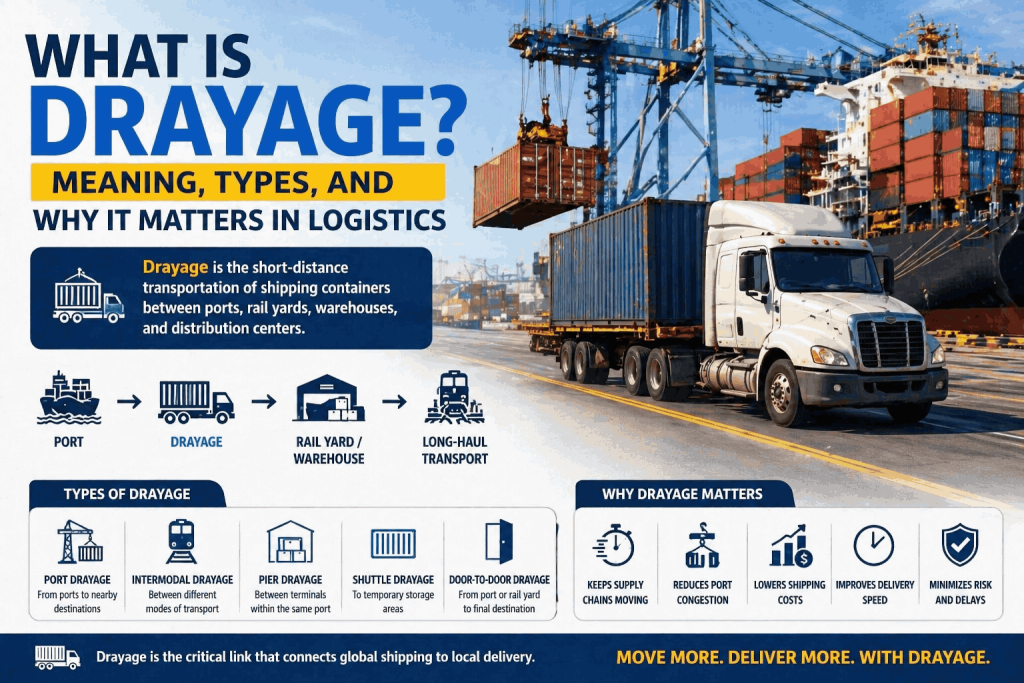
Drayage refers to the short-distance transportation of freight, usually a shipping container, between two nearby points in the supply chain. This typically means moving a container from a seaport or rail terminal to a warehouse, distribution centre, or another transportation hub, all within the same metro area or region.
The word comes from an old English term for a low cart (a “dray”) used to haul heavy loads. Today, drayage is done by specialized trucks and drayage carriers who know port operations, appointment scheduling, and container handling inside and out.
Key characteristics of drayage shipping:
- Distances are typically under 100 kilometres
- Almost always involves ISO shipping containers (20ft or 40ft)
- Occurs at ports, rail ramps, warehouses, and intermodal terminals
- Often, the most time-sensitive leg of the entire shipment journey
Types of Drayage Services: A Complete Breakdown
Not all drayage moves are the same. Here’s a clear breakdown of the main drayage service types used in Canadian logistics:
Drayage Type | What It Does | When It’s Used |
Moves containers between ports, rail terminals, and trucking hubs | Common in long-distance supply chains across Canada | |
Port Drayage | Transfers cargo from a port to a nearby warehouse or rail yard | Used right after goods arrive at ports like Vancouver or Montreal |
Intra-Carrier Drayage | Moves freight within the same logistics provider’s network | Used by large carriers operating multiple terminals |
Inter-Carrier Drayage | Transfers cargo between different transportation providers | Used when shipments change hands between carriers |
Shuttle Drayage | Temporarily relocates containers to storage yards due to congestion | Helpful when terminals or warehouses are full |
Expedited Drayage | Fast-tracked delivery for urgent shipments | Used when delays could disrupt supply chains |
How Drayage Works: Step by Step
Understanding the drayage process helps you see where delays happen and how to prevent them.
- Container arrives at port or rail yard: The shipping line notifies the consignee that freight is available for pickup.
- Customs clearance: In Canada, the Canada Border Services Agency (CBSA) must release the container before it can move.
- Drayage carrier picks up the container: The truck driver uses a chassis (a wheeled frame) to haul the container out of the terminal.
- Delivery to warehouse or facility: The container is dropped at the consignee’s dock for unloading.
- Empty container return: Once unloaded, the drayage driver returns the empty container to the shipping line’s depot.
Why Drayage Matters for Canadian Businesses
For Canadian importers and logistics operators, drayage transportation is often the most stressful part of the supply chain. Port congestion, chassis shortages, driver availability, and CBSA processing times all affect how quickly containers move. A delay in drayage can trigger:
- Demurrage fees: daily charges from the shipping line for keeping a container at the port past the free time
- Detention fees: charges for keeping the chassis or container at your facility too long
- Production shutdowns: if you’re in manufacturing, late parts stop the line
- Lost sales: if products don’t arrive in time for seasonal demand or retail windows
Working with an experienced drayage service provider can eliminate most of these risks. At Innovations Logistics, our team manages Canadian port pickups, customs coordination, and timely container delivery so your supply chain keeps moving without costly surprises.
Difference between Drayage and Freight Shipping
Feature | Drayage | Freight Shipping |
Distance | Short-distance | Long-distance |
Purpose | Connect transport modes | Move goods across regions |
Transport | Mostly trucks | Ships, planes, trains, trucks |
Role | Part of a larger journey | Entire shipping process |
Frequently Asked Questions About Drayage
Here are the most common questions Canadian shippers ask about drayage:
What is drayage in logistics?
Drayage is the short-distance trucking of freight, usually containers, between ports, rail yards, and warehouses.
What is drayage transportation used for?
It connects different parts of the supply chain, helping cargo move between ships, trains, and trucks.
How much does drayage cost in Canada?
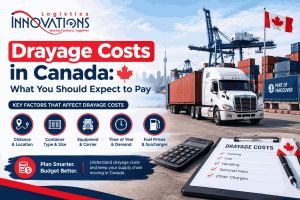
Drayage costs in Canada vary by distance, container size, fuel surcharges, and port congestion fees. Rates range from $200 to $800+ per move, with added fees for detention, chassis rental, or hazardous goods.
Why is drayage important in Canada?
Due to long shipping distances and busy ports, drayage ensures efficient cargo movement and prevents delays.
Final Thoughts:
Drayage may sound like a small part of logistics, but it carries a massive responsibility. It’s the short-distance move that keeps the entire supply chain connected linking ports, rail terminals, and warehouses into one smooth operation. When drayage goes wrong, delays, extra costs, and disruptions quickly follow.
For Canadian businesses importing or moving goods through major hubs like Vancouver, Montreal, Calgary, or Halifax, understanding what is drayage in logistics isn’t just helpful, it’s essential. The right drayage strategy can improve delivery times, reduce costs, and keep your operations running efficiently.
Need reliable drayage and intermodal logistics support in Canada? Contact Innovations Logistics today to discuss your container movement needs and get a customized quote. We handle the complexity so your freight arrives on time, every time.