
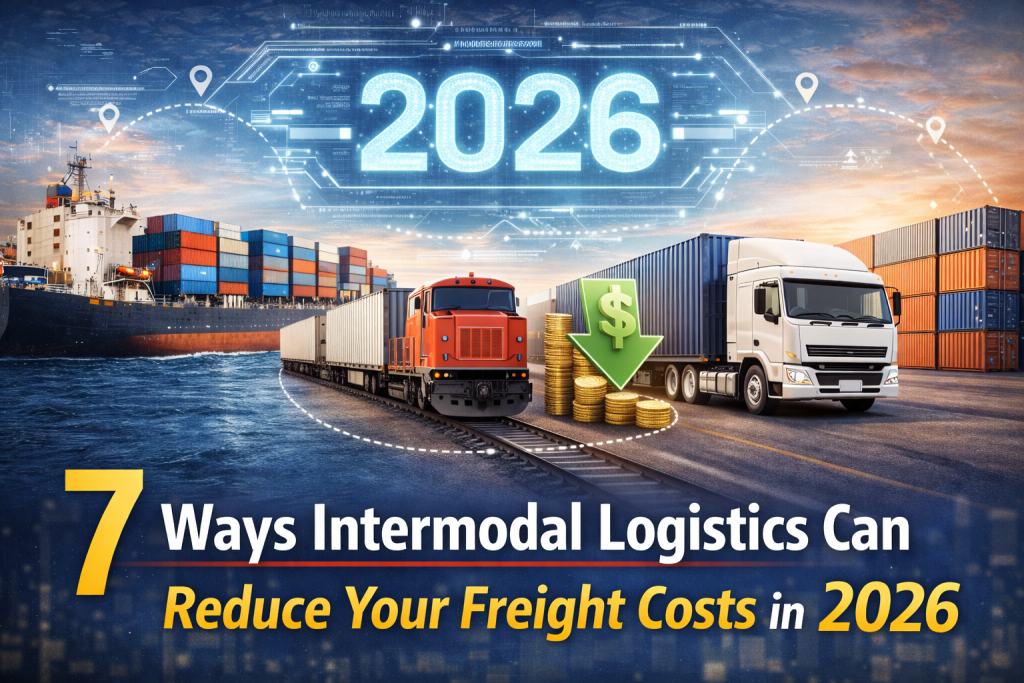
Rising fuel prices, driver shortages, and cross-border delays are pushing freight costs higher across Canada. If your business depends on shipping, you’ve likely felt the pressure. The good news? Intermodal logistics offers a smarter, more cost-efficient solution.
By combining rail, truck, and sometimes sea transport, businesses can significantly cut expenses without sacrificing reliability. In this guide, you’ll discover 7 practical ways intermodal logistics can reduce your freight costs in 2026, along with actionable insights.
Why Intermodal Logistics Is Gaining Popularity in Canada
Intermodal logistics involves moving freight using multiple modes of transport in one seamless journey, usually rail and truck. This approach is becoming a go-to solution due to:
- Lower fuel consumption compared to full truckload shipping
- Reduced reliance on long-haul drivers
- Better scalability for growing businesses
- Improved environmental sustainability
1. Lower Fuel Costs Through Rail Efficiency
Rail transport is far more fuel-efficient than trucking. On average, trains can move one ton of freight over 200 km on a single litre of fuel.
How this reduces costs:
Rail uses less fuel per ton-mile | Direct reduction in intermodal transportation costs |
Less exposure to diesel price spikes | Predictable shipping budgets |
Efficient long-haul transport | Ideal for cross-country Canadian routes |
This is one of the biggest drivers of intermodal freight savings, especially for long-distance shipments between provinces like Ontario and British Columbia.
2. Reduced Labour and Driver Expenses
Driver shortages continue to affect the Canadian logistics sector. Long-haul trucking requires more labour hours, higher wages, and additional compliance costs.
Cost-saving advantages:
- Rail handles the long-distance portion, reducing driver workload
- Fewer overnight trips mean lower accommodation expenses
- Reduced overtime and compliance-related costs
This shift helps companies significantly reduce freight costs with intermodal strategies.
3. Optimized Long-Distance Shipping Costs
Intermodal shipping is especially cost-effective for distances over 700 km.
Why it works:
Higher for long distances | |
Intermodal Transport | Lower due to rail integration |
For Canadian businesses shipping across provinces or into the U.S., intermodal shipping costs can be 10–30% lower compared to traditional trucking.
4. Lower Risk of Damage and Claims
Freight handled multiple times increases the risk of damage. Intermodal containers minimize this issue.
Key benefits:
- Cargo stays in the same container throughout the journey
- Reduced handling lowers the chance of damage
- Fewer insurance claims and associated costs
This contributes directly to lowering overall intermodal freight costs over time.
5. Better Scalability During Peak Seasons
Peak seasons can drive up trucking rates due to high demand. Intermodal offers more consistent pricing.
How businesses benefit:
Holiday shipping rush | Stable rail capacity reduces price spikes |
Sudden demand increase | Easier to scale without huge cost jumps |
Canadian retailers and manufacturers can better manage intermodal transportation costs during busy periods.
6. Environmental Incentives and Cost Benefits
Canada is pushing for greener logistics solutions. Intermodal transport produces fewer emissions than trucking.
Financial advantages:
- Potential tax incentives for sustainable shipping
- Lower carbon taxes in some provinces
- Improved brand image leading to customer retention
Using intermodal logistics solutions not only saves money but also aligns with sustainability goals.
7. Improved Network Efficiency and Route Optimization
Intermodal systems rely on well-established rail networks across Canada, allowing for optimized routing.
Cost-saving impact:
- Reduced empty miles compared to trucking
- Efficient hub-and-spoke distribution systems
- Faster transit times on high-volume routes
This results in better planning and reduced overall intermodal freight costs.
How to Get Started with Intermodal Logistics in Canada
If you’re considering making the switch, here are practical steps:
- Analyze your shipping lanes and identify long-distance routes
- Compare current trucking costs with intermodal options
- Partner with a reliable logistics provider
- Test with a pilot shipment before scaling
A trusted logistics partner can help you unlock full intermodal freight savings while minimizing risks.
FAQs About Intermodal Logistics and Freight Costs
1. What is intermodal logistics in simple terms?
Intermodal logistics means using more than one mode of transportation, like rail and truck, to move goods efficiently in a single container.
2. How much can intermodal reduce freight costs?
Businesses can typically save between 10% and 30%, depending on distance, cargo type, and route.
3. Is intermodal shipping slower than trucking?
It can be slightly slower for short distances but is often comparable or faster for long-haul routes.
4. What types of freight work best for intermodal transport?
Non-urgent, high-volume shipments over long distances are ideal for intermodal shipping.
5. Is intermodal logistics reliable in Canada?
Yes, Canada has a strong rail network, making intermodal transport a dependable and cost-effective option.
Conclusion:
Freight costs aren’t going down anytime soon, but your expenses can. By adopting intermodal logistics, Canadian businesses can reduce fuel costs, lower labour expenses, and improve overall efficiency. Whether you’re shipping across provinces or managing cross-border logistics, intermodal is a strategic advantage in 2026.
If you’re ready to reduce your intermodal freight costs and improve supply chain performance, consider working with an experienced provider like us, Innovation Logistics, to build a solution tailored to your business. Start optimizing your shipping strategy today and turn logistics into a competitive edge.