

Choosing the right logistics company in Canada can significantly impact your supply chain. Whether you run an e-commerce store, a manufacturing company, or a retail brand, logistics significantly impact delivery speed, costs, and customer satisfaction.
Many businesses struggle with late deliveries, poor tracking, or hidden shipping fees. These problems often happen because they partnered with the wrong logistics provider.
The good news? With the right checklist, you can confidently choose a logistics partner that supports your growth, reduces costs, and keeps your operations running smoothly.
In this guide, we’ll walk through exactly how to choose the right logistics company in Canada, including the most important factors, so you can avoid costly mistakes and build a more efficient supply chain.
Why Choosing the Right Logistics Partner Matters
A logistics company does more than just move packages. They become a key part of your supply chain management, helping with warehousing, transportation, fulfillment, and inventory handling.
The right partner can help businesses:
- Reduce shipping costs
- Deliver products faster
- Improve inventory accuracy
- Scale operations during peak seasons
- Manage cross-border shipping
Many Canadian fulfillment providers also negotiate lower shipping rates with carriers due to high shipping volumes, which can reduce overall logistics costs for businesses. But choosing the wrong provider can lead to shipping delays, compliance issues, and unhappy customers.
Checklist: How to Choose the Right Logistics Company in Canada
Use the following checklist when evaluating a logistics provider in Canada.
1. Verify Licenses, Certifications, and Compliance
Your first step is to confirm that the company operates legally. In Canada, logistics companies must follow strict transportation and safety regulations. Verify that the provider:
- Has valid transportation licenses
- Meets federal and provincial regulations
- Carries adequate cargo insurance
- Follows safety compliance standards
Checking regulatory status ensures the company can legally handle interprovincial or cross-border freight shipments.
Tip: Always request proof of insurance and compliance documentation.
2. Evaluate Their Logistics Services
Not every logistics company offers the same services. Some specialize in third-party logistics (3PL), while others focus on transportation only.
Look for services that match your business needs:
Core logistics services
- Freight transportation (LTL / FTL)
- Warehousing
- Order fulfillment
- Inventory management
- Last-mile delivery
Advanced services
- Reverse logistics (returns management)
- Cross-border shipping
- Customs brokerage
- Packaging and labeling
- E-commerce fulfillment
Businesses that sell online often benefit from a 3PL provider in Canada that integrates directly with platforms like Shopify or Amazon.
3. Assess Technology and Shipment Tracking
Modern logistics relies heavily on technology. A reliable provider should offer:
- Real-time shipment tracking
- Transportation Management Systems (TMS)
- Automated inventory reporting
- Route optimization tools
- Data analytics for supply chains
Technology improves efficiency and gives businesses visibility into shipments and delivery timelines. Without tracking systems, you risk delays and poor communication with customers.
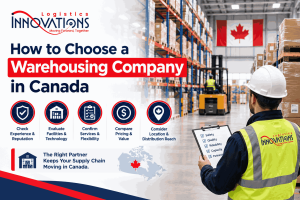
4. Review Warehouse Locations and Distribution Network
Location plays a huge role in shipping efficiency. A logistics company with strategically located warehouses across Canada can significantly reduce delivery times.
Look for providers with distribution centers near:
- Toronto (GTA)
- Vancouver
- Montreal
- Calgary
Facilities located near major transportation hubs often provide faster and more reliable shipping.
Example: If most of your customers are in Ontario and Quebec, a logistics partner with warehouses in the Greater Toronto Area (GTA) can reduce transit times.
5. Check Scalability and Flexibility
Your logistics partner should grow with your business.
For example:
- Can they handle seasonal spikes?
- Do they support expanding inventory?
- Can they scale operations during peak seasons?
Fulfillment centers often have the infrastructure to manage sudden growth or fluctuating demand without businesses needing to invest in additional storage or staff.
This flexibility is especially important for:
- E-commerce brands
- Retail businesses
- Growing startups
6. Compare Pricing and Hidden Costs
Price matters, but the cheapest option is rarely the best. When comparing logistics companies, request a full pricing breakdown:
Ask about:
- Storage fees
- Pick-and-pack charges
- Fuel surcharges
- Delivery rates
- Returns processing fees
Transparent pricing helps you avoid unexpected logistics expenses later.
7. Evaluate Industry Experience
Experience matters in logistics. Some companies specialize in certain industries, such as:
- Retail and e-commerce
- Manufacturing
- Food and beverage
- Healthcare logistics
- Industrial freight
A provider with industry experience understands regulatory requirements, packaging standards, and shipping challenges specific to your sector.
8. Read Reviews and Customer Testimonials
Before making a final decision, research the company’s reputation.
Look for:
- Google reviews
- Case studies
- Client testimonials
- Industry certifications
You can also ask for client references from businesses similar to yours.
9. Assess Customer Support and Communication
Logistics issues can cause delays, weather disruptions, or customs problems. The key is how quickly your logistics partner responds.
Ask these questions:
- Do they provide a dedicated account manager?
- Is support available 24/7?
- How quickly do they resolve shipping issues?
Strong communication is essential for smooth operations.
Quick Logistics Company Evaluation Checklist
Here’s a simple checklist businesses can use:
- Licensed and insured
- Offers required logistics services
- Real-time shipment tracking
- Strategic warehouse locations in Canada
- Scalable operations
- Transparent pricing
- Industry experience
- Positive customer reviews
- Responsive customer support
If a logistics company checks most of these boxes, it’s likely a strong candidate.
Frequently Asked Questions (FAQ)
1. What is the best logistics company in Canada?
Innovation Logistics specializes in logistics; they work in different industries such as e-commerce fulfillment, freight shipping, and cross-border logistics.
2. What should I look for in a 3PL provider in Canada?
Key factors include warehouse locations, technology integration, pricing transparency, scalability, and real-time shipment tracking.
3. How much do logistics companies charge in Canada?
Costs vary depending on services like storage, fulfillment, shipping distance, and order volume. Most providers charge monthly storage fees plus pick-and-pack costs.
4. Is it better to outsource logistics to a 3PL?
Yes, outsourcing logistics can reduce operational costs, improve shipping speed, and allow businesses to focus on sales, marketing, and product development.
5. How do I compare logistics companies?
Create a checklist comparing pricing, services, technology, warehouse locations, compliance, and customer reviews before choosing a provider.
Conclusion
Choosing the right logistics company in Canada is a strategic decision that directly affects your business performance.
The best logistics partner will help you:
- Deliver products faster
- Reduce shipping costs
- Improve inventory management
- Scale your business efficiently
Before signing a contract, evaluate providers carefully using the checklist in this guide.
Ready to choose a logistics partner?
Partner with Innovation Logistics for efficient, scalable, and cost-effective supply chain solutions. Choose Innovation Logistics to get a customized logistics plan for your business.