
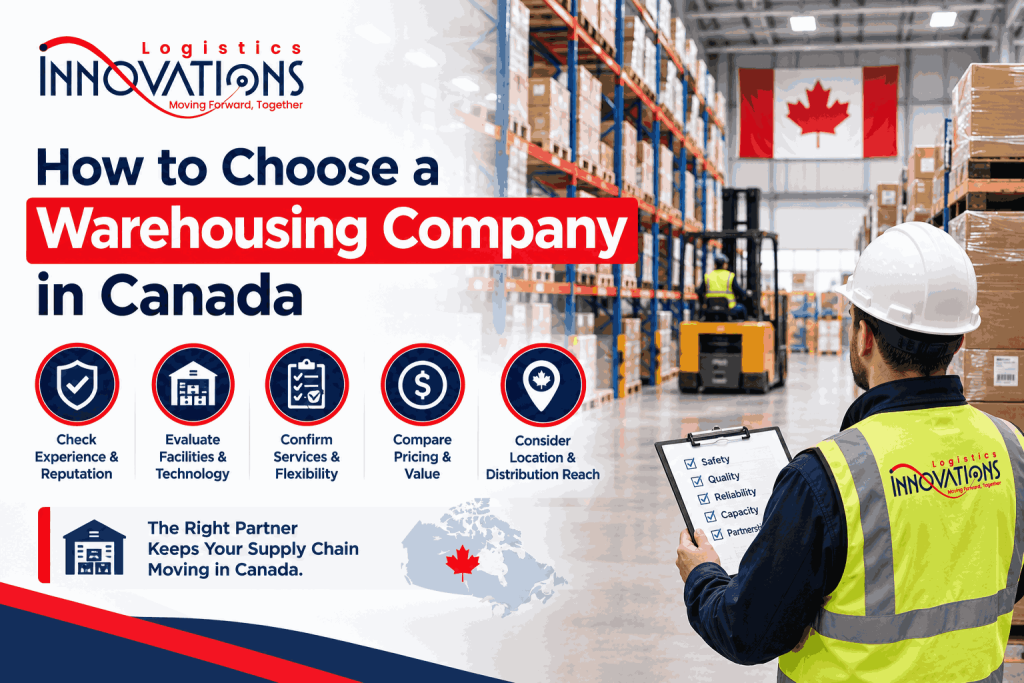
Choosing the right warehousing company in Canada can affect your storage costs, inventory control, delivery times, and customer service. The cheapest warehouse is not always the best choice. A provider with the right location, services, equipment, technology, and flexibility can help your business operate more efficiently as demand changes.
So, how to choose a warehousing company that fits your business? Start by looking at your actual storage and distribution needs, then compare warehouse providers based on service quality, total cost, location, security, technology, and ability to scale.
Start With Your Warehousing Needs
Before contacting a warehouse service provider, define what you actually need. This makes it easier to compare companies and avoid paying for services you do not use. Consider:
- How much inventory do you need to store?
- Do you need short term or long term storage?
- How many pallets, containers, or cartons do you receive each month?
- Do you need receiving and inventory handling?
- Will products need picking, packing, or distribution?
- Do you need cross docking or freight staging?
- Are your volumes seasonal?
- Do you need transportation along with storage?
- Do you handle imported or cross border freight?
For example, an importer may need container unloading, storage, inventory handling, and domestic delivery. A manufacturer may need storage and regular distribution to customers. Your needs should determine the type of warehouse services you compare.
Check the Warehouse Location
Location is one of the most important factors when choosing a warehouse provider. A warehouse close to your suppliers, customers, ports, rail terminals, or major highways can reduce unnecessary transportation time and costs. For businesses distributing across Canada, you should also consider how easily the facility connects to your main shipping lanes. Ask the warehousing company:
- Where is the facility located?
- Which cities and regions can it serve efficiently?
- Is it close to major highways, ports, rail terminals, or distribution hubs?
- Can it support your current delivery requirements?
- Can the location still work if your business expands?
Do not choose a warehouse based only on the lowest storage rate. A cheaper facility can become more expensive if it creates longer transportation routes or additional handling requirements.
Compare the Warehouse Services Offered
Not every warehouse offers the same level of service. Some primarily provide storage, while others can manage several parts of your logistics operation. Depending on your business, useful services may include:
- Short term and long term storage
- Inventory management
- Receiving and put away
- Pallet handling
- Order picking and packing
- Cross docking
- Freight staging
- Transloading
- Distribution coordination
- Container storage
- Returns processing
Innovations Logistics provides warehousing and transloading services in Canada with storage, inventory handling, cross docking, freight staging, and transloading support. Choosing a provider that can handle multiple connected activities may simplify your logistics and reduce the number of companies you need to coordinate.
Look at Inventory Management and Technology
Good warehousing is not only about having enough floor space. Your inventory should be organized, tracked, and easy to manage. Ask potential providers how they handle:
- Inventory receiving
- Stock counts
- Product locations
- Order processing
- Inventory reporting
- Shipment updates
- Damaged or missing goods
- Inventory discrepancies
If your business has many SKUs or frequent orders, technology becomes even more important. Ask to see how inventory information is recorded and how you will receive updates. A warehouse service provider should be able to explain its processes clearly instead of simply saying that it has modern technology.
Check Security and Handling Standards
Your inventory represents money, so security should be part of your evaluation. Ask about:
- Facility access controls
- Security monitoring
- Fire protection
- Loading and unloading procedures
- Product handling
- Inventory checks
- Damage prevention
- Insurance and liability coverage
You should also ask how the company handles damaged, lost, or short shipments. A reliable warehouse provider should have a clear process for reporting and resolving these issues.
If your goods require special handling, temperature control, regulated storage, or customs controlled storage, confirm that the facility can legally and operationally support those requirements before signing an agreement.
Understand the Full Cost
Warehouse pricing can include more than monthly storage. Depending on the provider, your total cost may include:
- Storage charges
- Receiving fees
- Pallet handling
- Loading and unloading
- Picking and packing
- Inventory services
- Cross docking
- Transportation
- Special handling
- Administrative fees
Ask for a detailed quote and make sure you understand what is included. The best warehousing company for your business is not necessarily the company with the lowest storage price. Compare the total cost of the services you actually need. Also ask about minimum monthly charges, additional service fees, rate increases, and charges during peak periods.
Make Sure the Company Can Scale
Your warehouse requirements may change as your business grows. A good warehousing company Canada businesses choose should be able to support changes in inventory volume, seasonal demand, new products, and new markets. Ask:
- Can you increase storage space when needed?
- How do you handle peak seasons?
- Can you support higher shipment volumes?
- Can you add services later?
- Can you support distribution in other Canadian markets?
Flexibility matters because moving inventory to another facility can be expensive and disruptive.
Evaluate Transportation and Logistics Support
Storage does not exist separately from transportation. Your warehouse may receive freight from ports, rail terminals, suppliers, and other facilities, then prepare it for final delivery. For businesses that need broader logistics support, consider whether the provider can coordinate transportation with warehousing.
Innovations Logistics also provides drayage services for container movements between ports, terminals, warehouses, and other locations. This can be useful for businesses that need storage and container transportation as part of the same logistics operation. For businesses moving freight across longer distances, intermodal transportation services can also connect rail and truck transportation.
Visit the Facility Before You Decide
If possible, visit the warehouse before signing a long term agreement. Look at:
- General cleanliness and organization
- Storage conditions
- Loading areas
- Equipment
- Security
- Inventory organization
- Staff activity
- Available space
Ask the operations team how they receive, store, handle, and release your type of freight. You can learn much more from seeing the operation than from a sales presentation.
Review the Agreement and Service Levels
Before choosing a warehouse provider, read the contract carefully. Make sure you understand:
- Pricing and billing
- Minimum commitments
- Service levels
- Liability
- Insurance
- Rate increases
- Notice periods
- Inventory removal procedures
- Contract termination terms
If the warehouse also provides fulfillment or transportation, ask for clear service expectations and performance measures. A good provider should be comfortable explaining the agreement and answering questions before you commit.
Questions to Ask a Warehousing Company
Before making your final decision, ask these questions:
- Where is your warehouse located and which markets do you serve?
- What storage and warehouse services do you provide?
- How do you track and manage inventory?
- What are your storage, handling, and additional service fees?
- How do you handle seasonal increases in inventory?
- What security and insurance measures are in place?
- Can you coordinate transportation and distribution?
- Can I visit the facility before signing?
- What happens if inventory is damaged or missing?
- Can your services grow with my business?
FAQs About Choosing a Warehousing Company
How do I choose a warehousing company?
Start by defining your storage volume, location requirements, required services, budget, inventory needs, and future growth. Then compare providers based on total cost, service quality, technology, security, location, and flexibility.
What should I look for in a warehouse service provider?
Look for a provider with the right location, reliable inventory handling, suitable storage capacity, clear pricing, strong security, useful technology, responsive service, and the ability to support your future requirements.
How much does warehousing cost in Canada?
Warehousing costs vary based on location, storage space, inventory volume, handling requirements, services, and contract terms. Ask for an itemized quote rather than comparing storage rates alone.
Is a 3PL better than using a warehouse only for storage?
It depends on your needs. A warehouse may be suitable if you only need storage. A 3PL can be more useful when you also need inventory handling, fulfillment, transportation coordination, distribution, or other logistics services.
Should I visit a warehouse before choosing a provider?
Yes. A facility visit can help you assess organization, storage conditions, security, equipment, and operating processes before you commit to a long term relationship.
Conclusion
Choosing the right warehousing company in Canada requires more than comparing storage prices. Look at the complete service, including location, inventory management, security, technology, transportation support, pricing, and flexibility.
The right warehouse provider should fit your current needs while giving your business room to grow. Take time to compare providers, ask detailed questions, review the agreement, and visit the facility when possible.
If your business needs secure storage, inventory handling, transloading, or connected logistics support, contact Innovations Logistics to discuss your warehousing requirements and get a solution built around your freight needs.