
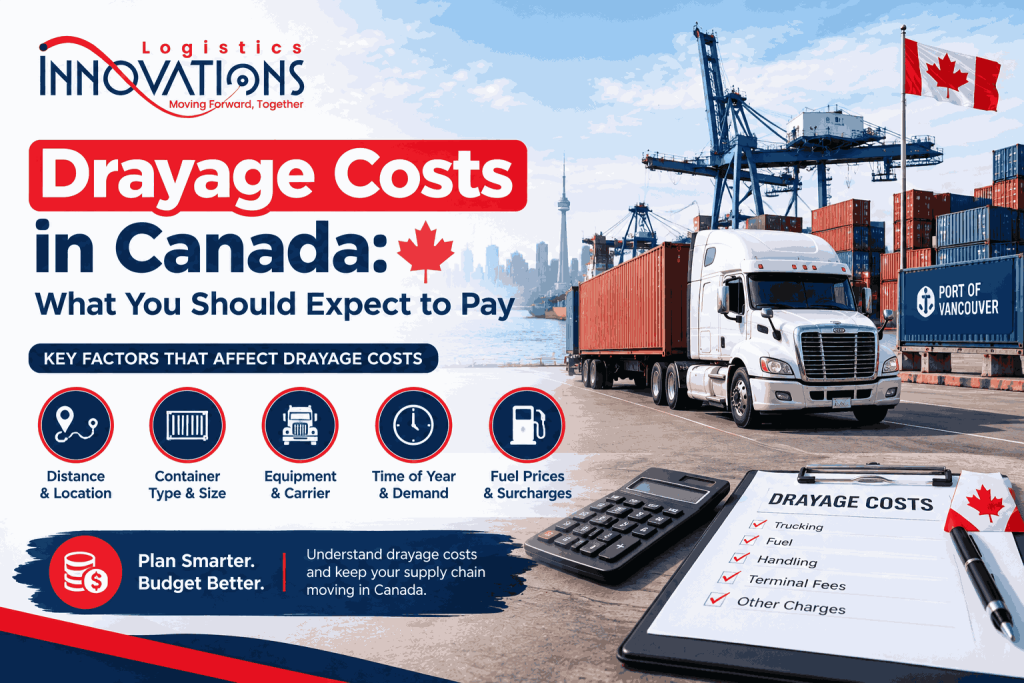
Drayage cost in Canada depends on several factors, including the distance from a port or rail terminal, container size, fuel prices, equipment, waiting time, and terminal conditions. For a standard local container move, businesses can often use CAD 300 to CAD 700 per container as a practical planning range, but the actual quote can be higher or lower depending on the shipment.
The key point is that the base drayage rate is only part of your total cost. Fuel surcharges, chassis charges, waiting time, storage, demurrage, and special handling can all increase the final bill.
How Much Does Drayage Cost in Canada?
For a standard dry container moving a relatively short distance between a Canadian port or rail terminal and a nearby warehouse, a reasonable planning range is about CAD 300 to CAD 700 per move.
Recent Canadian market sources show local rates varying by location and shipment requirements. Some Toronto estimates start around CAD 250 to CAD 450, while other Canadian container delivery estimates place local port drayage around CAD 350 to CAD 750.
Your drayage cost per container may change based on:
- 20 foot or 40 foot container
- Pickup and delivery distance
- Port or rail terminal
- Container weight
- Chassis availability
- Fuel surcharge
- Appointment and waiting requirements
- After hours or weekend delivery
- Terminal congestion
- Special equipment or handling
Because of these variables, there is no single nationwide drayage rate in Canada.
What Is Included in Drayage Rates Canada?
A basic drayage quote usually covers the short haul movement of a container from a port or rail terminal to another nearby location, such as a warehouse, distribution centre, or transloading facility.
Depending on the carrier, the quoted price may include:
- Container pickup
- Local trucking
- Delivery to your facility
- Standard equipment
- Basic shipment coordination
However, always ask what is excluded. A low base rate can become expensive if important charges are added later.
Common Additional Drayage Charges
The final drayage services cost may include:
- Fuel surcharge
- Chassis rental or split charges
- Waiting time
- Pre pull charges
- Storage or yard charges
- Weekend or after hours service
- Overweight charges
- Special equipment fees
- Empty container return charges
Demurrage and detention should also be considered, although they are not normally part of the basic trucking rate. They can become significant when containers are not collected, unloaded, or returned within the allowed free time.
What Factors Affect Drayage Cost in Canada?
1. Distance and Route
Distance is one of the most important factors. A container moving a short distance from a rail terminal to a nearby warehouse will normally cost less than one travelling much farther into a regional market.
However, drayage is not normally priced simply by mileage. Carriers consider the complete move, including terminal time, equipment, driver availability, route conditions, and appointment requirements.
2. Container Size and Weight
A 20 foot container and a 40 foot container may have different rates. Heavy containers can also require additional planning because Canadian road weight limits and equipment requirements must be considered.
Overweight shipments may require special permits, equipment, or routing.
3. Port and Rail Terminal
The location of the terminal has a direct effect on pricing.
Major Canadian gateways such as Vancouver, Montreal, Halifax, and inland rail hubs serving Toronto, Calgary, and Edmonton have different operating conditions. Congestion, appointment availability, terminal procedures, and local carrier capacity can all affect rates.
At the Port of Vancouver specifically, container trucking rates for licensed drayage carriers are subject to oversight by the BC Container Trucking Commission, a framework established after the 2014 trucking disputes to set minimum rates and reduce truck queuing at terminal gates. This means published minimum rate requirements can factor into what carriers charge for moves through Vancouver, which is not the case at every Canadian port.
4. Fuel Costs
Fuel surcharges are commonly added to the base rate. Since diesel prices change, the surcharge can also change between quotes.
Ask your carrier if the quoted drayage cost Canada includes fuel or if it will be added separately.
5. Waiting Time
If a driver arrives at your warehouse but cannot unload because the facility is not ready, waiting charges may apply.
Having the dock, staff, unloading equipment, and paperwork ready can help prevent unnecessary costs.
Is Drayage Charged by the Mile?
Not usually. Businesses often search for an average drayage cost per mile, but Canadian drayage is rarely calculated that way. A five kilometre move through a congested terminal can end up costing more than a much longer move on an open highway, because the price reflects the complete job rather than the distance travelled.
Carriers build their rates around terminal turn time, appointment availability, chassis access, and driver time on site, not a per kilometre formula. This is why a container moving a short distance out of a busy port can sometimes cost more than a longer move out of a terminal with easier access and shorter wait times.
For accurate budgeting, ask your provider for an all-in price per move rather than trying to back into a per mile number yourself. If a quote is presented as a rate per mile, confirm what else is or isn’t included, since accessorial charges are often where the real cost difference shows up.
Drayage Cost vs. Demurrage and Detention
These charges are often confused.
- Drayage is the transportation service that moves the container.
- Demurrage is generally charged when a container remains at a terminal beyond its permitted free time.
- Detention generally applies when the container or equipment remains outside the terminal beyond the allowed free period.
For example, if your container is available for pickup but your trucking appointment is delayed, you may face additional terminal charges even though the original drayage quote has not changed.
That is why fast coordination can matter as much as the trucking rate itself.
How to Reduce Drayage Costs
The cheapest quote is not always the cheapest shipment. Look at the complete cost from pickup through empty return.
Here are practical drayage cost reduction strategies:
- Book pickups early: Early planning gives your carrier more flexibility with appointments and equipment.
- Prepare your warehouse: Make sure the dock, labour, unloading equipment, and receiving team are ready before the truck arrives.
- Understand free time: Track terminal free time carefully so containers do not remain at the terminal unnecessarily.
- Compare complete quotes: Ask carriers to show the base rate, fuel surcharge, chassis charges, waiting fees, and other possible accessorial charges.
- Coordinate empty returns: Confirm where and when the empty container must be returned before delivery takes place.
- Use a logistics partner for multiple services: Combining drayage with warehousing, transloading, or intermodal coordination can simplify shipment management and reduce avoidable handoffs.
For businesses using rail for longer distance freight, intermodal transportation services can connect rail transportation with the local drayage leg.
When Should You Get a Customized Drayage Quote?
A general rate can help with budgeting, but a customized quote is better when the shipment is complex.
Provide your logistics provider with:
- Pickup terminal or port
- Delivery address
- Container size
- Container weight
- Loaded or empty status
- Cargo type
- Required delivery date
- Special equipment requirements
- Empty return location
This information allows the provider to calculate the actual move instead of giving you a generic estimate.
Innovations Logistics provides drayage services in Canada for container movements between ports, terminals, warehouses, and intermodal facilities, with support for import and export container transportation.
Frequently Asked Questions
How much does drayage cost per container in Canada?
A standard local container move can commonly fall around CAD 300 to CAD 700, depending on the location, distance, container size, equipment, fuel surcharge, and additional services. Complex or longer moves can cost more.
Is drayage charged per mile?
Usually, drayage is quoted per move rather than using a simple per mile calculation. Terminal time, equipment, driver availability, appointments, and other operating costs can affect the final rate.
What is included in a drayage fee?
A basic fee generally covers the short haul transportation of a container between a port or rail terminal and another nearby location. Fuel, chassis, waiting time, special handling, and other accessorial charges may be separate.
What causes drayage costs to increase?
Longer distances, heavy containers, larger equipment, fuel surcharges, terminal congestion, waiting time, special delivery requirements, and after hours service can increase the final cost.
How can Canadian businesses reduce drayage costs?
Plan pickups early, prepare your receiving facility, monitor free time, coordinate empty returns, compare complete quotes, and work with a provider that can coordinate related transportation and logistics services.
Conclusion
Understanding drayage cost in Canada is about more than finding the lowest trucking rate. The real cost depends on the complete container movement and the charges that can arise before, during, and after delivery.
For many standard local moves, CAD 300 to CAD 700 is a useful starting point for budgeting, but every shipment should be quoted based on its actual route, container, timing, and service requirements.
If your business needs reliable container transportation between a port, rail terminal, warehouse, or distribution facility, contact Innovations Logistics for a quote based on your shipment requirements.