
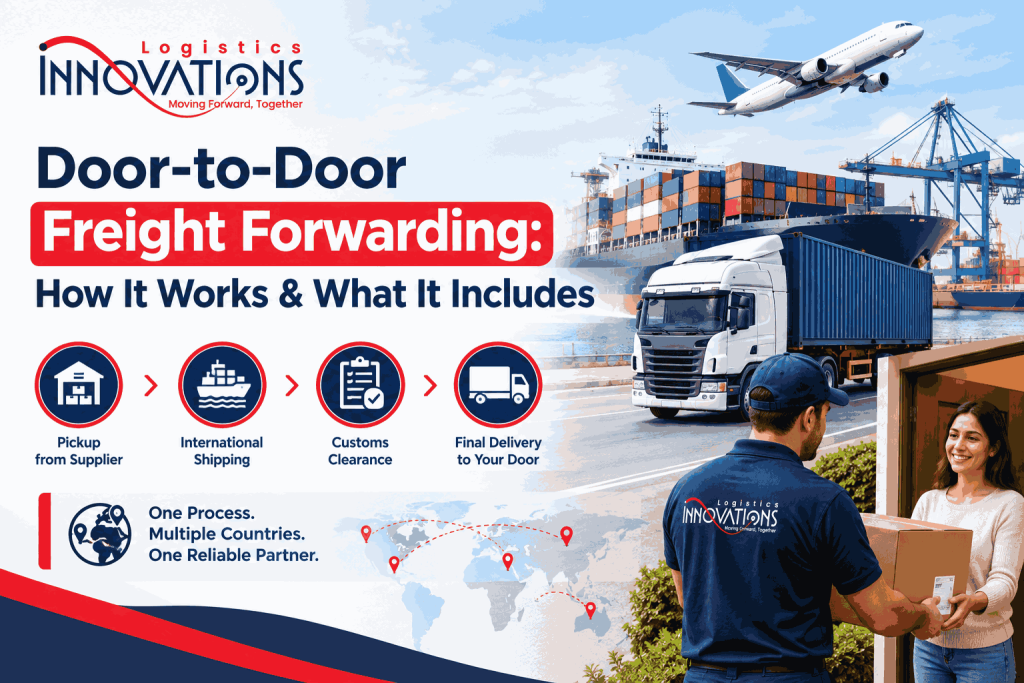
Door to door freight forwarding is a shipping solution that manages cargo from the pickup location to the final delivery address. Instead of arranging trucking, freight transport, customs support, and final delivery with separate providers, a freight forwarder coordinates the shipment as one connected process.
For Canadian businesses, this can make domestic, cross border, and international shipping easier to manage. A shipment may move by truck, rail, ocean, or air, but the goal remains the same: move the cargo from the shipper’s door to the receiver’s door with fewer coordination problems.
The service can include pickup, freight booking, documentation, customs coordination, tracking, storage or transloading when needed, and final delivery.
What Is Door to Door Freight Forwarding?
Door to door freight forwarding is an end to end shipping service where a logistics provider coordinates the movement of cargo from its origin address to its final destination.
A typical shipment may involve several transportation stages, such as:
- Local pickup by truck
- Ocean, air, rail, or long distance truck transportation
- Customs documentation and clearance support
- Port or terminal handling
- Warehousing or transloading when required
- Final mile transportation
- Delivery to the receiving address
The freight forwarder coordinates these stages so the shipper does not have to manage every provider separately.
For example, a Canadian importer receiving goods from an overseas supplier may need factory pickup, ocean transportation, Canadian port handling, customs coordination, inland transportation, and final delivery. Door to door freight forwarding brings these steps together under one shipping plan.
How Does Door to Door Freight Forwarding Work?
The exact process depends on the shipment, destination, cargo type, and transportation mode. In most cases, it follows these steps.
1. Shipment Details Are Collected
The logistics provider first needs basic shipment information, including:
- Pickup and delivery locations
- Type of goods
- Number of pieces
- Weight and dimensions
- Required delivery date
- Preferred transportation mode
- Customs information for international freight
This information helps determine the best shipping plan and expected charges.
2. Pickup Is Arranged
The forwarder coordinates transportation from the supplier, warehouse, factory, or other origin location.
For Canadian businesses, this could mean a local truck pickup in Calgary, Edmonton, Toronto, Vancouver, Montreal, or another location before the freight moves to a terminal, port, warehouse, or directly toward its destination.
3. Main Freight Transportation Is Managed
The cargo then moves using the most suitable transportation method.
Common options include:
- Truck freight for domestic and cross border shipments
- Rail for longer distance freight
- Ocean freight for international container shipments
- Air freight for urgent or time sensitive cargo
- Intermodal transportation when rail and truck are combined
The right option depends on cost, cargo characteristics, distance, and delivery requirements.
For businesses moving freight across longer Canadian or North American routes, intermodal transportation services can combine rail and truck movement within one coordinated shipment.
4. Customs and Documentation Are Coordinated
International shipments require accurate documentation and customs procedures. Depending on the shipment, this can involve commercial invoices, packing information, bills of lading, customs declarations, permits, and other documents.
A freight forwarder can coordinate documentation and communication between the shipper, carrier, customs representatives, and other parties.
For shipments that need to move under customs control, bonded shipment services may also be relevant.
5. Warehousing or Transloading May Be Used
Not every shipment moves directly from a port or terminal to its final destination.
Cargo may need temporary storage, consolidation, deconsolidation, cross docking, or transfer between transportation modes.
Warehousing and transloading services can support these stages when freight needs to be stored or transferred before final delivery.
6. Final Delivery Is Coordinated
The last stage is delivery to the customer’s specified address. The forwarder coordinates the final transportation leg and provides shipment updates based on the service selected.
This completes the door to door shipping process.
What Do Door to Door Shipping Services Include?
The exact scope varies by provider and quote. Common door to door freight services can include:
- Origin pickup
- Freight booking
- Carrier coordination
- Transportation planning
- Shipment documentation
- Customs coordination
- Port and terminal handling
- Drayage
- Warehousing or transloading
- Shipment tracking
- Final mile delivery
Not every shipment requires every service. A domestic shipment may only need pickup, line haul, and final delivery, while an international container shipment may involve several additional stages.
For container movements between ports, rail terminals, warehouses, and distribution centres, drayage services in Canada can be an important part of the overall shipment.
How Much Does Door to Door Shipping Cost?
There is no single door to door shipping price. The total cost depends on the complete movement from origin to destination.
Important cost factors include:
- Distance between pickup and delivery locations
- Cargo weight and dimensions
- Transportation mode
- Shipment volume
- Container type and size
- Fuel and transportation charges
- Customs and documentation requirements
- Port, terminal, or handling charges
- Warehousing or storage requirements
- Special handling or delivery requirements
For this reason, Canadian businesses should request a complete quote based on actual shipment details rather than relying on a general per shipment estimate.
Benefits of Door to Door Freight Forwarding for Canadian Businesses
Door to door shipping can provide several practical advantages.
One Coordinated Shipping Process: Instead of communicating with multiple transportation providers, the business has one coordinated logistics process.
Less Administrative Work: The freight forwarder can manage bookings, shipment coordination, documentation, and transportation communication.
Better Shipment Visibility: A coordinated service can make it easier to track cargo and understand where it is within the transportation process.
Flexible Transportation Options: A shipment can use truck, rail, air, ocean, or a combination of modes based on its requirements.
Easier Cross Border Shipping: For Canadian companies shipping to the United States, freight forwarding can help coordinate transportation and the documentation required for cross border movement.
When Should a Business Use Door to Door Freight Forwarding?
Door to door freight forwarding can be useful when a company:
- Imports or exports commercial goods
- Ships freight across Canada
- Moves cargo between Canada and the United States
- Works with overseas suppliers
- Ships containers through Canadian ports
- Needs multiple transportation modes
- Wants one provider to coordinate the complete shipment
- Does not have an internal logistics team to manage every transportation stage
It can be especially useful for businesses that regularly move freight but want to reduce the time spent coordinating separate carriers and logistics services.
Door to Door vs Port to Port Shipping
The main difference is responsibility.
With port to port shipping, the customer usually needs to arrange transportation before the cargo reaches the port and after it arrives at the destination port.
With door to door shipping, the service is planned around the complete journey from the origin address to the final delivery address.
For a business that wants fewer separate transportation arrangements, door to door shipping services can provide a simpler approach.
How to Choose a Door to Door Freight Provider
Before choosing a provider, ask:
- Can you handle my origin and destination locations?
- Which transportation modes can you coordinate?
- Are customs and documentation support available?
- Is final delivery included in the quote?
- Can you arrange warehousing or transloading if required?
- How will shipment tracking and updates be handled?
- Are additional charges clearly explained?
- Do you have experience with my type of cargo?
A clear quote should explain what is included and identify services that may create additional charges.
Frequently Asked Questions
1. What is door to door freight forwarding?
Door to door freight forwarding is a logistics service that coordinates cargo from the pickup address through transportation and other required stages until it reaches the final delivery address.
2. What is included in door to door shipping?
It can include pickup, freight transportation, carrier coordination, documentation, customs support, terminal handling, warehousing, tracking, and final delivery. The exact services depend on the shipment.
3. Is door to door shipping available across Canada?
Yes. Door to door shipping can be arranged for many domestic freight movements across Canada. Coverage, transportation options, and pricing depend on the origin, destination, cargo, and required service.
4. Is door to door freight forwarding more expensive?
Not necessarily. The total price depends on the complete shipment requirements. Although a door to door quote may include more services, it can reduce the need to arrange and manage separate providers.
5. Can door to door freight forwarding include customs support?
For international shipments, customs coordination can be included as part of the overall logistics plan. The exact customs services depend on the shipment, trade route, cargo, and responsibilities agreed upon with the logistics provider.
Conclusion
Door to door freight forwarding gives Canadian businesses a coordinated way to move cargo from origin to final destination. Instead of managing every transportation stage separately, a freight forwarder can coordinate pickup, freight transportation, documentation, customs support, handling, storage, and final delivery as needed.
The right service depends on your cargo, route, timing, budget, and delivery requirements. A detailed quote is the best way to understand the full cost and services involved.
If your business needs reliable door to door freight forwarding services across Canada, across the border, or through international routes, contact Innovations Logistics with your shipment details and discuss a solution built around your freight requirements.