

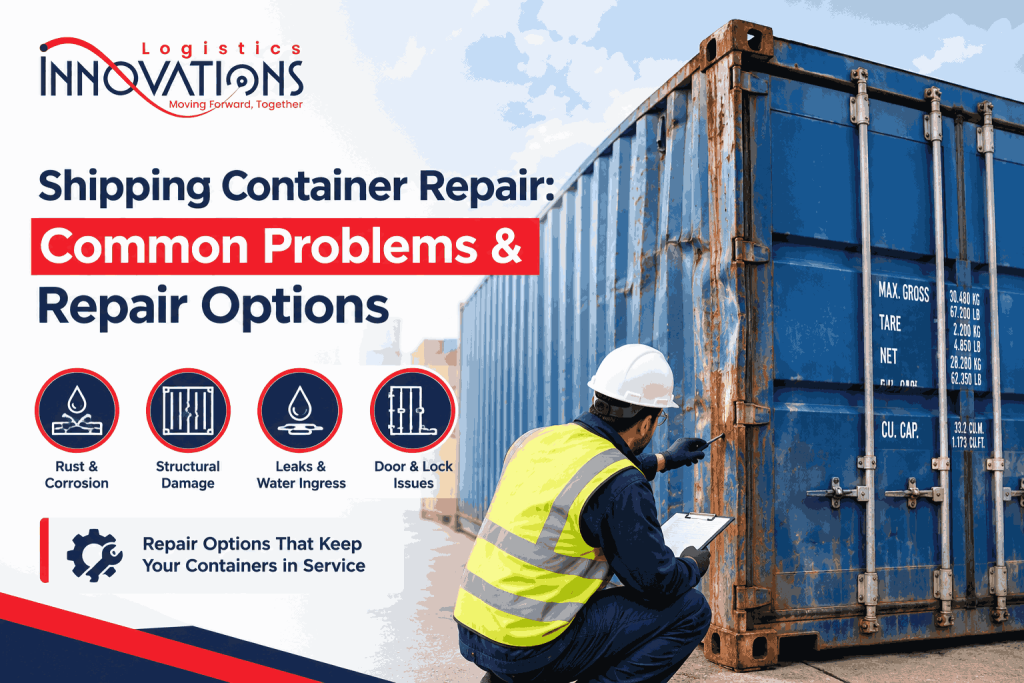
A damaged container does not always need to be replaced. In many cases, professional shipping container repair can restore the unit, prevent further damage, and extend its useful life. Common issues include rust, leaking roofs, damaged floors, faulty doors, worn seals, bent panels, and structural damage.
The right repair depends on the type and severity of the damage. Some problems are simple maintenance issues, while others require welding, replacement parts, or professional structural work.
What Are the Most Common Shipping Container Problems?
The most common container problems involve corrosion, doors, flooring, leaks, dents, and structural components.
1. Rust and Corrosion
Rust is one of the most common reasons a container needs repair. Small surface rust spots can often be cleaned, treated, primed, and painted. More serious corrosion can create holes or weaken steel panels.
Common repair options include:
- Removing loose rust and damaged material
- Treating the affected area
- Welding or patching holes
- Applying primer and protective paint
- Replacing severely damaged steel sections
Regular inspection is important because untreated corrosion can spread and make future repairs more expensive.
2. Damaged Doors, Hinges, and Locks
Container doors are used frequently, making them vulnerable to bent hinges, damaged locking bars, worn seals, and alignment problems. A door that does not close properly can also allow water and debris into the container.
Container repair services may include:
- Door realignment
- Hinge repair or replacement
- Locking bar repairs
- Handle replacement
- New door seals
- Adjustment of closing mechanisms
If a door becomes difficult to open after the container has been loaded, the issue may also involve uneven placement or movement of the container.
3. Floor Damage
Container floors can suffer from heavy equipment, concentrated loads, moisture, and repeated use. Cracked, soft, or damaged flooring should not be ignored, especially when the container is used for cargo or equipment storage.
Storage container repair may involve removing damaged boards and installing suitable replacement flooring. The repair method depends on the container design, the type of damage, and how the container will be used.
4. Roof and Wall Damage
Forklift impacts, loading equipment, falling objects, and rough handling can dent or puncture container walls and roofs. Small dents may not affect performance, but holes or damaged seams can allow water inside.
A professional shipping container damage repair assessment can determine if the area needs straightening, patching, welding, or panel replacement.
5. Structural Damage
The frame, corner posts, rails, and other structural components are critical to container strength. Serious impact can bend or weaken these areas.
Structural repairs should not be treated like simple cosmetic work. In Canada, Transport Canada guidance states that containers with significant safety concerns may need to be submitted to an approved repair facility, and structural repair facilities require appropriate certification.
What Does Shipping Container Repair Include?
The repair process normally starts with an inspection. The condition of the container should be assessed before deciding which parts need repair or replacement.
Common container repair services include:
- Inspection: Identify visible damage, corrosion, leaks, flooring problems, and structural concerns.
- Cleaning and preparation: Remove dirt, loose rust, damaged coatings, or other material around the repair area.
- Component repair: Fix doors, hinges, locks, flooring, panels, or other damaged parts.
- Welding and patching: Repair holes, cracks, and damaged steel where appropriate.
- Corrosion treatment: Treat exposed steel and apply suitable protective coatings.
- Final inspection: Check doors, seals, repaired areas, and overall condition before the container is returned to use.
Innovations Logistics provides container repair support covering door, lock, and hinge repairs, floor repairs, rust treatment, repainting, and basic structural repairs.
How Much Does Container Repair Cost in Canada?
There is no single price for shipping container repairs because the cost depends on the damage and the work required.
Important cost factors include:
- Container size and type
- Location and accessibility
- Amount of rust or corrosion
- Size of damaged steel areas
- Flooring condition
- Door and hardware requirements
- Welding or fabrication work
- Labour and replacement parts
- Transportation to and from a repair facility
A small door adjustment or seal replacement will generally require much less work than repairing a damaged frame or replacing large sections of steel. For this reason, getting an inspection and repair estimate is more useful than relying on a general price.
Should You Repair or Replace a Shipping Container?
Repair is usually worth considering when the container has localized damage, and its main structure remains sound.
Repair may make sense when:
- Damage is limited to doors, seals, flooring, or small steel areas
- Rust is manageable
- The frame and corner posts remain sound
- The container still meets your intended use
- Repair costs are reasonable compared with replacement
Replacement may make more sense when corrosion is widespread, major structural components are compromised, or the required repairs become extensive.
For businesses, the decision should also consider downtime, transportation, replacement availability, and the value of the container.
When Should a Business Hire Professional Repair Services?
Professional shipping container repair Canada services are a sensible choice when the damage affects safety, structure, cargo protection, or continued use.
You should consider professional help if you notice:
- Holes or major cracks in steel panels
- Severe corrosion
- Bent corner posts or structural members
- Doors that cannot close or lock correctly
- Significant floor damage
- Roof damage that allows water inside
- Damage caused by forklifts, trucks, or other heavy equipment
Trying to repair structural damage without the right experience or equipment can create additional safety problems.
How to Prevent Expensive Container Repairs
Routine maintenance can help identify smaller problems before they become major repairs. A practical maintenance routine includes:
- Inspecting the roof, walls, doors, and floor regularly
- Checking for early signs of corrosion
- Keeping door seals and moving hardware in good condition
- Removing debris and standing moisture from problem areas
- Checking flooring before loading heavy cargo
- Repairing small steel damage before corrosion spreads
Businesses that rent containers should also report damage promptly instead of waiting until the end of the rental period.
If you also need secure storage for equipment, inventory, or seasonal goods, Innovations Logistics provides container storage, rental, and repair services for Canadian businesses and customers.
Why Container Condition Matters for Logistics
A damaged container can create problems beyond the repair itself. A door that will not close properly can delay loading. A damaged floor can create cargo handling risks. Structural problems may prevent safe use or movement.
For businesses moving containers between ports, terminals, warehouses, and distribution facilities, proper container condition is part of reliable logistics planning. Innovations Logistics also provides container drayage services connecting ports, rail terminals, warehouses, and other destinations across Canada.
Frequently Asked Questions
Can a damaged shipping container be repaired?
Yes. Many containers can be repaired if the damage is limited to areas such as doors, flooring, corrosion, panels, or other replaceable components. Severe structural damage requires a professional assessment.
How do you repair a rusted shipping container?
Minor rust can usually be removed and treated before applying primer and protective paint. Heavily corroded steel may require cutting out the damaged section and welding in replacement material.
Can a shipping container floor be repaired?
Yes. Damaged flooring can often be repaired or replaced. The appropriate solution depends on the extent of damage and the container’s intended use.
Is it cheaper to repair or replace a shipping container?
It depends on the container’s condition. Localized damage is often a good repair candidate, while widespread corrosion or major structural damage can make replacement more practical.
How often should shipping containers be inspected?
Containers should be checked regularly, particularly before loading valuable cargo and after heavy handling or transport. Regular inspections help identify corrosion, door problems, floor damage, and leaks before they become larger issues.
Conclusion
Shipping containers can provide years of useful storage and cargo service when they are properly maintained. Rust, damaged floors, faulty doors, leaks, dents, and structural problems are all repairable in many situations, but the right solution depends on the condition of the container.
For Canadian businesses, early inspection is often the best way to control repair costs and avoid unnecessary downtime. If your container needs shipping container repair services, Innovations Logistics can assess the problem and provide repair support based on the container’s condition and intended use.
Need help with a damaged container? Contact Innovations Logistics to discuss your container repair, storage, or rental requirements.