
If you’ve ever ordered a large shipment into Canada and watched the tracking number stall at the port for days, you’re not alone. Moving a shipping container from a marine terminal to your warehouse door may sound straightforward, but the reality involves customs paperwork, port scheduling, container drayage, and a chain of freight logistics decisions that can make or break your delivery timeline.
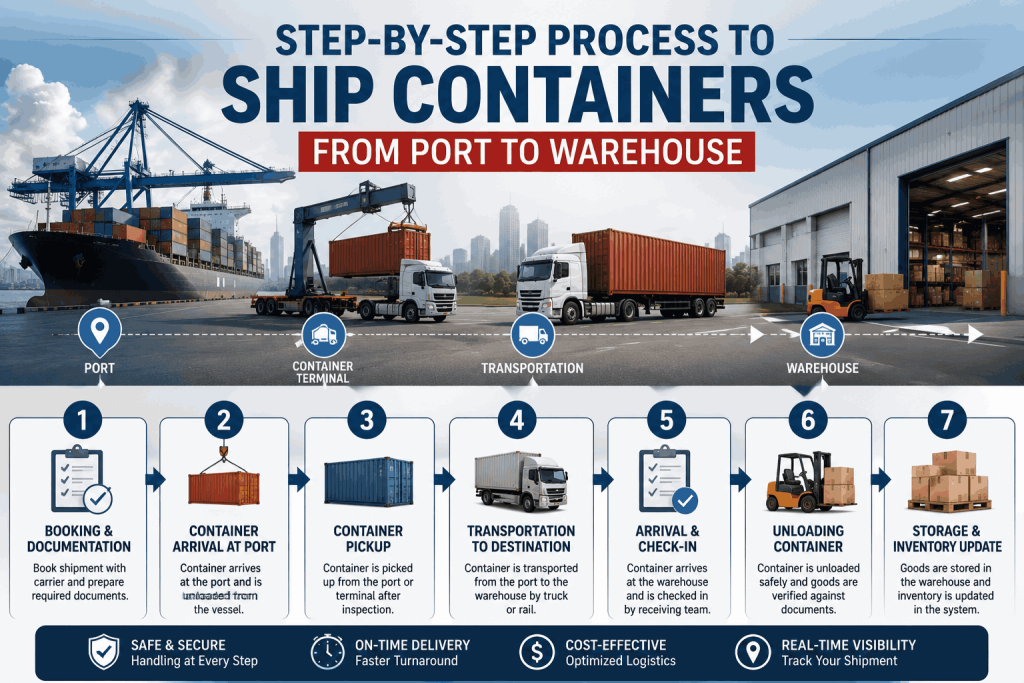
Understanding the step-by-step process to ship containers from port to warehouse isn’t just for logistics professionals. Importers, warehouse managers, and supply chain teams across Alberta, British Columbia, and the rest of Canada need this knowledge to avoid costly delays, demurrage fees, and compliance headaches.
This guide breaks down the entire process in easy-to-understand language, helping you manage freight shipping in Canada more efficiently while handling container shipping in Calgary, container shipping in Edmonton, or shipments anywhere in between.
Step 1: Prepare Your Documentation
The biggest mistake Canadian importers make is waiting until their container arrives to deal with paperwork. By then, you’re already behind.
Key Documents for Container Shipping in Canada
To clear shipping containers through Canadian ports, you’ll need:
- Bill of Lading (BOL): The master contract between shipper and carrier
- Commercial Invoice: Declares the value, quantity, and nature of goods
- Packing List: Itemizes the contents of each container
- Certificate of Origin: Confirms where goods were manufactured
- Customs Entry (B3 Form): Required by the Canada Border Services Agency (CBSA)
- Import Permits: Required for regulated goods (food, chemicals, textiles, etc.)
Submitting these documents before arrival is part of the Advance Commercial Information (ACI) program, a CBSA requirement for most commercial shipments entering Canada. Filing late triggers delays that eat into your free time at the port.
Step 2: Customs Clearance
No container delivery happens in Canada without a CBSA sign-off. This step is where most delays occur, and where a reliable freight logistics partner makes all the difference.
The Customs Clearance Process
- Pre-arrival submission your customs broker files documents before the vessel docks.
- CBSA reviews the agency, assesses duties, taxes, and compliance.
- Duty and tax payment are calculated based on the Harmonized System (HS) code.
- Release order CBSA issues this when the shipment is approved.
- Inspection, random or targeted exams add 1–3 business days.
Working with an experienced customs broker who understands freight port logistics in Canada is essential. They know which HS codes trigger inspections, how to respond to CBSA queries fast, and how to get your container released before your free time runs out.
Canadian Importer Tip: Pre-clearance can cut your port dwell time from 3–5 days down to same-day release in many cases.
Step 3: Port Logistics
Once your vessel docks and CBSA clears your shipment, the port terminal issues a release notification. This is your green light to begin the container transport process.
What Happens at the Port Terminal
Your port logistics coordinator will:
- Receive the arrival notice from the terminal.
- Confirm your container number and seal number.
- Check the last free day, the deadline before demurrage kicks in.
- Book a terminal pickup appointment, mandatory at major Canadian ports, including Vancouver, Prince Rupert, and Halifax.
Most Canadian port terminals now require advance appointments for container pickups. Showing up without one means your driver turns around empty, wasting a full day and pushing you closer to demurrage fees.
This is where freight port logistics expertise pays for itself. A team that manages terminal relationships and port systems daily will get your container picked up on the first attempt.
Innovations Logistics provides dedicated port logistics coordination across Western Canada, ensuring your container is booked, tracked, and picked up on time.
Step 4: Container Drayage
Container drayage is the specialized trucking service that moves your container from the port terminal to your warehouse, rail ramp, or distribution centre. This is one of the most time-sensitive and operationally complex parts of the entire journey.
What Are Container Drayage Services?
Container drayage services are not the same as standard freight trucking. Drayage operators must have:
- Port access credentials and terminal registration
- Chassis equipment compatible with shipping container sizes (20ft, 40ft, 40ft HC)
- Real-time tracking systems for container status
- Knowledge of the last free day management to avoid demurrage
- Familiarity with port terminal operating procedures
Not every trucking company qualifies. Choosing a carrier without proper port authorization leads to failed appointments, rejected pickups, and demurrage fees that pile up daily.
Container Drayage Routes in Western Canada
Vancouver Port → Calgary | 3–5 business days | Trans-Canada / Hwy 1 corridor |
Vancouver Port → Edmonton | 4–6 business days | Yellowhead Hwy corridor |
Prince Rupert Port → Edmonton | 3–5 business days | CN Rail + final truck leg |
Vancouver Port → Kelowna | 2–3 business days | Interior BC |
For businesses relying on container shipping Calgary or container shipping Edmonton operations, understanding these transit timelines is critical for inventory planning and warehouse scheduling.
Innovations Logistics offers professional container drayage services from major Canadian ports to destinations across Alberta and Western Canada with real-time tracking and LFD management included.
Step 5: Container Transport
Container transport costs in Canada go beyond just the trucking invoice. The biggest hidden costs come from fees you can control if you know what to watch for.
Key Cost Drivers in Canadian Container Shipping
Cost Factor | What It Means | Typical Cost Range |
Port Demurrage | Container stays at terminal past free days | $150–$500+/day |
Detention | Empty container returned late | $100–$300+/day |
Customs Brokerage | Every shipment entry | $150–$500+ |
Drayage (Vancouver → Calgary) | Per container move | $2,500–$4,500 |
Warehousing | Per pallet/month | $25–$60 |
Duties & Taxes | Based on HS code & value | Varies |
The most avoidable costs are demurrage and detention. Both are eliminated with proper scheduling. A coordinated freight logistics team that tracks your container from vessel arrival to empty return keeps these fees at zero.
Step 6: Warehouse Receiving
Your container delivery is only complete when goods are properly received and verified at your facility. Skipping this step creates disputes, undetected damage, and inventory discrepancies that are nearly impossible to resolve later.
Standard Warehouse Receiving Checklist
Follow this process every time a container arrives:
- Verify the seal number against the Bill of Lading before breaking the seal.
- Inspect the container interior for moisture, mold, pest evidence, or shifting cargo.
- Count every SKU and match against the packing list line by line.
- Photograph all damage. Timestamped photos are required for carrier or insurance claims.
- Note exceptions on the delivery receipt before the driver departs.
- Log the delivery in your WMS (warehouse management system)
Any discrepancy noted after the driver leaves is extremely difficult to claim against the carrier. Your signature on the delivery receipt is legally binding.
Step 7: Empty Container Return
After unloading, the shipping line’s container must be returned to its designated empty depot within the free time window, typically 3–5 days after delivery. This is called empty restitution.
Missing this deadline triggers detention fees charged by the ocean carrier, separate from port demurrage. Your container drayage services provider should include empty pickup and return coordination as part of their standard service agreement.
Always confirm this is covered before signing a drayage contract.
Freight Shipping Canada: Why Western Canadian Importers Need Specialized Support
Freight shipping Canada-wide presents unique challenges that importers from the US or Europe often underestimate:
- Geography Alberta is 1,000+ km inland from the nearest major port.
- Weather and winter road conditions affect transit times and equipment availability.
- CBSA regulations, Canada’s customs rules, differ significantly from the US CBP.
- Port congestion in Vancouver and Prince Rupert is among the busiest ports in North America.
- Rail transports much of the freight to Edmonton, which is moved by CN or CP Rail before final truck delivery.
For businesses managing container shipping Calgary or container shipping Edmonton regularly, these aren’t occasional problems, they’re weekly variables that require an experienced local freight logistics team to manage proactively.
Common Mistakes to Avoid in Container Shipping
Even experienced importers make these errors. Watch out for:
- Filing customs after vessel arrival is always pre-clear with CBSA.
- Ignoring the last free days, one overlooked LFD can cost thousands in demurrage.
- Hiring drayage companies without port credentials causes failed terminal appointments.
- Skipping the receiving inspection leaves you with no damage recourse.
- Forgetting the empty container return deadline triggers detention fees on top of everything else.
- Not tracking vessel ETAs, unexpected early arrivals shorten your preparation window.
FAQ: Shipping Containers from Port to Warehouse in Canada
1. What is the difference between container drayage and container transport?
Container drayage specifically refers to short-distance trucking from a port terminal to a nearby inland point, often requiring port credentials and chassis equipment. Container transport is a broader term covering the full movement of containers, including over-the-road long haul, rail, and intermodal moves. Both are part of the larger container logistics chain.
2. How long does container shipping from Vancouver to Calgary or Edmonton take?
Once your container is cleared by customs and released from the terminal, container shipping from Vancouver to Calgary typically takes 3–5 business days by road. Container shipping to Edmonton adds 1–2 days due to the additional distance. Pre-booking your container drayage services before vessel arrival reduces the port-to-dispatch delay significantly.
3. What are the biggest hidden costs in freight shipping Canada?
Beyond the base freight rate, the biggest surprises are demurrage (port storage fees), detention (late empty return fees), customs examination charges, and chassis rental surcharges. Working with a coordinated freight logistics provider who actively manages these timelines eliminates most of these costs.
4. Do I need a customs broker for container delivery in Canada?
Yes, for commercial shipments, it is strongly recommended and in most cases effectively required. A licensed customs broker navigates CBSA’s advance filing requirements, classifies your goods under the correct HS code, and responds to any CBSA queries during the clearance process. This directly affects how fast your container delivery happens.
5. What should I look for in a container drayage services provider in Alberta?
Look for active port terminal registration and credentials, a track record of managing freight port logistics in Canada, real-time container tracking, experience with last free day management, and clear inclusion of empty container return in their service. For Alberta specifically, experience with container shipping Calgary and container shipping Edmonton routes is a major advantage.
Conclusion
Shipping containers from port to warehouse in Canada is a multi-step process that demands precision at every stage, from documentation and customs clearance to container drayage, port logistics, and final container delivery. Each step has a timeline, and each missed deadline has a dollar value attached to it.
For Canadian businesses managing regular freight shipping Canada-wide, the difference between a smooth supply chain and a costly one often comes down to one thing: the expertise of your freight logistics partner.
You need container drayage services from Vancouver to Alberta, container shipping Calgary coordination, or full-cycle container logistics from port to warehouse across Western Canada, working with a team that knows every step of this process is the smartest investment you can make.
Take the guesswork out of your container shipping. Visit Innovation Logistics to explore professional container transport, port logistics, and container drayage services built for Canadian importers.