
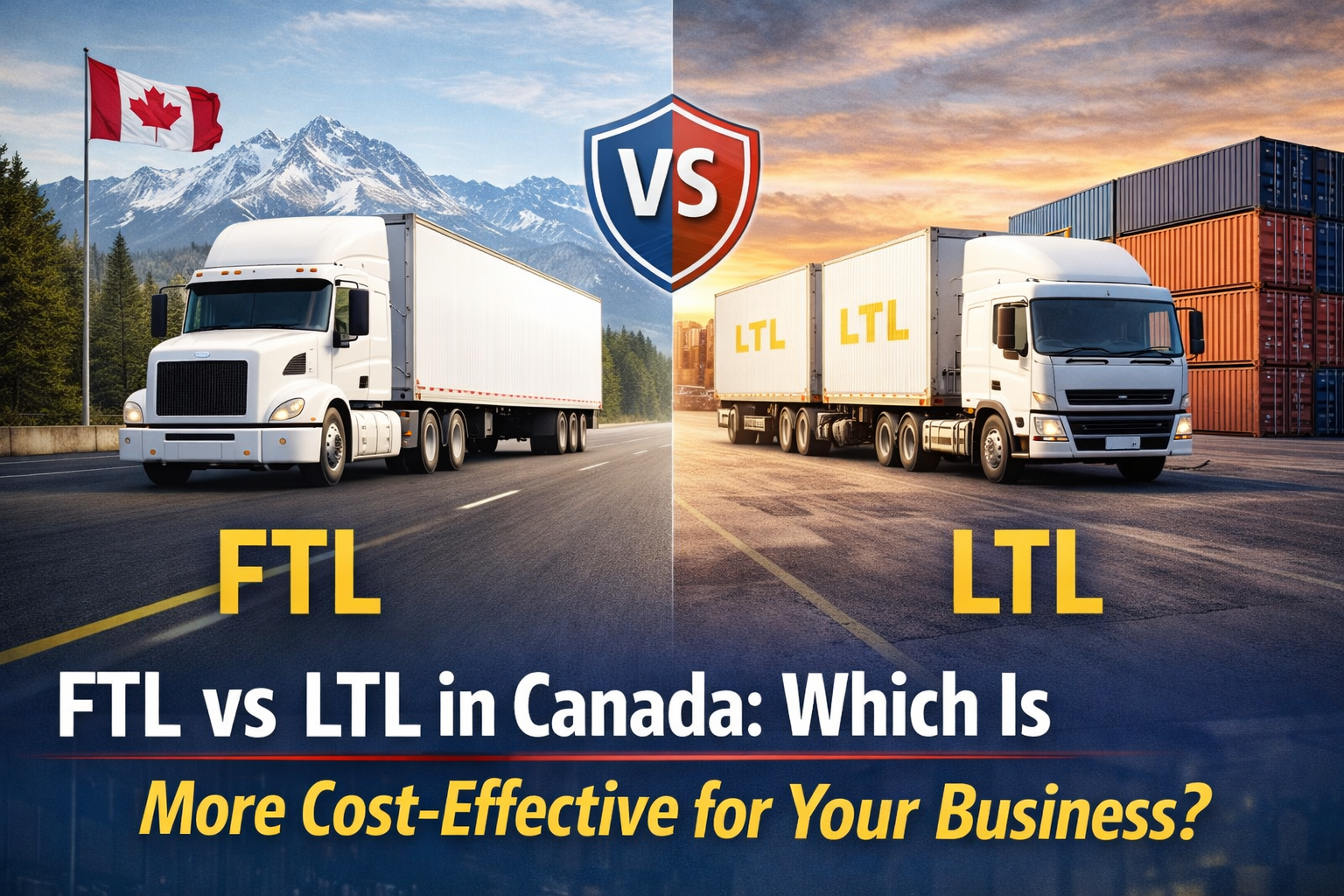
When comparing ftl vs ltl, the most cost-effective option depends on your shipment size, delivery speed, and overall freight needs. In simple terms, FTL is usually better for large shipments that can fill most of a truck, while LTL is ideal for smaller loads where you only pay for the space you use.
If your business ships goods across Canada or cross-border to the U.S., understanding the difference between FTL and LTL shipping can help you lower transportation costs and improve delivery performance.
What Is FTL Shipping?
If you’re wondering what is FTL shipping, FTL stands for Full Truckload.
This means your shipment uses the entire truck. The freight moves directly from pickup to delivery without sharing space with other businesses.
FTL Shipping Is Best For:
- Large shipments (usually 10+ pallets)
- Heavy or oversized freight
- Time-sensitive deliveries
- High-value goods that need less handling
- Long-distance freight shipping in Canada
Because the truck goes straight to the destination, FTL shipping is typically faster and involves less handling. This also reduces the risk of damage.
How FTL Pricing Works
FTL rates are usually based on:
- Distance
- Fuel prices
- Type of trailer (dry van, reefer, flatbed)
- Market demand
- Cross-border requirements (if shipping to the U.S.)
You pay for the full truck, so the more space you use, the better your cost per pallet.
What Is LTL Shipping?
If you’re asking what is LTL shipping, LTL stands for Less Than Truckload.
With LTL shipping, your freight shares truck space with shipments from other companies. You only pay for the portion of the trailer that your freight occupies.
LTL Shipping Is Best For:
- Small to medium shipments (1–6 pallets)
- Businesses that ship smaller loads regularly
- Flexible delivery timelines
- Lower-volume freight
Because multiple shipments are combined, LTL trucks make several stops. This can increase delivery time and handling.
How LTL Pricing Works
LTL rates are calculated based on:
- Weight
- Dimensions
- Freight class
- Distance
- Additional services (liftgate, inside delivery, residential delivery)
LTL can appear cheaper upfront, but added handling and longer transit times may affect total shipping efficiency.
FTL vs LTL: Key Differences
Here’s a simple comparison of ftl vs ltl:
Truck Space | Entire truck | Shared space |
Best For | Large shipments | Small shipments |
Transit Time | Faster (direct) | Slower (multiple stops) |
Handling | Minimal | More handling |
Damage Risk | Lower | Higher |
Cost Efficiency | Better for high volume | Better for low volume |
Which Is More Cost-Effective in Canada?
The answer depends on your shipment size and frequency.
FTL Is More Cost-Effective When:
- You can fill most of the trailer
- You ship regularly on the same routes
- Fast delivery is important
- You want lower damage risk
- You ship across provinces or cross-border frequently
For manufacturers and distributors in Canada, FTL often provides better long-term savings when shipment volume is consistent.
LTL Is More Cost-Effective When:
- You ship small quantities
- You don’t have enough freight to fill a truck
- Delivery time is flexible
- You want to avoid paying for unused truck space
Small and mid-sized businesses often choose LTL shipping for occasional or lower-volume freight.
Hidden Costs to Consider
When deciding between ftl vs ltl, don’t just compare the base rate.
Also consider:
- Inventory holding costs
- Delivery delays
- Damage claims
- Customer satisfaction
- Administrative time
- Fuel surcharges
Sometimes FTL may cost more per shipment but save money overall due to faster delivery and fewer damages.
How to Choose the Right Option
To choose between FTL and LTL shipping in Canada, ask:
- How many pallets do I ship per load?
- How urgent is the delivery?
- How often do I ship?
- Is my freight fragile or high-value?
- Am I shipping within Canada or cross-border?
If your shipments are growing, Innovation Logistics are helping you to switch from LTL to FTL may lower your cost per unit over time.
Frequently Asked Questions
1: Is FTL cheaper than LTL?
FTL can be cheaper per pallet when you ship large volumes. LTL is usually cheaper for small shipments.
2: Is LTL slower than FTL?
Yes. LTL shipments involve multiple stops, which increases transit time.
3: Is FTL safer for fragile goods?
Yes. Since FTL involves less handling, the risk of damage is lower.
4: Which is better for cross-border shipping?
Both can work, but FTL is often preferred for faster Canada–U.S. freight movement.
Final Thoughts
When comparing ftl vs ltl, there is no one-size-fits-all answer.
- Choose FTL shipping for large, urgent, and high-volume freight.
- Choose LTL shipping for smaller, flexible shipments.
The most cost-effective strategy is based on your shipment size, frequency, and business goals. Reviewing your freight data can help you make the right decision and improve your overall logistics performance across Canada.